


Trending Now
 Siemens Bags Order from Titagarh Rail Systems for Pune Metro Extension Trainsets
 Titagarh Rail Systems becomes Corporate Member of Chamber of Railway Industries (Rail Chamber)
 World Bank approves ₹1,400 crore Civil Tender for Gurugram Metro Phase 2
 Bi-RIDE invites ₹200 crore Tender for Soladevanahalli Depot of Bengaluru Suburban Rail Project
 GHV India awarded ₹107.79 crore Civil Contract for Lucknow Metro East-West Corridor
 Pune Metro Line 3 set to launch First 12-km Section on 15 July 2026
 DMRC gets approval to Fell or Transplant 364 Trees for Central Vista Metro Corridor under Phase IV
 ₹4.5 Lakh crore Metro Rail Investment reaches less than 5% of Urban Population in India
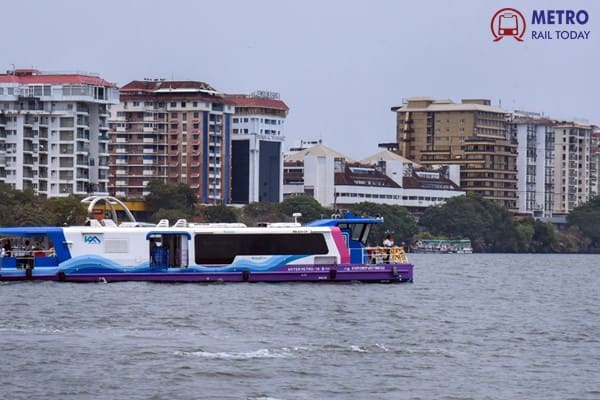 West Bengal plans to launch Water Metro Systems in Kolkata
- Titagarh Rail Systems targets full Indigenous Aluminium Coach Manufacturing by FY2027
Bangalore Metro network gears up to grow from its current 96 km to 466 km by 2035
MRT Online Desk
Posted on: 2025-12-25 16:06:00
Viewer: 2,213
Comments: 0
Country: India
City: Bengaluru
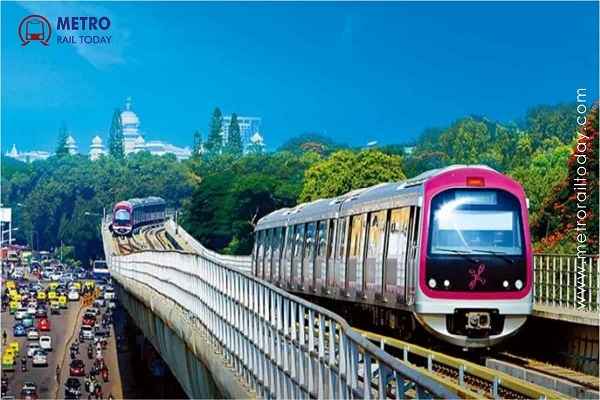
Bengaluru, India (Metro Rail Today): Bengaluru is poised for one of the fastest urban transit expansions in India as the Namma Metro network gears up to grow from its current 96 km to an ambitious 466 km by 2035. What began with the inaugural Purple Line service from MG Road in 2011 has evolved into a lifeline connecting the city’s central districts with major IT hubs such as Whitefield and Electronics City. The next decade aims to redefine mobility in India’s technology capital by easing congestion, cutting travel time, and encouraging a decisive shift from private vehicles to mass rapid transit.
Airport connectivity to get a major boost with Blue Line extension
A key highlight of the expansion is the Blue Line extension to Kempegowda International Airport. With over one lakh vehicles plying daily to and from the airport, this project is expected to significantly decongest arterial corridors while offering a sustainable alternative to road travel. The stretch between Hebbal and the airport is projected for completion around mid-2027, while the Central Silk Board to KR Puram section is likely to be operational by 2026, bringing the airport much closer to the city in terms of travel time, convenience, and reliability.
The Outer Ring Road remains one of Bengaluru’s most stressed transport corridors, witnessing an estimated four to five lakh vehicles every day. The upcoming metro line along this belt is expected to provide a dependable mass transit option for thousands of tech workers and residents, reducing gridlock and improving productivity. It is also anticipated to fuel economic growth by enhancing accessibility to office complexes, industrial clusters, and residential townships along the stretch.
Pink Line to introduce Bengaluru’s first seamless north–south travel
The Pink Line, opening in phases from 2026, will link Kalena Agrahara in the south to Nagawara in the north, creating the city’s first uninterrupted north–south metro connection. This corridor will allow commuters to traverse key residential, educational, and commercial hubs without interchanges, improving comfort and reducing travel time. For daily commuters, this line is expected to be a major game changer.
Commenting on Bengaluru’s metro expansion, Mrs. Mamta Shah, MD & CEO of Urban Infra Group, said, “Bengaluru’s aggressive metro expansion reflects a decisive shift toward sustainable urban mobility. Seamless airport access, stronger suburban links and high-capacity corridors will not only decongest roads but also enhance economic competitiveness, liveability and environmental outcomes for the city.”
Challenges persist, but momentum remains strong
Despite the progress, some projects are facing delays. Work on the 45 km Orange Line is currently paused to evaluate a double-decker flyover option, while the 36 km Red Line awaits Union government approval after redesigning to reduce costs. These bottlenecks highlight the complexities of building large-scale infrastructure in dense urban environments while balancing cost efficiency and minimal disruption.
BMRCL is exploring nearly 209 km of new routes to extend metro connectivity to emerging residential and industrial townships such as Tumakuru, Bidadi, Harohalli, and Attibele. The expansion is aligned with the Comprehensive Mobility Plan 2020, which identifies both medium-term corridors and long-term extensions totalling over 680 km for phased development. Discussions are also underway on an intercity metro between Madavara and Tumakuru, though experts indicate that suburban rail or RRTS may offer better returns for longer-distance travel.
After 14 years of laying foundations, Bengaluru is entering a defining decade of transit transformation. As new lines link the airport, ORR, suburbs and growth corridors, the Namma Metro is set to reshape how the city moves—reducing congestion, expanding economic opportunity, and steering Bengaluru firmly toward a cleaner, smarter, and more connected urban future.


MRT Online Desk
Metro Rail Today is an authentic and global news provider for the Rail & Metro industry from and around the world.