


Trending Now
 Siemens Bags Order from Titagarh Rail Systems for Pune Metro Extension Trainsets
 Titagarh Rail Systems becomes Corporate Member of Chamber of Railway Industries (Rail Chamber)
 World Bank approves ₹1,400 crore Civil Tender for Gurugram Metro Phase 2
 Bi-RIDE invites ₹200 crore Tender for Soladevanahalli Depot of Bengaluru Suburban Rail Project
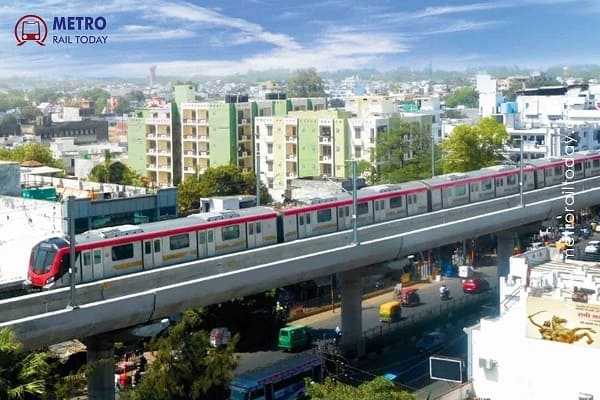 GHV India awarded ₹107.79 crore Civil Contract for Lucknow Metro East-West Corridor
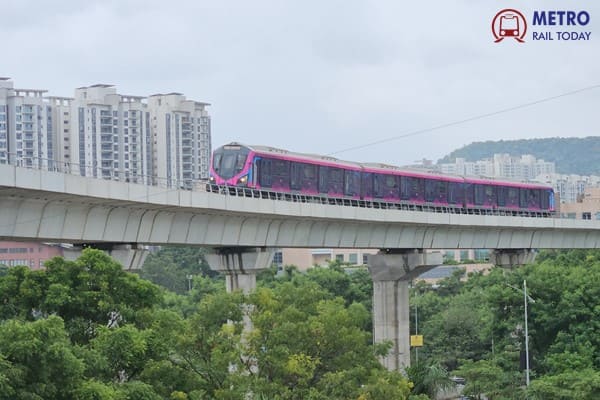 Pune Metro Line 3 set to launch First 12-km Section on 15 July 2026
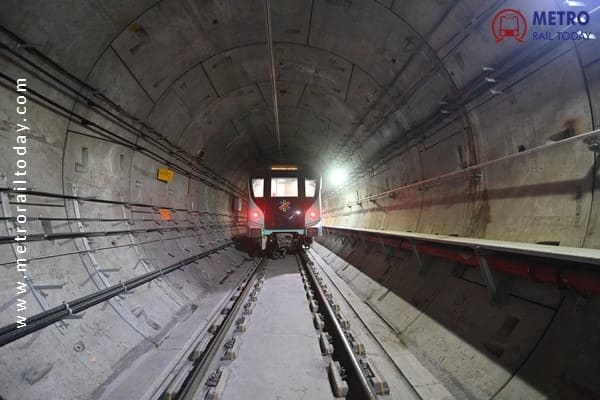 DMRC gets approval to Fell or Transplant 364 Trees for Central Vista Metro Corridor under Phase IV
 ₹4.5 Lakh crore Metro Rail Investment reaches less than 5% of Urban Population in India
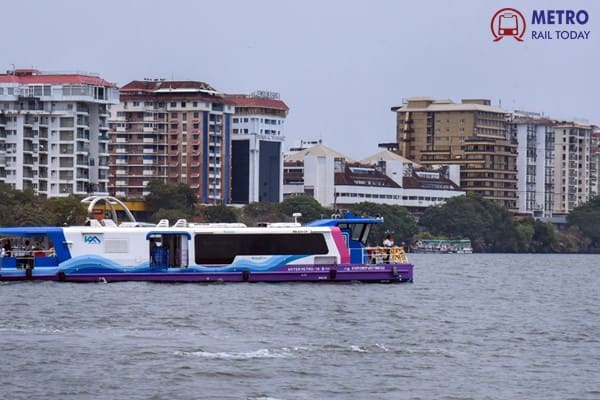 West Bengal plans to launch Water Metro Systems in Kolkata
- Titagarh Rail Systems targets full Indigenous Aluminium Coach Manufacturing by FY2027
CMRL conducts second trial run on Chennai Metro Phase 2 Corridor 4
MRT Online Desk
Posted on: 2026-01-11 16:25:00
Viewer: 1,503
Comments: 0
Country: India
City: Chennai
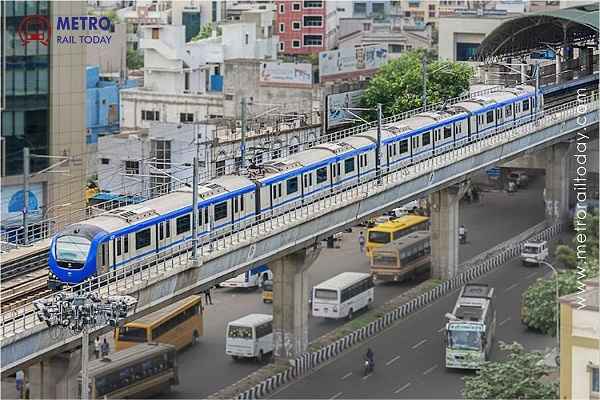
Chennai, India (Metro Rail Today): Chennai Metro Rail Limited has achieved a major construction and commissioning milestone in its Phase II programme with the successful conduct of the second trial run section on January 11, 2026. The trial was carried out on Corridor–4 along the Down Line between Porur Junction and Vadapalani, covering a stretch of 5.537 kilometres, marking a significant step toward integrating Phase II with the existing metro network.
This development builds on CMRL’s earlier achievement on the same corridor, where trial runs were successfully completed between Poonamallee Bypass and Porur Junction. That 9.1-kilometre stretch, comprising 10 stations, was made fully ready by June 2025 in line with the original target of December 2025. With the latest breakthrough, the cumulative progress on Corridor–4 has substantially advanced the operational readiness of Phase II.
CMRL officials said the extension of trial operations up to Vadapalani was a strategic decision taken by the top management to ensure seamless connectivity between Phase II and Phase I. Vadapalani is planned as a critical interchange station, allowing commuters to travel directly from Poonamallee and western suburbs into the heart of Chennai city using the metro network. This integration is expected to significantly enhance ridership potential and network utility once passenger services begin.
Originally targeted for completion by June 2026, the Porur–Vadapalani stretch was delivered nearly four months ahead of schedule. Officials attributed this achievement to a focused mission-mode execution over the last four months, during which viaduct construction, track laying and traction works were completed by prioritising through-running readiness while temporarily skipping intermediate station works.
During this accelerated phase, a massive construction effort was undertaken, involving the erection of more than 1,200 precast elements including U-girders and I-girders, completion of over 160 deck slabs, installation of nearly 15 kilometres of track, and commissioning of more than 1,000 traction masts. Over 4,000 workers were deployed across civil, track, electrical traction and signalling activities to meet the compressed timeline.
Offering an industry perspective on the achievement, Mrs. Mamta Shah, Managing Director and CEO of Urban Infra Group, said the milestone reflects the growing maturity of metro project execution in Indian cities. “Completing such a complex interface stretch ahead of schedule, especially to enable early network integration, demonstrates strong project leadership and coordination. Early interchange connectivity is critical for maximising passenger benefits and accelerating the transition to public transport,” she said.
Senior officials including the Managing Director of CMRL, the Secretary for Special Initiatives, directors of the organisation, the General Consultant’s team leader and representatives of key contractors were present during the trial run. Officials described the successful completion of the trial as a morale booster for project teams, with the event concluding in a celebratory atmosphere.
With this milestone, Chennai Metro Phase II moves closer to operational integration with the existing network, reinforcing its role as the backbone of the city’s future urban mobility system.


MRT Online Desk
Metro Rail Today is an authentic and global news provider for the Rail & Metro industry from and around the world.