

Trending Now
 Jupiter Wagons Eyes ₹20,000-Crore Mumbai Suburban Mega Rolling Stock Tender
 Mumbai Metro Chief Ashwini Bhide appointed as First Woman BMC Commissioner
 TBM ‘Parvati’ completes Underground Tunnelling on Kanpur Metro Phase 1 Project
 Surat Metro begins First Trial Run on 8.5 km Diamond Corridor between Dream City and Althan Tenement
 Cemindia wins ₹1,024 crore Civil Contract for Central Vista Tunnel Package of Delhi Metro Phase V
 TBM ‘Durgavati’ begins tunneling works on Bhopal Metro Underground Stretch
 Washington Metro celebrates its Golden Jubilee—50 years of passenger service
 Two TBMs arrive in Mumbai for undersea tunneling on Mumbai-Ahmedabad Bullet Train Project
 Alstom awarded €915 million Rolling Stock Contract for Belgrade’s First Driverless Metro Line
 Bhopal Metro begins Signalling works to boost train frequency on Priority Corridor
First Tunnel Boring Machine for Mumbai-Ahmedabad Bullet Train to arrive India soon
MRT Online Desk
Posted on: 2024-08-19 15:15:00
Viewer: 2,440
Comments: 0
Country: India
City: New Delhi
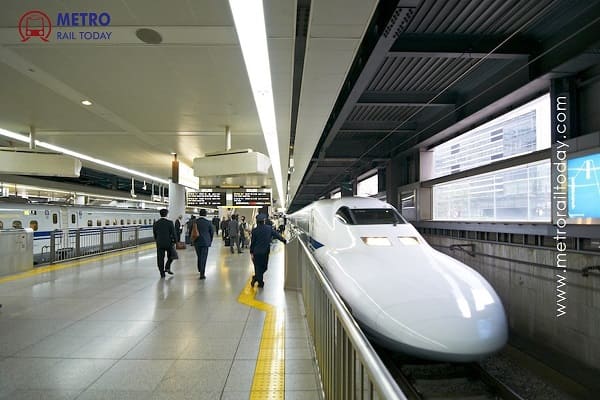
New Delhi, India (Metro Rail Today): The Mumbai-Ahmedabad High-Speed Rail (MAHSR) project has reached a significant milestone with the successful completion of factory acceptance tests (FAT) for its first Tunnel Boring Machine (TBM), designated TBM S-1392. This groundbreaking development signals the commencement of one of India’s most ambitious rail infrastructure projects.
A Milestone in Tunnel Boring Technology
The TBM S-1392, which boasts a diameter of 13.56 meters, is the largest tunnel boring machine ever to be deployed in India. Manufactured by Herrenknecht AG in their Guangzhou facility, this state-of-the-art machine is set to play a crucial role in the construction of the Mumbai-Ahmedabad Bullet Train's underground section. It will be employed by Afcons Infrastructure to excavate the 20.377 km underground Package C-2, spanning from Bandra Kurla Complex Station (Km 0.773) to Shilphata Ramp (Km 21.150). This section of the rail line includes a challenging 3 km "undersea" tunnel beneath Thane Creek.
The TBM is equipped with a mixshield configuration, designed to handle diverse soil conditions and provide efficient excavation. It is scheduled to commence operations in 2025, alongside another TBM, to construct a 16 km single-tube tunnel that will accommodate both the up-line and down-line tracks. Although the National High-Speed Rail Corporation Ltd. (NHSRCL) had originally specified a requirement for at least three TBMs, Afcons Infrastructure plans to start with two machines and potentially order a third if necessary.
Project Details and Current Progress
In June 2023, NHSRCL awarded Afcons Infrastructure a substantial contract valued at ₹6,397.27 crore for the underground Package C-2. The contract stipulates a deadline of 5.17 years (1,888 days) for completion. As part of the project, Afcons is currently constructing three shafts at strategic locations: BKC Station, Vikhroli, and Sawli, with depths of approximately 36 meters, 56 meters, and 39 meters respectively. These shafts will serve as launch and retrieval points for the TBMs. Additionally, an inclined shaft of 42 meters at Ghansoli and a tunnel portal at Shilphata are being developed to facilitate 5 km of NATM (New Austrian Tunneling Method) tunneling work.
Scale and Specifications
TBM S-1392's impressive 13.56-meter diameter makes it the largest tunnel boring machine ever used in India. This dwarfs previous record-holders such as the 12.19-meter diameter CRCHI slurry TBM Mavala, which was used in the Mumbai Coastal Road Project from 2021 to 2023. To put its size in perspective, TBMs used in Indian metro projects typically range from 6.45 meters to 6.68 meters in diameter. Even larger 10-meter diameter machines have been used for water projects in Andhra Pradesh and Madhya Pradesh.
The enormity of TBM S-1392 is evident in images from Herrenknecht’s Guangzhou plant, where an employee is seen walking on the machine’s bottom-right corner, highlighting its massive scale.
Next Steps and Anticipations
Following the completion of factory tests, TBM S-1392 is now preparing for disassembly and shipment. Given the various stages involved, including disassembly, transportation, assembly at the site, and site acceptance tests, tunneling work is expected to commence no earlier than the third quarter of 2025. The second TBM, likely designated S-1393, will probably be introduced around the same time, with nicknames for both machines anticipated to be announced just before tunneling begins.
The introduction of TBM S-1392 marks a pivotal moment in the MAHSR project, reflecting both the scale of the endeavor and the advanced technology being employed. As the project progresses, it will be closely watched by industry experts and stakeholders, setting new benchmarks for high-speed rail infrastructure in India.


MRT Online Desk
Metro Rail Today is an authentic and global news provider for the Rail & Metro industry from and around the world.