

Trending Now
 Washington Metro celebrates its Golden Jubilee—50 years of passenger service
 Two TBMs arrive in Mumbai for undersea tunneling on Mumbai-Ahmedabad Bullet Train Project
 Alstom awarded €915 million Rolling Stock Contract for Belgrade’s First Driverless Metro Line
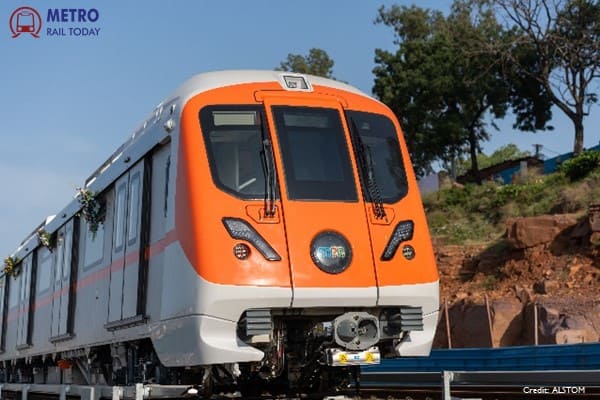 Bhopal Metro begins Signalling works to boost train frequency on Priority Corridor
 Elevated vs. Ground Trains: Which Is Better for Modern Travel?
 CMRS approves commencement of train operations on 11.5 km Indore Metro Extension
 Egypt launches Africa’s longest 56.5-km East Nile Monorail Line in Cairo
 JICA signs ₹6,100 Crore Loan Agreement for Bangalore Metro Phase 3 Orange Line
 MTA launches RFP for procurement of 2,390 Metro Cars to modernize New York Metro
 Rail Chamber launches 2026–27 Membership Drive to strengthen India’s Railway Industry Ecosystem
Bhopal Metro begins Signalling works to boost train frequency on Priority Corridor
MRT Online Desk
Posted on: 2026-03-27 15:11:00
Viewer: 782
Comments: 0
Country: India
City: Bhopal
Bhopal, India (Metro Rail Today): In a significant push to enhance metro operations in Madhya Pradesh’s capital, work on the signalling system has commenced on the Bhopal Metro’s priority corridor between Subhash Nagar and AIIMS. The development marks a crucial step toward improving service frequency and unlocking the full operational potential of the city’s metro network.
The signalling installation is part of a larger ₹800 crore contract covering nearly 30 kilometres of metro infrastructure, aimed at strengthening core systems essential for safe and efficient train operations.
At present, Bhopal Metro services are operating under constrained conditions due to the absence of a fully functional signalling system. Trains are currently running on a single track (down line), forcing metro authorities to manage bi-directional operations on the same track.
This has resulted in low service frequency, with trains running at intervals of nearly 75 minutes, leading to longer waiting times for passengers. The up track between AIIMS and Subhash Nagar is not yet operational, further limiting the network’s capacity and efficiency.
As a result, the metro is currently functioning in a low-frequency mode, impacting ridership and overall commuter convenience.
Commenting on the development, Mrs. Mamta Shah, MD & CEO, Urban Infra Group, said, “Signalling systems are the backbone of any modern metro network. Their timely implementation is critical for achieving optimal train frequency, ensuring passenger safety, and enhancing the overall efficiency of urban transit systems.”
Signalling System: The Core of Metro Operations
The signalling system plays a central role in managing metro operations by controlling train speeds, maintaining safe distances between trains, and enabling automated operations. It is essential for operating trains on multiple tracks simultaneously and ensuring high-frequency services.
Once installed, the system will allow metro trains in Bhopal to operate on both tracks independently, significantly improving operational flexibility and reducing travel delays.
The advanced signalling technology being deployed is expected to be similar to that used in the Delhi Metro, known for its reliability, safety, and high-frequency operations.
Following the completion of signalling works, the project will undergo extensive testing and validation, after which the Commissioner of Metro Rail Safety (CMRS) will be invited to conduct a fresh inspection of the corridor.
Full-fledged operations on both tracks will commence only after successful trials and receipt of safety clearance from the CMRS, ensuring compliance with all technical and operational standards.
Towards Higher Frequency and Better Ridership
The implementation of the signalling system is expected to significantly reduce headways between trains, enabling higher frequency services and improved commuter experience. This, in turn, is likely to boost ridership, which has remained modest due to the current operational limitations.
The Bhopal Metro project is a key component of the city’s urban mobility transformation, aimed at providing a modern, safe, and sustainable public transport system.
With signalling work now underway, the metro is moving closer to achieving full-scale operations with enhanced service levels, marking an important milestone in Bhopal’s journey toward becoming a well-connected and transit-oriented city.


MRT Online Desk
Metro Rail Today is an authentic and global news provider for the Rail & Metro industry from and around the world.