

Trending Now
 MMRDA invites bids for ₹4,882 Crore Rolling Stock & Systems Contract for Mumbai Metro Line 12
 Kolkata Metro completes Aluminium Third Rail Upgrade on Blue Line
 Metroman E. Sreedharan submits new Blueprint for ₹54,000 Crore Kerala High Speed Rail Corridor
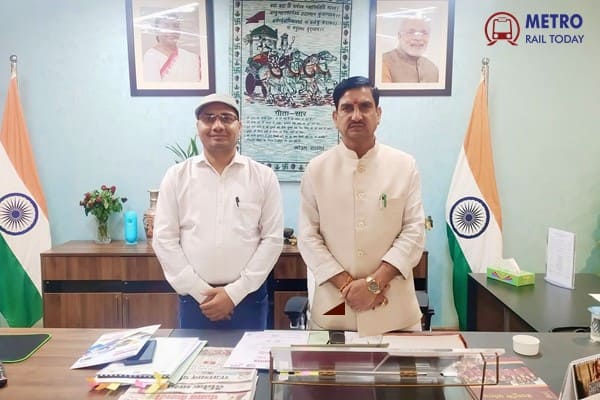 Union Housing & Urban Affairs Minister Tokhan Sahu to inaugurate 6th RailTrans Expo 2026
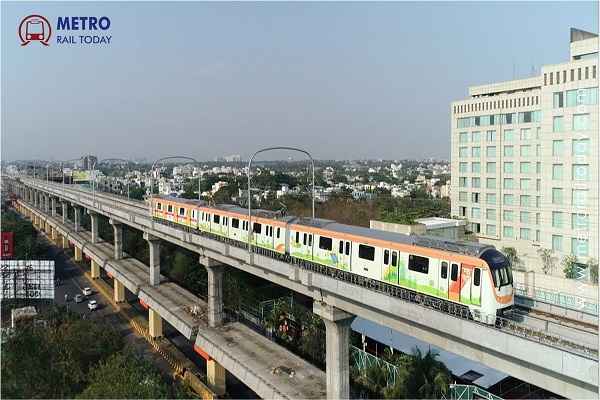 Maha Metro plans Six-Coach Trains ahead of Pune Metro Line 3 Launch
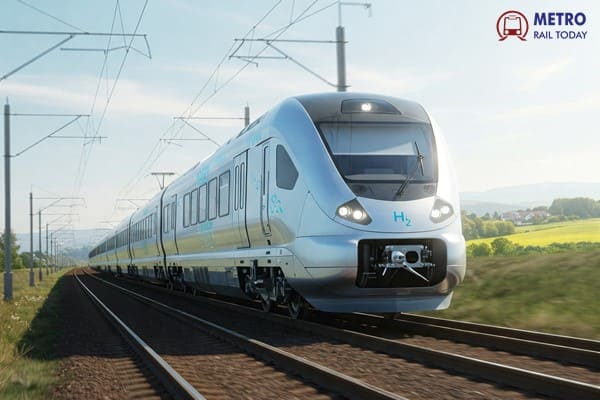 Railway Ministry approves launch of India’s First Hydrogen-Powered Train on Jind–Sonipat Route
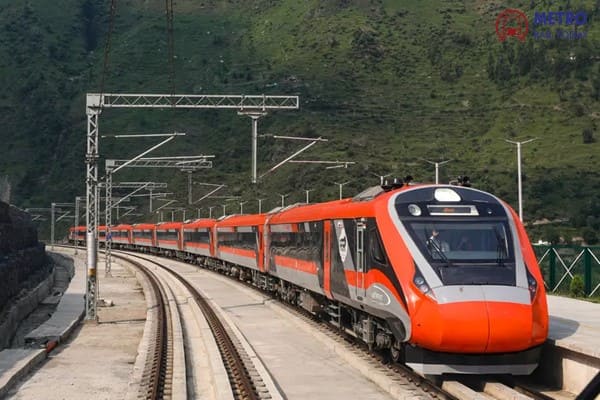 Kineco Global Rail secures Interior Contract for new 100 Vande Bharat Sleeper Trains
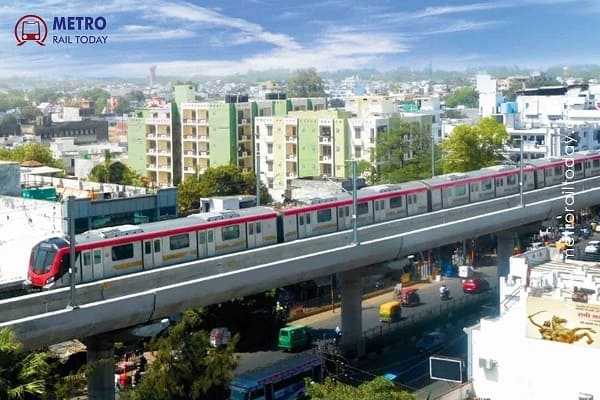 Ranjit Buildcon Wins ₹383.98 Crore Civil Contract for Lucknow Metro Phase 1B
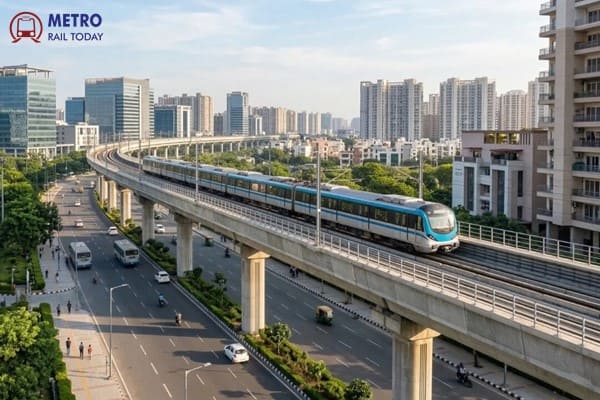 Tamil Nadu seeks Central Support for new Metro Rail Projects in Coimbatore, Hosur and Madurai
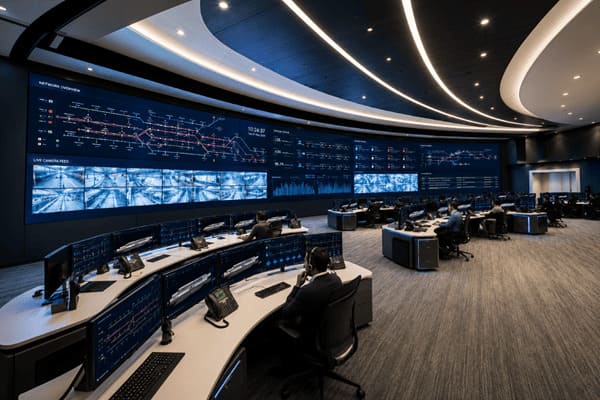 Future Metro Control Centres: ST Engineering Transforms Command Rooms to Intelligent Nerve Centres
CMRS approves commencement of train operations on 11.5 km Indore Metro Extension
MRT Online Desk
Posted on: 2026-03-19 16:30:00
Viewer: 1,632
Comments: 0
Country: India
City: Indore
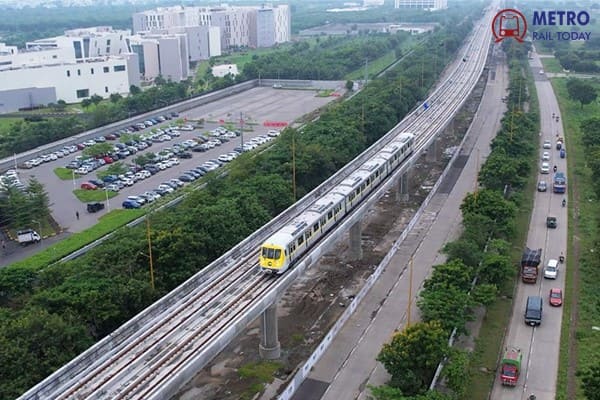
Indore, India (Metro Rail Today): The Indore Metro project has achieved a major milestone as the Commissioner of Metro Rail Safety (CMRS) has granted safety clearance for an 11.5-kilometre extension of the city’s priority metro corridor, enabling operations across 11 stations up to Malviya Nagar Square. The approval marks a significant step toward strengthening sustainable urban mobility infrastructure in Madhya Pradesh’s commercial capital.
With the No Objection Certificate (NOC) now issued by the CMRS, the expanded stretch from Super Corridor-2 to Malviya Nagar is technically ready for operations. Commercial metro services will commence once the Madhya Pradesh state government issues formal operational orders.
Metro Network Expands Across Key City Corridors
The newly approved section will significantly enhance connectivity across major residential and commercial hubs in Indore. Once operational, the metro will pass through Super Corridor-2, Super Corridor-1, MR-10 Road, ISBT, Chandragupta Square, Hiranagar, Bapat Square, Meghdoot Garden, Vijay Nagar Square, and Malviya Nagar.
Currently, metro services in Indore operate between Gandhinagar and Super Corridor-3. With the commissioning of the new section, the total operational network will expand to nearly 17 kilometres, offering faster and more reliable connectivity for thousands of commuters across the rapidly growing city.
Commenting on the development, Mrs. Mamta Shah, MD & CEO, Urban Infra Group, said, “The progress of the Indore Metro reflects the growing commitment of Indian cities to adopt modern and sustainable public transport solutions. Expanding metro connectivity in emerging urban centers will play a vital role in reducing traffic congestion and improving the quality of urban mobility.”
Safety Clearance After Detailed Inspection
The CMRS approval follows a comprehensive inspection conducted between March 15 and March 18, 2026, which evaluated the corridor’s infrastructure, safety systems, operational readiness and compliance with technical standards. The inspection process is considered the final and most critical stage before the commencement of passenger operations.
Officials from Madhya Pradesh Metro Rail Corporation Limited (MPMRCL) confirmed that all safety and operational parameters required for metro operations have been successfully met.
MPMRCL Managing Director S. Krishna Chaitanya stated that the expansion will provide residents of Indore with a safe, reliable and environmentally friendly transport option, while also contributing to reduced congestion and lower pollution levels across the city.
A Key Step in Indore’s Urban Mobility Transformation
The Indore Metro project forms part of a broader strategy to modernize the city’s public transport network and support its transformation into a well-connected metropolitan hub. As the city continues to grow as a major commercial and educational center in central India, efficient mass transit solutions are becoming increasingly critical.
With the CMRS safety clearance now secured, the project is awaiting the final go-ahead from the state government for formal inauguration and commercial launch.
Once operational, the extended corridor will represent a major milestone in Indore’s public transport development, bringing the city closer to its goal of building a modern, efficient and environmentally sustainable urban mobility system.

MRT Online Desk
Metro Rail Today is an authentic and global news provider for the Rail & Metro industry from and around the world.