


Trending Now
 Siemens Bags Order from Titagarh Rail Systems for Pune Metro Extension Trainsets
 Titagarh Rail Systems becomes Corporate Member of Chamber of Railway Industries (Rail Chamber)
 World Bank approves ₹1,400 crore Civil Tender for Gurugram Metro Phase 2
 Bi-RIDE invites ₹200 crore Tender for Soladevanahalli Depot of Bengaluru Suburban Rail Project
 GHV India awarded ₹107.79 crore Civil Contract for Lucknow Metro East-West Corridor
 Pune Metro Line 3 set to launch First 12-km Section on 15 July 2026
 DMRC gets approval to Fell or Transplant 364 Trees for Central Vista Metro Corridor under Phase IV
 ₹4.5 Lakh crore Metro Rail Investment reaches less than 5% of Urban Population in India
 West Bengal plans to launch Water Metro Systems in Kolkata
- Titagarh Rail Systems targets full Indigenous Aluminium Coach Manufacturing by FY2027
Tamil Nadu seeks Central Support for new Metro Rail Projects in Coimbatore, Hosur and Madurai
MRT Online Desk
Posted on: 2026-05-29 16:20:00
Viewer: 2,059
Comments: 0
Country: India
City: New Delhi
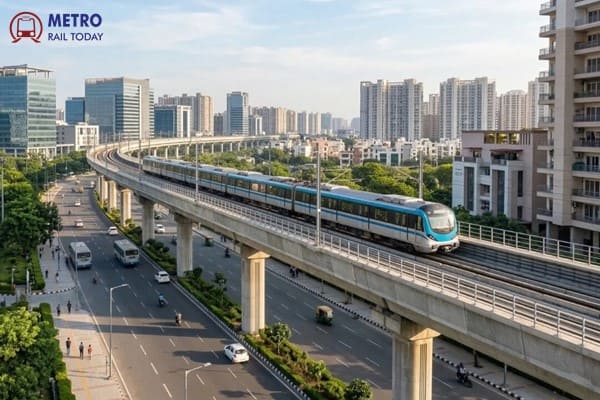
New Delhi, India (Metro Rail Today): Tamil Nadu Chief Minister C. Joseph Vijay met Union Finance Minister Nirmala Sitharaman in New Delhi on Wednesday and sought financial assistance from the Central Government for several major infrastructure initiatives across the state, including proposed Metro Rail projects in Coimbatore, Hosur and Madurai.
During the meeting, the Chief Minister emphasized the need for enhanced budgetary support for Tamil Nadu’s development, particularly in sectors such as metro rail, ports, highways, railway infrastructure and industrial corridors. He highlighted that continued investments in large-scale infrastructure are essential to sustain the state’s economic growth, industrial expansion and urban development.
According to sources, Vijay stressed the importance of introducing Metro Rail connectivity in Coimbatore, Hosur and Madurai, noting that all three cities have emerged as important economic, industrial and commercial centres in Tamil Nadu. He requested the Centre to allocate the necessary funds for the development of these metro systems to support rising urban mobility demands and improve public transportation infrastructure.
Among the proposed projects, the Coimbatore Metro is currently one of the most advanced in terms of planning. The Phase-I project, being implemented by Chennai Metro Rail Limited (CMRL), is estimated to cost around ₹10,740 crore and will comprise two corridors spanning approximately 34.8 km with 32 stations. The project is presently awaiting final approval from the Union Government. Once implemented, the metro network is expected to significantly improve urban mobility in Coimbatore, which continues to witness rapid industrial, commercial and residential growth.
The Chief Minister also underlined the strategic importance of Hosur, which has evolved into a major industrial and manufacturing hub due to its proximity to Bengaluru. Improved mass transit connectivity in the region is expected to support economic integration, workforce mobility and future urban expansion.
Meanwhile, the proposed Madurai Metro project continues to face challenges at the approval stage. The Detailed Project Report (DPR), prepared by CMRL, was earlier returned by the Union Ministry of Housing and Urban Affairs, which cited concerns that Madurai’s population and projected ridership levels do not currently meet the eligibility requirements under the 2017 Metro Rail Policy. The Centre had suggested a Bus Rapid Transit System (BRTS) as an alternative solution. However, the Tamil Nadu government continues to push for a metro-based transit system for Madurai considering the city’s growing urban footprint, tourism importance and increasing transportation needs.
Commenting on the development, Mrs. Mamta Shah, MD & CEO, Urban Infra Group, said:
“Expanding metro connectivity to emerging industrial and economic centres like Coimbatore, Hosur and Madurai is essential for supporting balanced urban growth and future mobility needs. As Indian cities continue to expand rapidly, sustainable and integrated public transportation systems will play a crucial role in enhancing economic productivity and improving quality of life.”
The renewed push for metro rail projects reflects Tamil Nadu’s broader vision of expanding sustainable urban transportation beyond Chennai and strengthening connectivity across emerging economic centres. Industry experts believe that metro systems in cities such as Coimbatore, Hosur and Madurai could play a major role in reducing congestion, improving commuter efficiency and supporting long-term regional development.

MRT Online Desk
Metro Rail Today is an authentic and global news provider for the Rail & Metro industry from and around the world.