

Trending Now
 Karnataka proposes 270-km RRTS Network linking Bengaluru with Tumakuru, Mysuru and KGF
 Alstom and Vingroup sign MoU to supply up to 200 Metro Trains for Hanoi Urban Rail Projects
 Afcons Infrastructure wins ₹1,383 crore Civil Contract for Lucknow Metro Phase 1B Corridor
 GMRL issues ₹1,662 crore Civil Tender for Sector 9–Cyber City Gurugram Metro Rail Corridor
 Madrid unveils €1.57 billion Metro Rail Expansion Programme with 27.8 km of New Corridors
 Global Tender launched for Project Management Consultancy for Abu Dhabi Tram Line 4
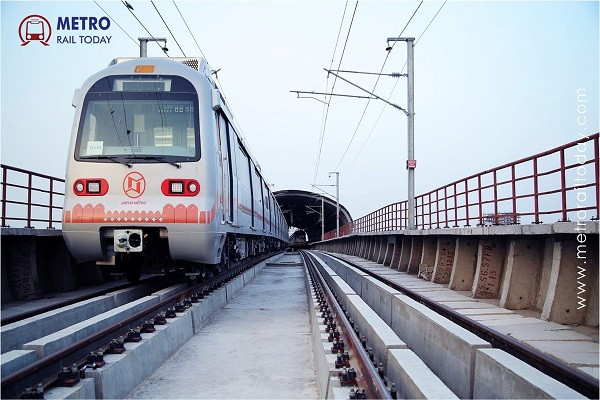 NV Dynamics awarded Noise and Vibration Study contract for Jaipur Metro Phase 2 Project
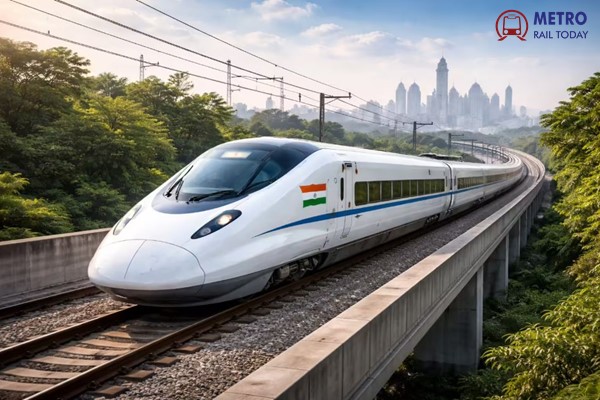 Two global consortia bid for India’s 350 kmph High-Speed Rail Design consultancy contract
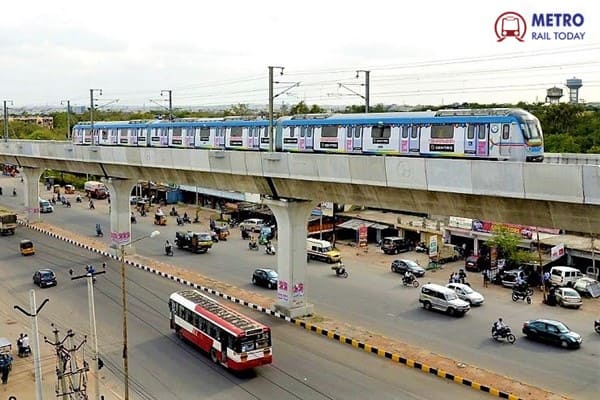 Larsen & Toubro (L&T) extends Hyderabad Metro stake sale timeline to 31 December 2026
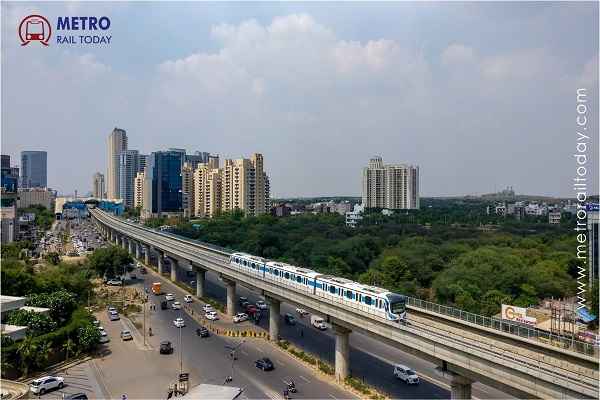 Haryana Govt approves ₹1,662 crore construction tender for Gurugram Metro Phase 2
Egypt launches Africa’s longest 56.5-km East Nile Monorail Line in Cairo
MRT Online Desk
Posted on: 2026-03-20 16:20:00
Viewer: 2,832
Comments: 0
Country: Egypt
City: Cairo
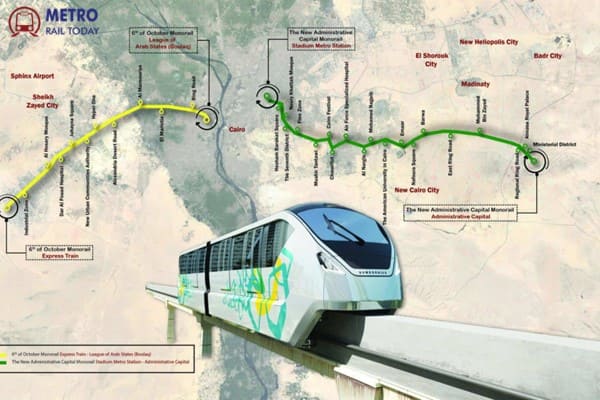
Cairo, Egypt (Metro Rail Today): Egypt has taken a major step toward modernizing its urban transport network with the inauguration of the 56.5-kilometre East Nile Monorail line in Cairo, now the longest single monorail line in Africa. The project was officially inaugurated on March 20, 2026, by President Abdel Fattah el-Sisi, marking a milestone in the country’s efforts to deploy high-capacity and environmentally sustainable transit systems.
The driverless monorail connects Nasr City in eastern Cairo with the New Administrative Capital, a rapidly developing government and business district designed to reduce pressure on the historic city center. The elevated line features 22 stations and is expected to significantly ease congestion along one of the most densely populated corridors in Africa.
Following the inauguration ceremony, President Sisi travelled on the system from Al-Fattah Al-Alim Mosque station to the Financial District, accompanied by families of fallen Egyptian soldiers, symbolizing the project’s national significance.
High-Capacity Automated Transit System
The new system operates as a fully automated driverless monorail, capable of carrying up to 500,000 passengers per day once demand reaches full capacity. The network uses rubber-tyred trains running on elevated guideways, which help minimize disruption to existing road infrastructure while reducing noise and energy consumption.
Egypt’s Transport Minister Kamel al-Wazir described the project as a “civilizational leap,” highlighting its role in promoting environmentally friendly transport solutions that reduce fuel consumption and road congestion.
The monorail system is designed to consume approximately 30 percent less energy than conventional electric rail systems, supporting Egypt’s broader sustainability and urban mobility goals.
Commenting on the development, Mrs. Mamta Shah, MD & CEO, Urban Infra Group, said, “Large-scale automated transit systems like Cairo’s new monorail demonstrate how modern mobility technologies can reshape urban transportation in rapidly growing megacities. Driverless systems with high passenger capacity are becoming increasingly important for sustainable urban development.”
Part of Africa’s Largest Monorail Network
While the East Nile route holds the record as Africa’s longest single monorail line, it is part of the broader Cairo Monorail system, which also includes another corridor connecting 6th of October City.
Together, the two lines will create a 96-kilometre monorail network, making it the largest monorail system in Africa once fully operational.
The system has been developed by a consortium comprising Alstom, Orascom Construction, and Arab Contractors. The project includes the supply of 40 four-car Innovia 300 trains, capable of reaching speeds of up to 80 km/h.
These trains are equipped with extruded aluminium car bodies, which are lightweight, corrosion-resistant and fully recyclable. They are also designed to handle tight curves with a radius of 46 metres and gradients of up to 6‰, making them well suited for dense urban environments.
The rolling stock has been manufactured at Alstom’s facility in Derby, United Kingdom, and the system uses the company’s Cityflo 650 train control technology, operating at Grade of Automation 4 (GoA4)—the highest level of driverless automation.
Advanced Passenger Facilities and Integration
The monorail features platform screen doors, LED passenger information displays, and accessibility features, ensuring safe and comfortable travel for commuters.
Trains are currently planned to operate at three-minute intervals, with the potential to reduce headways to 90 seconds as ridership increases.
The line is also integrated with Cairo Metro Line 3 and the Light Rail Transit (LRT) system, with future connections planned to Metro Lines 4 and 6, creating a broader multimodal urban transport network.
Long-Term Infrastructure Investment
The project originates from a €4.1 billion turnkey contract signed in 2019, initially led by Bombardier Transportation, which was later acquired by Alstom in 2021. The agreement includes the construction of two monorail lines, the delivery of 70 trains, and a 30-year maintenance contract.
Although both lines were originally scheduled to open in 2023, the timeline was affected by land acquisition issues, technical challenges, and global supply chain disruptions.
With the East Nile corridor now operational, Cairo’s monorail is expected to play a pivotal role in connecting emerging urban districts, supporting economic development, and reducing traffic congestion across the Egyptian capital.

MRT Online Desk
Metro Rail Today is an authentic and global news provider for the Rail & Metro industry from and around the world.