

Trending Now
 CLW sets Global Benchmark with record 800 Electric Locomotives production in FY 2025–26
 NMRC invites Applications for Key Executive Positions for Noida Metro Rail Project
 Central Govt rejects revised DPR of 7.5 km Noida-Greater Noida Metro Rail Extension Project
 Revised DPR of Prayagraj Metro focuses on seamless Rail-Air connectivity
 DMRC floats Tender for Central Vista Depot Design in Delhi Metro Phase V Expansion
 MMRDA seeks ₹14,100 Crore Loan for two upcoming Mumbai Metro Corridors
 Jupiter Wagons Eyes ₹20,000-Crore Mumbai Suburban Mega Rolling Stock Tender
 Mumbai Metro Chief Ashwini Bhide appointed as First Woman BMC Commissioner
 TBM ‘Parvati’ completes Underground Tunnelling on Kanpur Metro Phase 1 Project
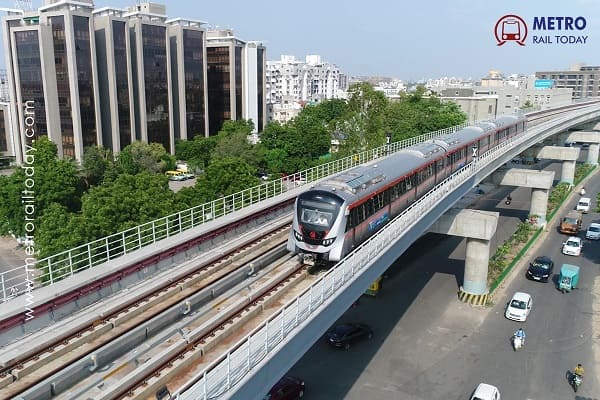 Surat Metro begins First Trial Run on 8.5 km Diamond Corridor between Dream City and Althan Tenement
High-Level Task Force constituted to establish Unified Metropolitan Transport Authority in Delhi
MRT Online Desk
Posted on: 2026-02-06 16:55:00
Viewer: 895
Comments: 0
Country: India
City: New Delhi
New Delhi, India (Metro Rail Today): In a major institutional reform aimed at transforming urban mobility in the national capital, the Delhi government has initiated the drafting of a comprehensive legislation to establish the Delhi Unified Metropolitan Transport Authority (DUMTA) along with a dedicated Delhi Urban Transport Fund (DUTF).
The proposed Bill seeks to rationalise, integrate and coordinate Delhi’s fragmented transport ecosystem under a single, cohesive planning and governance framework. The move marks a significant milestone in the government’s vision to create a modern, efficient, citizen-centric and environmentally sustainable urban transport system.
High-Level Task Force Constituted
To fast-track the legislative process, Chief Minister Rekha Gupta has constituted a high-level task force chaired by the Chief Secretary, mandated to prepare and submit the draft Bill at the earliest. The decision reflects the government’s urgency in addressing long-standing structural challenges in Delhi’s transport planning and delivery.
The task force comprises senior officials from key departments, including:
-
Transport
-
Urban Development
-
Finance
-
Planning
-
Public Works
-
Delhi Police
In addition, representatives from major transport and civic agencies have been included, such as:
-
Delhi Development Authority (DDA)
-
Municipal Corporation of Delhi (MCD)
-
Delhi Metro Rail Corporation (DMRC)
-
Delhi Transport Corporation (DTC)
-
National Capital Region Transport Corporation (NCRTC)
-
Indian Railways
Addressing Fragmentation in Urban Mobility
Delhi’s transport system currently operates through multiple agencies with overlapping jurisdictions, often resulting in disjointed planning, duplication of investments, and sub-optimal passenger experience. Urban planners and transport experts have long advocated for a unified authority capable of synchronising policy, infrastructure investment, operations, and service delivery across modes.
Recognising the pressures of rapid urbanisation, population growth and rising vehicular congestion, the Delhi government has opted for a systemic, long-term solution rather than incremental or piecemeal interventions.
The Chief Minister has also suggested that renowned urban transport experts may be co-opted into the task force to ensure that global best practices are aligned with local urban realities.
Vision for Integrated Mobility
Highlighting the intent behind the reform, CM Rekha Gupta stated that DUMTA would place metro rail, buses, regional rail and other transport modes under a single planning jurisdiction, ensuring better coordination, efficiency and citizen-focused mobility outcomes.
Commenting on the development, Mrs. Mamta Shah, MD & CEO, Urban Infra Group, said:
“The move to establish DUMTA is a long-overdue and transformative reform for Delhi’s urban mobility landscape. A unified transport authority backed by a dedicated urban transport fund can unlock integrated planning, seamless multimodal connectivity and more efficient capital deployment. Institutional alignment is as critical as infrastructure investment, and this initiative has the potential to set a national benchmark for metropolitan transport governance.”
Way Forward
Once enacted, the DUMTA legislation and the Delhi Urban Transport Fund are expected to provide institutional clarity, financial sustainability and long-term planning capability, enabling Delhi to transition toward a more resilient, low-carbon and commuter-friendly transport system.
The proposed framework could also serve as a model for other Indian megacities grappling with fragmented transport governance and rising mobility demands.

MRT Online Desk
Metro Rail Today is an authentic and global news provider for the Rail & Metro industry from and around the world.