

Trending Now
 TBM Servarayan achieves Tunnel Breakthrough on Corridor 3 of Chennai Metro Phase 2
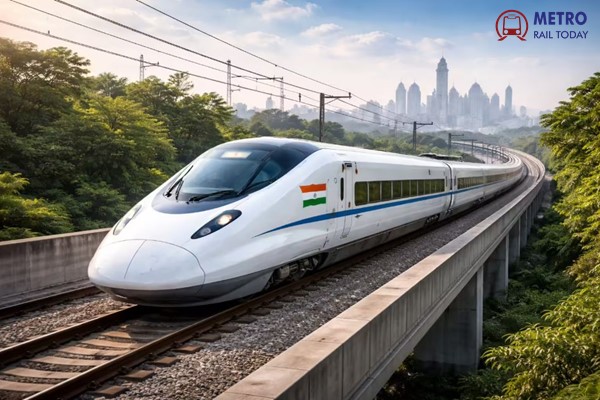 India targets 350 kmph Indigenous Bullet Train to accelerate High-Speed Rail ambitions
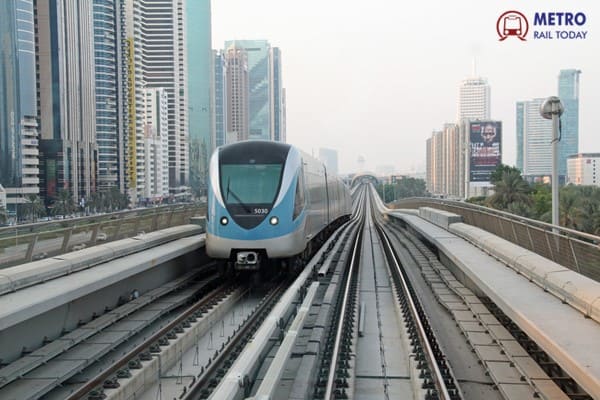 RTA invites bids for $9.2 billion Dubai Metro's Gold Line Expansion Project
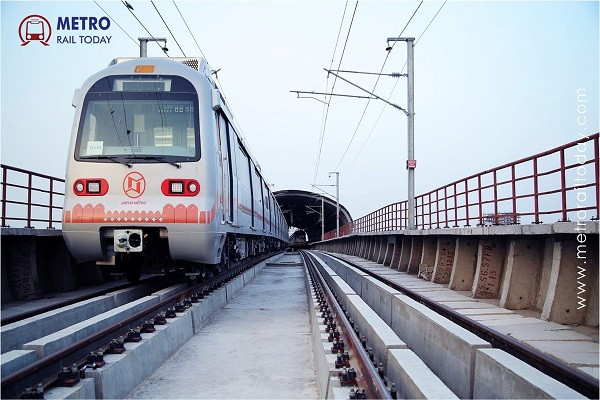 ICT–RINA JV awarded Design Consultancy Contract for Jaipur Metro Phase 2
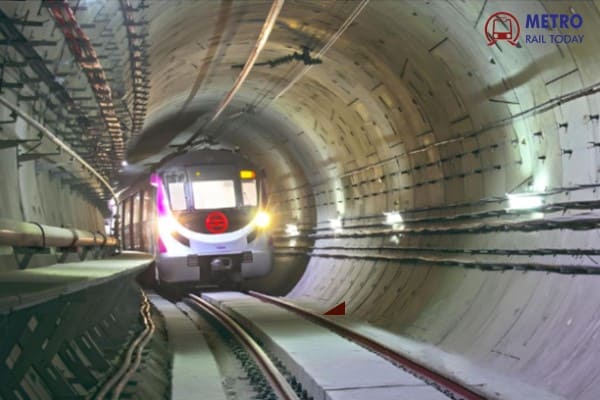 J. Kumar Infraprojects achieves TBM Breakthrough at Mahipalpur for Delhi Metro Phase IV
- DPR submitted for 671 km Hyderabad–Pune–Mumbai High-Speed Rail Corridor
 Former Railway Board Member Anil Kumar Khandelwal Joins Advisory Board of Rail Chamber
 Govt proposes 270-km Orbital Rail Corridor to transform Regional connectivity in Delhi-NCR
 Tamil Nadu approves ₹9,335 Crore Chennai Airport–Kilambakkam Metro Corridor
 NCRTC to appoint General Consultant for Delhi–Panipat–Karnal Namo Bharat RRTS Corridor
Siemens–Stadler Consortium bags €3 Billion Contract for World’s largest Open ATO Rail System
MRT Online Desk
Posted on: 2026-02-05 16:30:00
Viewer: 1,517
Comments: 0
Country: Germany
City: Berlin
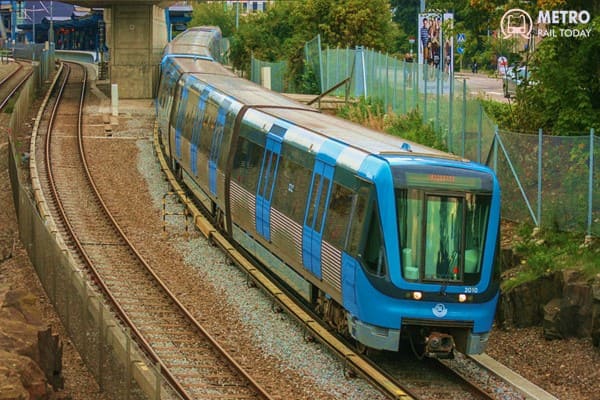
Berlin, Germany (Metro Rail Today): The Danish State Railways (DSB) has signed a landmark framework agreement with a consortium led by Siemens Mobility and Stadler for the supply of 226 fully automated four-car S-trainsets, with an option for up to 100 additional units. Valued at around €3 billion, the order will create the world’s largest open railway system with Automated Train Operation (ATO).
The new fleet will serve Copenhagen’s S-Bane suburban rail network and represents the largest investment in the 90-year history of the S-Bane. The first trains are scheduled to enter passenger service from 2032, with phased deliveries continuing until 2040.
As consortium leader, Siemens Mobility will supply key electrical and digital systems, including propulsion and braking systems, onboard power supply, vehicle and train control systems, passenger information systems, and bogies. Siemens will also deliver its Air-free Brake System, designed to reduce weight and cut CO₂ emissions by over 50 percent.
Stadler will provide the carbodies, interiors, seating, air-conditioning systems, doors, and couplings, and will handle the final assembly of the trains. The vehicles will feature an iconic yet familiar S-Bane design, combining continuity with modern aesthetics and advanced automation readiness.
Designed for Capacity, Comfort and Automation
The 56-metre-long trains will offer 120 fixed seats, 36 folding seats, and space for around 300 standing passengers, ensuring high capacity for peak-hour operations. Barrier-free access, wide aisles, ground-level entry with sliding steps, and flexible multi-purpose areas for bicycles, prams, and wheelchairs will significantly enhance passenger convenience.
Large front and side windows, modern passenger information systems, low noise levels, and smooth ride characteristics aim to deliver a premium suburban travel experience comparable to long-distance trains.
Boosting Capacity on Copenhagen’s S-Bane
With the transition to fully automated GoA4 operations, DSB plans to increase service frequency substantially. During peak hours, trains will run at intervals as short as 7.5 minutes per line, and 1.5 minutes in central Copenhagen, translating to up to 35 percent more departures on several routes.
The upgrade is expected to accommodate around 10 million additional passenger journeys annually, as ridership continues to grow beyond the 111 million passengers recorded in 2025.
Commenting on the investment, Flemming Jensen, CEO, DSB, said:
“This is the largest investment in the 90-year history of the S-Bane. Increased frequency and capacity will ensure that the S-Bane keeps up with growing demand and maintains its role as the backbone of Copenhagen’s transport network.”
Michael Peter, CEO of Siemens Mobility, added:
“We’re not just delivering trains, but intelligent mobility solutions. This project will create the world’s largest open railway system with automated train operation, making Copenhagen’s public transport more efficient and sustainable.”
Long-Term Service and Digital Maintenance
The contract also includes a 30-year Technical Support & Spares Supply Agreement (TSSSA+), with options for two additional five-year extensions. The agreement covers spare parts supply, maintenance support, cybersecurity services, and advanced digital tools such as Railigent X, CORMAP, and FRACAS/RAM platforms to maximise fleet availability and reliability.
While Siemens and Stadler retain overall maintenance responsibility, DSB personnel will carry out day-to-day maintenance activities, supported by advanced workshop equipment and digital diagnostics.
Mrs. Mamta Shah, MD & CEO, Urban Infra Group, described the project as a benchmark for global urban rail systems:
“The Copenhagen S-Bane transformation sets a new global reference for fully automated, high-capacity suburban rail networks. Large-scale ATO deployment, combined with long-term digital maintenance strategies, demonstrates how cities can future-proof public transport while enhancing safety, sustainability, and passenger experience. Such projects offer valuable lessons for rapidly urbanising regions worldwide.”
Full Automation by 2033
In parallel, Siemens Mobility is upgrading the entire 170-kilometre S-Bane network with Trainguard MT CBTC technology, enabling fully driverless GoA4 operations. Automation will be introduced in phases, with initial automated services planned for 2030 and full network automation targeted by 2033.
Once complete, the project will significantly boost network capacity, reliability, punctuality, and long-term resilience—cementing Copenhagen’s position as a global leader in smart, sustainable urban mobility.

MRT Online Desk
Metro Rail Today is an authentic and global news provider for the Rail & Metro industry from and around the world.