

Trending Now
 Japanese Delegation visits KRIDE to explore Bengaluru Suburban Rail Project opportunities
 GMRC issues ₹879 crore Civil Tender for Airport Extension under Ahmedabad Metro Phase 2A
 Global Mobility Leaders Alstom and Siemens become Corporate Member of Chamber of Railway Industries
 L&T-MHI JV wins contract for Automated People Mover at Dubai’s Al Maktoum International Airport
 Delhi Metro Rail Network to expand to 695 km by 2047, Six new RRTS Corridors planned
 HÜBNER at InnoTrans 2026: Global rail expertise and local capability for India’s Next-Gen Mobility
 Australia shortlists three firms/consortia for Sydney–Newcastle High Speed Rail Project
 MRVC set to procure 238 AC Vande Metro Trainsets worth ₹19,293 crore from Indian Railways
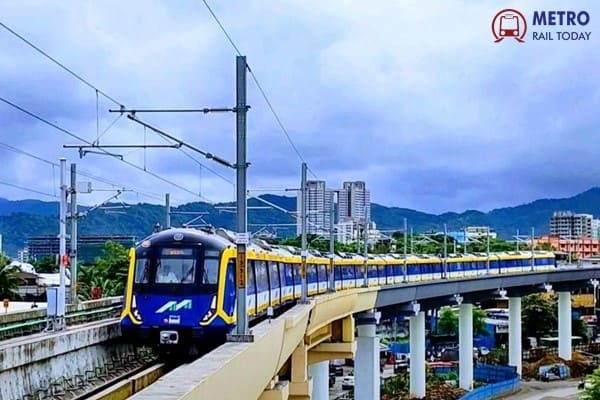 Maharashtra approves ₹17,725 crore Mumbai Metro Line 13 linking Mira-Bhayandar with Vasai-Virar
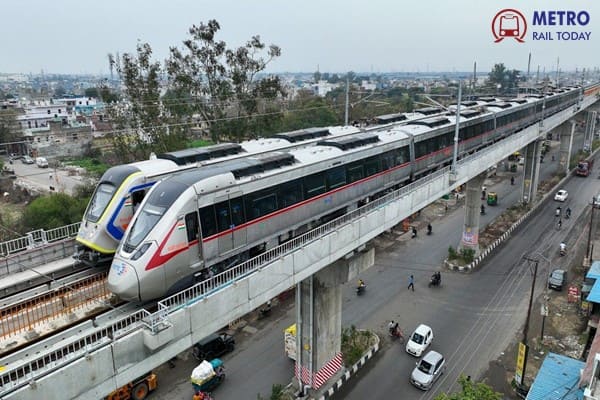 Gujarat issues three tenders for 48.38-km Metro-RRTS Hybrid corridors under Ahmedabad Metro Phase 3
Railway Minister reviews progress of Ahmedabad–Dholera Semi High-Speed Rail Project
MRT Online Desk
Posted on: 2026-03-01 16:50:00
Viewer: 1,761
Comments: 0
Country: India
City: New Delhi
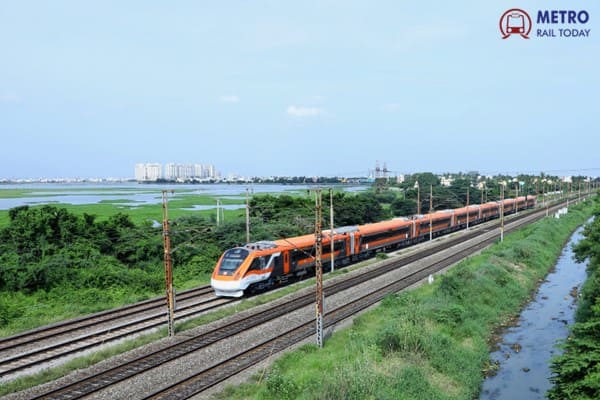
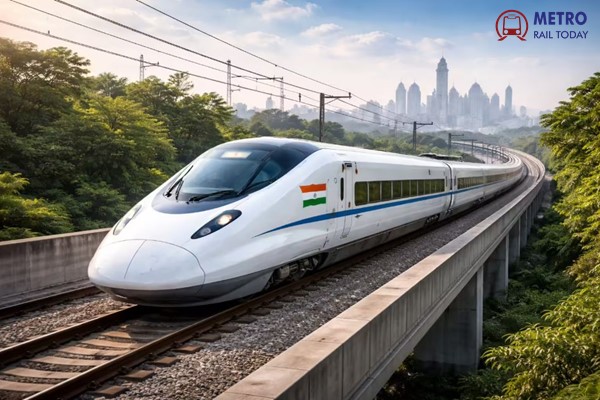
New Delhi, India (Metro Rail Today): Railway Minister Ashwini Vaishnaw on Sunday reviewed the progress of Western Railway’s ambitious Ahmedabad–Dholera Semi High-Speed Rail Connectivity Project during his visit to Ahmedabad, officials said.
During the review, the Minister assessed developments on the Sarkhej–Dholera doubling section as well as the proposed 134-km spur line connecting the National Maritime Heritage Complex and Dholera Airport. Chief Administrative Officer Pradeep Gupta of Western Railway briefed him on the status of construction and implementation milestones.
The Ahmedabad–Dholera Semi High-Speed Rail Connectivity Project is being positioned as a prototype for future semi high-speed rail systems across India. The corridor aims to provide fast and efficient connectivity between Ahmedabad and the Dholera Special Investment Region (SIR), a key industrial and manufacturing hub under development in Gujarat.
According to officials, the project will be the world’s first semi high-speed rail system developed on a 1,676 mm broad gauge section between Sarkhej and Dholera, with a maximum potential speed of 220 kmph. It will also be the first semi high-speed rail corridor in India to feature a mixed traffic system, allowing freight trains operating at up to 100 kmph and passenger trains at speeds of up to 220 kmph to run on the same track infrastructure.
The project is expected to play a strategic role in accelerating the development of Dholera as a major centre for semiconductor manufacturing and solar energy component production. Gujarat is among the leading states in installed solar energy capacity, and with further expansion planned, demand for solar components is projected to grow significantly. The rail link is designed to provide industries with seamless connectivity to domestic markets and export gateways.
Officials stated that the corridor will also facilitate easier movement of skilled manpower between Ahmedabad and Dholera, supporting the rapid industrialisation of the emerging smart city. The integration of logistics zones and multimodal infrastructure is expected to enhance supply chain efficiency by linking industries with suppliers and markets.
With planned connectivity to the four-lane access-controlled expressway, the Western Dedicated Freight Corridor and major ports such as Jawaharlal Nehru Port, the project aims to ensure faster access to both domestic distribution networks and international export routes.
Commenting on the development, Mrs. Mamta Shah, MD & CEO, Urban Infra Group, said, “The Ahmedabad–Dholera Semi High-Speed Rail project represents a forward-looking model for integrating passenger and freight mobility on a shared high-performance corridor. By combining industrial connectivity with advanced rail technology, it can significantly enhance logistics competitiveness and support the growth of next-generation manufacturing clusters.”
The project is expected to serve as a template for similar semi high-speed corridors across the country, aligning with India’s broader objective of modernising rail infrastructure and strengthening multimodal logistics networks.


MRT Online Desk
Metro Rail Today is an authentic and global news provider for the Rail & Metro industry from and around the world.