


Trending Now
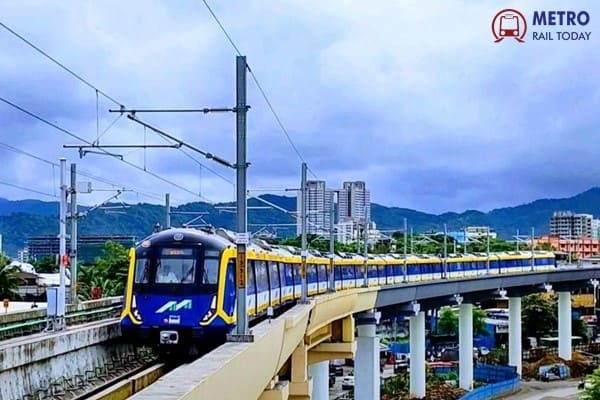 Maharashtra approves ₹17,725 crore Mumbai Metro Line 13 linking Mira-Bhayandar with Vasai-Virar
 Gujarat issues three tenders for 48.38-km Metro-RRTS Hybrid corridors under Ahmedabad Metro Phase 3
 Alstom’s Madhepura Locomotive Project Generates ₹60,000 Crore Economic Output: Study Report
 Kolkata Metro to expand around 130 km urban rail network in upcoming years
 Indian Railways to begin production of Fifty 24-Car Vande Bharat Sleeper Trainsets
 Govt of India allocates ₹628.32 crore additional fund for Patna Metro Rail Project
 Indian parliamentary panel seeks push for indigenous Bullet Train technology & global best practices
 CAG flags major planning and financial irregularities in Bangalore Metro Phase 1 & 2
 Delhi's Indira Gandhi International Airport to build India’s First Driverless Air Train
 DMRC invites bids for ₹114.24 Crore AFC System Tender for Patna Metro Stations
Maharashtra approves ₹17,725 crore Mumbai Metro Line 13 linking Mira-Bhayandar with Vasai-Virar
MRT Online Desk
Posted on: 2026-08-17 17:40:00
Viewer: 68
Comments: 0
Country: India
City: Mumbai
Mumbai, India (Rail & Metro Today): The Maharashtra government has approved transport infrastructure projects worth ₹28,227 crore for the Mumbai Metropolitan Region (MMR) and Pune, including the ₹17,724.99-crore Metro 13 corridor connecting Mira-Bhayandar with Vasai-Virar.
The approvals were granted by the Cabinet Infrastructure Committee, chaired by Maharashtra Chief Minister Devendra Fadnavis. The decisions are expected to give a major boost to regional connectivity and public transport infrastructure across the state.
Metro 13 to connect Mira-Bhayandar and Vasai-Virar
To be implemented by the Mumbai Metropolitan Region Development Authority (MMRDA), Metro 13 will establish a direct mass rapid transit connection between the rapidly developing Mira-Bhayandar and Vasai-Virar regions across Thane and Palghar districts.
The proposed corridor will be 25.03 km long, comprising 21.78 km of elevated alignment and 3.25 km underground. It will have 16 stations, including 13 elevated and three underground stations.
The corridor will connect important urban centres including Mira Road, Vasai, Naigaon, Nalasopara and Virar, improving cross-regional connectivity and providing an alternative to road and suburban rail travel.
Integrated Metro and road bridge across Vasai Creek
One of the major engineering components of Metro 13 will be a 4.92-km integrated six-lane road and Metro bridge across Vasai Creek, connecting Panju Island.
The project will also include a Metro depot at Chikhal Dongri, supporting the operation and maintenance of the corridor.
Metro 13 is planned to integrate with Mumbai's existing and upcoming transport infrastructure. Interchange facilities will be provided at suburban railway stations at Naigaon, Nalasopara and Virar, while a connection with Metro Line 9 is proposed at Netaji Subhash Chandra Bose Stadium.
Bus connectivity is also planned at all stations to strengthen first- and last-mile connectivity.
Metro 13 expected to carry 4.49 lakh passengers daily
According to the Maharashtra government, the corridor is expected to record a daily ridership of approximately 4.49 lakh passengers by 2031.
The project is also expected to reduce travel time by around 50% compared with road-based travel, providing faster connectivity between the growing urban centres of the MMR.
The corridor will require approximately 24.84 hectares of land and has been targeted for completion within five years.
Chief Minister Devendra Fadnavis has directed officials to complete land acquisition and approach roads within six months to ensure timely progress of the project.
Pune ring road extension also approved
Alongside Metro 13, the state government approved a ₹10,502.36-crore eastern extension of the Pune ring road.
The project is aimed at diverting inter-state and inter-city traffic away from Pune's urban areas, helping reduce congestion and improving regional road connectivity.
Together, the two major projects represent an investment of more than ₹28,227 crore in strategic transport infrastructure for the Mumbai Metropolitan Region and Pune.
The approval of Metro 13 is particularly significant as it will create a new cross-regional public transport corridor between Mira-Bhayandar and Vasai-Virar, while integrating Metro, suburban rail and bus services into a broader multimodal mobility network.

MRT Online Desk
Metro Rail Today is an authentic and global news provider for the Rail & Metro industry from and around the world.