


Trending Now
 Pune Metro Line 3 targets September-end opening with 17 stations on Hinjawadi–Shivajinagar corridor
 Jupiter Wagons Limited forms New Subsidiary to expand Railway Mobility Business
 Five major firms bid for ₹1,878 crore Underground Section of Lucknow Metro Phase 1B Project
 DMRC focuses on Technology, Financial Sustainability and Global Expansion: Dr. Vikas Kumar
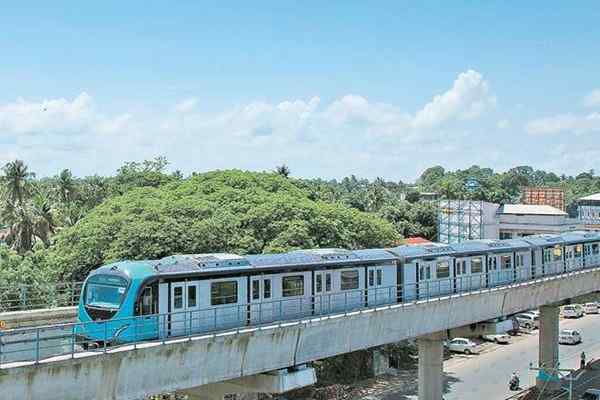 DMRC seeks opportunity to take up operation and maintenance of the Kochi Metro Rail network
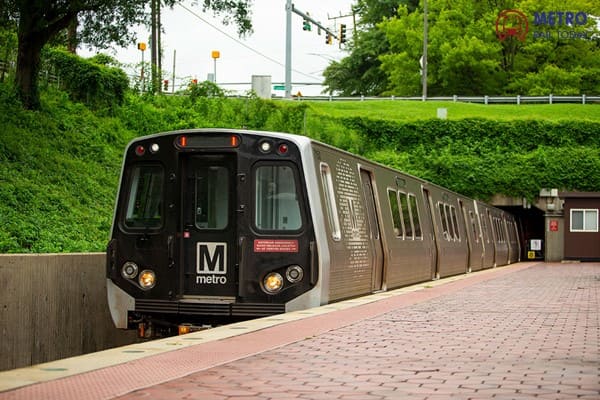 New Zealand opens country's first Underground City Rail Link in Auckland
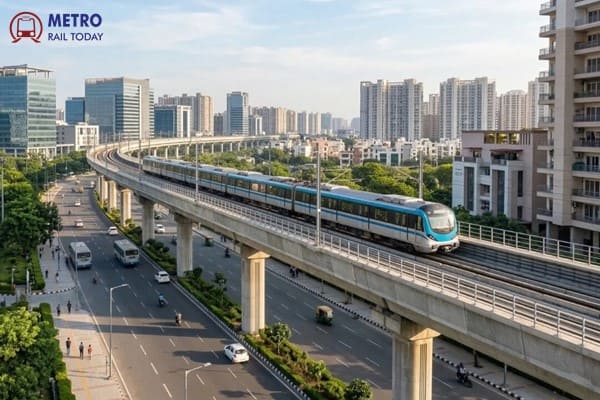 Ireland approves construction of €15.7 billion Dublin MetroLink, tender to be launched soon
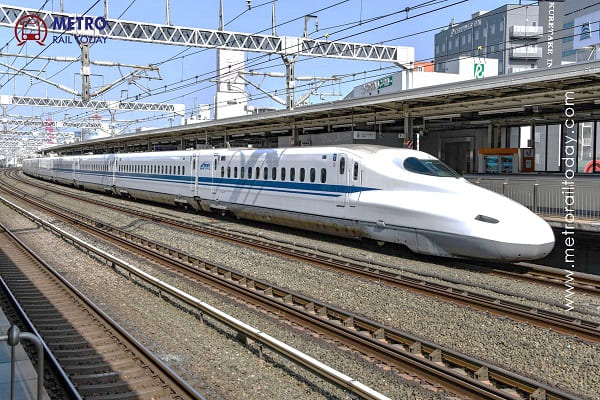 India's Mumbai-Ahmedabad Bullet Train project completes construction of over 365 km Viaduct
 Metro Rail Expansion in India: 1,155 Km Network Across 26 Cities and the Road Ahead
 Mumbai BKC Pod Taxi project faces Architects’ concerns over cost, capacity and environment
National Planning Group reviews key Rail & Metro projects under PM GatiShakti
MRT Online Desk
Posted on: 2026-02-27 17:00:00
Viewer: 1,500
Comments: 0
Country: India
City: New Delhi
New Delhi, India (Metro Rail Today): The Department for Promotion of Industry and Internal Trade (DPIIT) convened the 109th meeting of the Network Planning Group (NPG) to evaluate major infrastructure proposals under the PM GatiShakti National Master Plan. The session focused on strengthening national connectivity through integrated, multimodal planning aimed at improving freight efficiency and passenger mobility.
Senior officials reviewed four significant projects submitted by different ministries. These included two railway expansion proposals from the Ministry of Railways, a metro extension project from the Ministry of Housing and Urban Affairs, and an airport development proposal from the Ministry of Civil Aviation. Each project was assessed for alignment with GatiShakti principles, including seamless logistics integration, last-mile connectivity, and coordinated inter-ministerial execution.
One of the key railway proposals involves construction of a third line between Jalandhar Cantt and Jammu Tawi, spanning approximately 210.75 km across Punjab, Himachal Pradesh and Jammu & Kashmir. The corridor will include 27 stations and pass through districts such as Jalandhar, Hoshiarpur, Kangra, Pathankot, Kathua and Samba. The additional line is intended to enhance capacity on this strategically important route, improving both passenger and freight movement.
Beyond commercial benefits, the corridor carries strategic importance due to its proximity to India’s northern borders. The upgraded capacity is expected to facilitate faster movement of defence personnel, equipment and supplies when required. It will also support regional economic activity by improving transportation of agricultural produce, construction materials and general goods.
Another major railway proposal reviewed during the meeting was the addition of a third line between Manikpur and Itarsi, covering approximately 518.5 km across Uttar Pradesh and Madhya Pradesh. The route passes through key districts including Chitrakoot, Satna, Maihar, Katni, Jabalpur, Narsinghpur and Narmadapuram. As a critical link between northern and central India, the section currently handles substantial passenger and freight traffic. The proposed capacity augmentation is expected to ease congestion, improve service reliability and support industrial growth, logistics efficiency and tourism in the region.
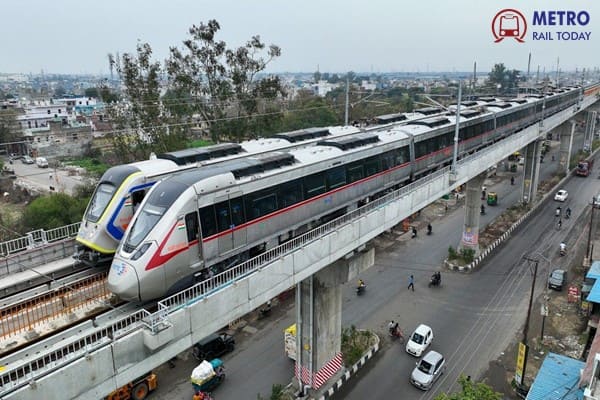
The NPG also examined the proposed extension of Surat Metro Corridor II in Gujarat. The 4.4-km elevated extension from Saroli to the Mumbai–Ahmedabad High-Speed Rail corridor will include three stations, with provisions for two additional stations in the future. The extension is designed to function as a feeder system to the high-speed rail network, enabling smooth interchange between metro and bullet train services. Plans include feeder bus services and improved pedestrian infrastructure to strengthen last-mile connectivity.
Collectively, the projects reviewed during the 109th NPG meeting reflect a continued push toward integrated transport planning under the PM GatiShakti framework. By enhancing rail capacity, expanding urban transit networks and strengthening multimodal linkages, the initiatives aim to improve logistics performance, stimulate regional economic development and create a more resilient national transportation system.
Commenting on the development, Mrs. Mamta Shah, MD & CEO, Urban Infra Group, said, “The emphasis on third-line railway capacity and multimodal metro-high-speed rail integration reflects the maturing vision of PM GatiShakti. Integrated planning across ministries is critical for reducing logistics costs, strengthening defence mobility and ensuring seamless passenger connectivity across regions.”
The NPG’s evaluation underscores the government’s commitment to coordinated infrastructure development that aligns strategic, economic and urban mobility objectives.


MRT Online Desk
Metro Rail Today is an authentic and global news provider for the Rail & Metro industry from and around the world.