

Trending Now
 Assam Govt Cabinet approves four-phase Guwahati Metro Rail Project with ₹18,000 crore Investment
 RITES awarded DPR Contract for 55-km Nagpur Metro Phase 3 Expansion with Four New Corridors
 Mumbai Metro One secures ₹2,771 crore Debt Restructuring, Insolvency proceedings set to end
 TBM Durga achieves major tunnel breakthrough at Victoria for Kolkata Metro Purple Line Expansion
 UPMRC floats ₹670 Crore Rolling Stock Tender for 45 Metro Cars for Lucknow Metro Phase 1B
 Maha Metro launches ₹994.78 crore Rolling Stock Tender for Nagpur and Pune Metro Phase 2
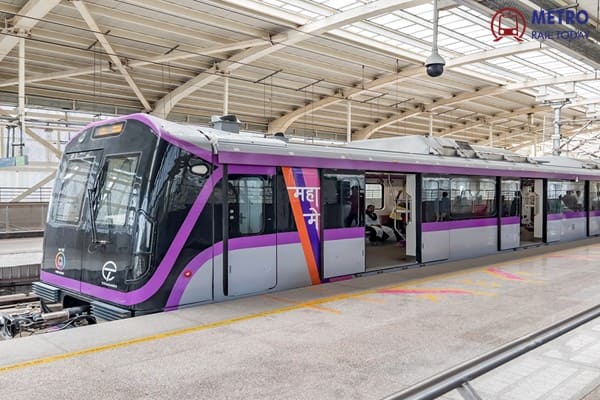 Afcons Infrastructure wins ₹1,045 crore Civil Contract for Ramwadi–Wagholi Metro Corridor in Pune
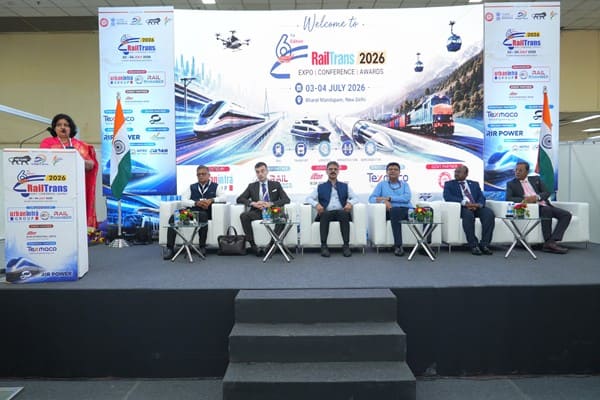 6th RailTrans Expo 2026 concludes on a Grand Note, Reinforcing India's Vision for Viksit Rail 2047
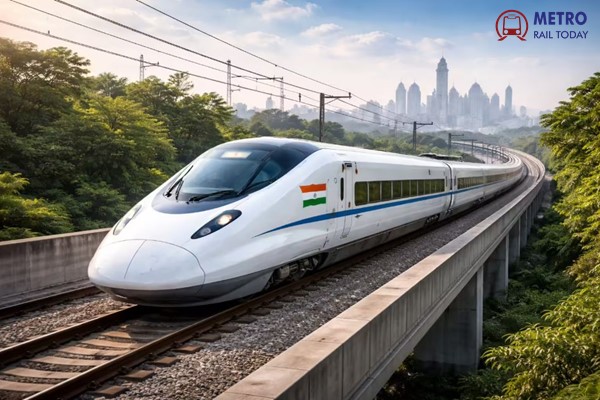 Keralam High-Speed Rail proposal is technically feasible but project cost may double: Expert Panel
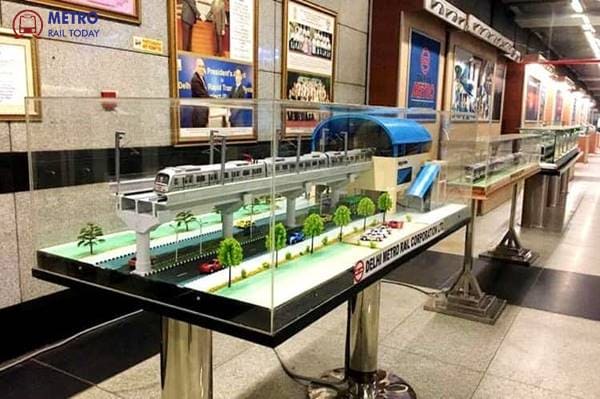 DMRC begins Construction work on Inderlok–Indraprastha Corridor under Delhi Metro Phase 4 Expansion
India tests First Hydrogen Train on Jind–Sonipat Route, Marks leap towards Green Rail Mobility
MRT Online Desk
Posted on: 2026-05-04 07:20:00
Viewer: 1,269
Comments: 0
Country: India
City: New Delhi
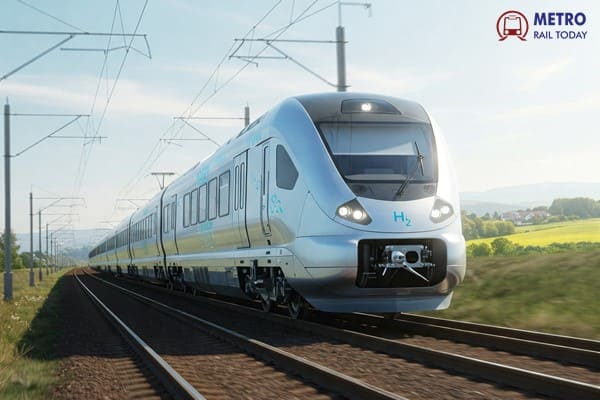
New Delhi, India (Metro Rail Today): In a major breakthrough for sustainable transportation, Indian Railways has successfully completed the trial run of its first hydrogen-powered train on the Jind–Sonipat route in Haryana. The development marks a crucial step in India’s transition towards cleaner and greener rail technologies, placing the country among a select group of nations exploring hydrogen-based train operations.
Developed by the Integral Coach Factory (ICF), the hydrogen-powered train operates without emitting smoke or carbon, making it one of the most environmentally friendly modes of rail transport currently being tested in India. The successful trial signals growing momentum in Indian Railways’ efforts to reduce its carbon footprint and adopt alternative energy solutions.
A Shift Towards Zero-Emission Rail Technology
Unlike conventional diesel-powered trains, the hydrogen train uses hydrogen fuel cells to generate energy, producing only water vapour as a byproduct. This eliminates harmful emissions and significantly reduces environmental impact, especially on non-electrified routes where diesel traction continues to dominate.
The Jind–Sonipat route was selected for the trial as part of a broader strategy to test hydrogen-powered mobility solutions under real operating conditions. Railway officials see this as a stepping stone towards scaling up hydrogen train deployment across suitable routes in the future.
With this successful trial, India joins countries such as Germany, Japan, China, and Sweden that are actively investing in hydrogen-powered rail systems as part of their long-term decarbonisation strategies.
Strategic Push for Green Mobility
Indian Railways, one of the largest rail networks in the world, has been actively pursuing electrification and alternative fuel technologies to reduce dependence on fossil fuels. Hydrogen propulsion is being viewed as a viable solution, particularly for routes where full electrification may not be immediately feasible.
The introduction of hydrogen trains could play a key role in cutting emissions, lowering noise levels, and improving overall passenger experience. Additionally, it aligns with India’s broader sustainability goals and commitment to achieving net-zero carbon emissions in the coming decades.
Mrs. Mamta Shah, MD & CEO of Urban Infra Group, said, “The successful trial of India’s first hydrogen-powered train is a landmark achievement in the country’s journey towards sustainable mobility. Hydrogen technology has the potential to transform rail transport by offering a clean, efficient alternative to diesel, particularly on non-electrified routes. This initiative also highlights India’s growing capability to develop and deploy advanced, future-ready transport solutions.”
Future Potential and Challenges
While the successful trial is a promising development, experts note that large-scale adoption of hydrogen trains will require significant investment in hydrogen production, storage, and refuelling infrastructure. Cost competitiveness and supply chain readiness will also play a critical role in determining the pace of deployment.
However, with increasing global focus on green hydrogen and supportive policy frameworks, India is well-positioned to expand its capabilities in this space. The success of this trial could pave the way for pilot projects across other regions, eventually leading to wider adoption of hydrogen-powered rolling stock.
As Indian Railways continues to modernise and decarbonise its operations, the hydrogen train initiative stands out as a bold step towards redefining the future of rail transport in the country—cleaner, quieter, and more sustainable.

MRT Online Desk
Metro Rail Today is an authentic and global news provider for the Rail & Metro industry from and around the world.