


Trending Now
 Siemens Bags Order from Titagarh Rail Systems for Pune Metro Extension Trainsets
 Titagarh Rail Systems becomes Corporate Member of Chamber of Railway Industries (Rail Chamber)
 World Bank approves ₹1,400 crore Civil Tender for Gurugram Metro Phase 2
 Bi-RIDE invites ₹200 crore Tender for Soladevanahalli Depot of Bengaluru Suburban Rail Project
 GHV India awarded ₹107.79 crore Civil Contract for Lucknow Metro East-West Corridor
 Pune Metro Line 3 set to launch First 12-km Section on 15 July 2026
 DMRC gets approval to Fell or Transplant 364 Trees for Central Vista Metro Corridor under Phase IV
 ₹4.5 Lakh crore Metro Rail Investment reaches less than 5% of Urban Population in India
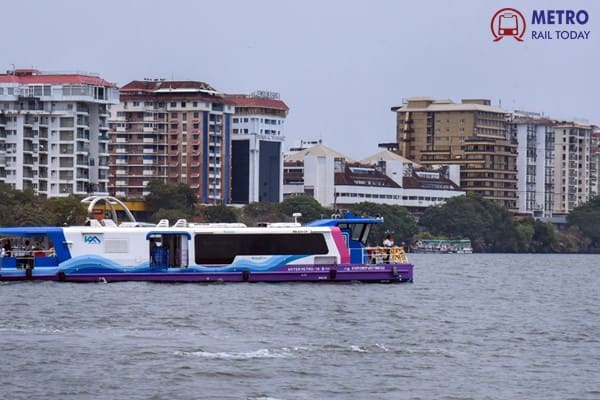 West Bengal plans to launch Water Metro Systems in Kolkata
- Titagarh Rail Systems targets full Indigenous Aluminium Coach Manufacturing by FY2027
Kochi Metro unveils Visionary Design for Phase II Pink Line Metro Stations
MRT Online Desk
Posted on: 2026-05-25 09:52:00
Viewer: 1,756
Comments: 0
Country: India
City: Kochi
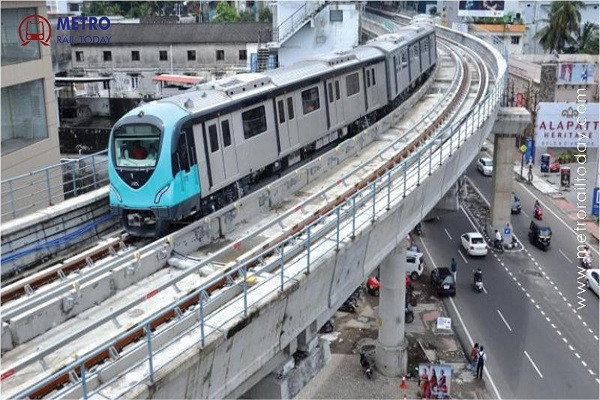
Kochi, India (Metro Rail Today): Kochi Metro Rail Limited (KMRL) has unveiled the architectural vision for the upcoming Phase II “Pink Line,” introducing a new generation of metro stations designed around women’s safety, sustainability, inclusivity, and Kerala’s rich cultural identity.
The 11.2-km Phase II corridor connecting JLN Stadium to Infopark in Kakkanad is emerging as one of India’s most thoughtfully designed urban transit projects, aimed at serving Kochi’s rapidly growing IT and business corridor while redefining public infrastructure experiences for commuters.
Far beyond conventional transit stations, the Pink Line stations are being envisioned as vibrant, people-centric public spaces that combine mobility, architecture, culture, and environmental responsibility.
Women-Centric Design at the Core
In a landmark move for Indian urban transit infrastructure, KMRL has placed women’s safety and comfort at the heart of the Pink Line’s station design philosophy.
The stations are being planned with:
- Open sightlines for enhanced visibility
- Elimination of blind spots
- Brightly illuminated concourses
- Universally accessible circulation areas
- Improved pedestrian movement
- Safe and inclusive public spaces
To further improve passenger convenience, dedicated:
- Mothers’ lounges
- Nursing rooms
- Accessible facilities
are also being integrated into the station infrastructure.
The initiative aligns with Kochi Metro’s long-standing efforts to promote gender-inclusive public transportation and support the increasing number of women commuters travelling to the city’s expanding IT and commercial hubs.
Celebrating Kerala’s Cultural Heritage Through Architecture
One of the most distinctive aspects of the Pink Line is its strong integration of Kerala’s artistic and cultural identity into station architecture and interiors.
The stations will feature:
- Curvilinear architectural forms
- Expansive roof canopies
- Organic pedestrian pathways
- Open public gathering spaces
- Immersive cultural design elements
Each station has been assigned a unique Kerala-inspired theme, transforming the metro corridor into a moving cultural showcase.
Theme-Based Pink Line Stations
| Station | Cultural Theme |
|---|---|
| Palarivattom Junction | Cartoons – Lines of Laughter |
| Alinchuvadu | Kerala Handloom |
| Chembumukku | Musical Instruments of Kerala |
| Vazhakkala | Lamps of Kerala |
| Padamughal | Legacy of Coir Industry |
| Civil Station Junction | Aranmula Kannadi |
| Cochin SEZ | Ornaments of Kerala |
| Chittethukara | Vallam Kali |
| Kinfra Park | Kalaripayattu |
| Infopark | Kathakali |
| Smart City | Theyyam |
Urban designers believe this approach could create one of India’s most culturally immersive metro corridors while strengthening local identity within modern infrastructure development.
Sustainability Integrated into Every Station
KMRL has also incorporated multiple sustainable and climate-responsive design elements into the Pink Line project to suit Kochi’s tropical environmental conditions.
Key sustainability features include:
- Passive cooling systems
- Natural ventilation
- Skylights for daylight optimisation
- Solar power integration
- Rainwater harvesting systems
- Energy-efficient infrastructure
- Green building-oriented design principles
The stations are being designed to reduce energy consumption while enhancing passenger comfort and environmental performance.
Transforming Urban Transit Experience
Officials describe the Pink Line as an “architecture of embrace” — a transit system intended not only to move passengers efficiently, but also to provide safe, comfortable, emotionally engaging, and aesthetically enriching public spaces.
The corridor is expected to significantly improve connectivity between:
- JLN Stadium
- Kakkanad
- Infopark
- SmartCity
- KINFRA
- Rajagiri Valley
- Cochin Special Economic Zone
Once operational, the corridor will serve thousands of daily commuters travelling to Kerala’s rapidly expanding IT and business ecosystem.
Commenting on the development, Mrs. Mamta Shah, MD & CEO, Urban Infra Group, said:
“Kochi Metro’s Pink Line represents a progressive evolution in urban transit design where infrastructure goes beyond functionality to create safe, inclusive, culturally rooted, and environmentally responsible public spaces. Such people-centric transit models will play an important role in shaping the future of sustainable urban mobility in India.”
Progress on Kochi Metro Phase II
Construction activities on Kochi Metro Phase II are progressing steadily across civil, systems, and station development packages.
The Pink Line forms a major component of Kerala’s broader urban mobility strategy focused on:
- Sustainable transportation
- Multimodal integration
- Reduced traffic congestion
- Improved public transport accessibility
The corridor is also planned for integration with:
- Bus transport systems
- Water Metro services
- Public bicycle-sharing infrastructure
Redefining Public Infrastructure in India
Urban mobility experts believe Kochi Metro’s Pink Line could emerge as a national benchmark for:
- Women-centric transit design
- Climate-responsive metro architecture
- Cultural integration in infrastructure
- Passenger-focused public spaces
The project reflects a growing shift in India’s urban infrastructure planning towards more human-centric and inclusive transit environments.

MRT Online Desk
Metro Rail Today is an authentic and global news provider for the Rail & Metro industry from and around the world.