


Trending Now
 Siemens Bags Order from Titagarh Rail Systems for Pune Metro Extension Trainsets
 Titagarh Rail Systems becomes Corporate Member of Chamber of Railway Industries (Rail Chamber)
 World Bank approves ₹1,400 crore Civil Tender for Gurugram Metro Phase 2
 Bi-RIDE invites ₹200 crore Tender for Soladevanahalli Depot of Bengaluru Suburban Rail Project
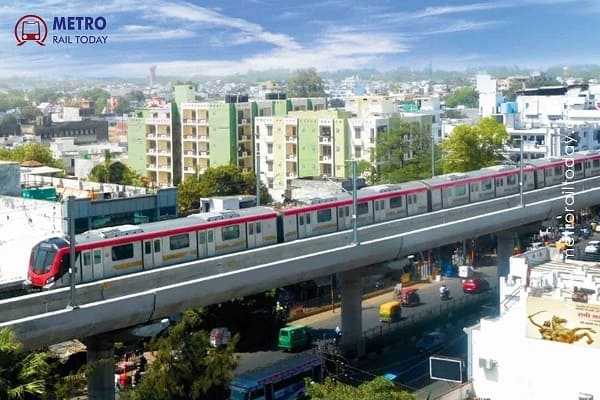 GHV India awarded ₹107.79 crore Civil Contract for Lucknow Metro East-West Corridor
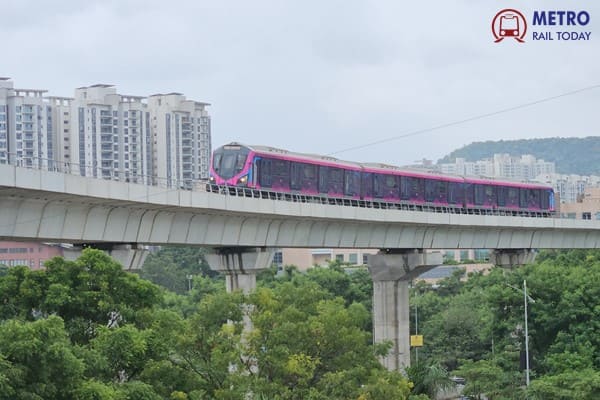 Pune Metro Line 3 set to launch First 12-km Section on 15 July 2026
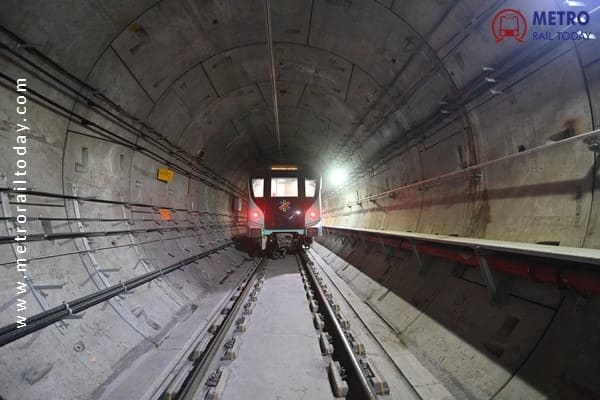 DMRC gets approval to Fell or Transplant 364 Trees for Central Vista Metro Corridor under Phase IV
 ₹4.5 Lakh crore Metro Rail Investment reaches less than 5% of Urban Population in India
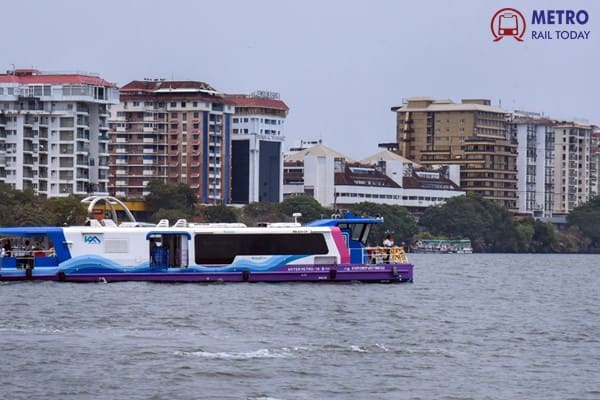 West Bengal plans to launch Water Metro Systems in Kolkata
- Titagarh Rail Systems targets full Indigenous Aluminium Coach Manufacturing by FY2027
India to add over 300 Kilometres of New Metro and Regional Rail Network by 2026
Dr. Vinod Shah
Posted on: 2025-11-10 07:00:00
Viewer: 16,146
Comments: 0
Country: India
City: New Delhi
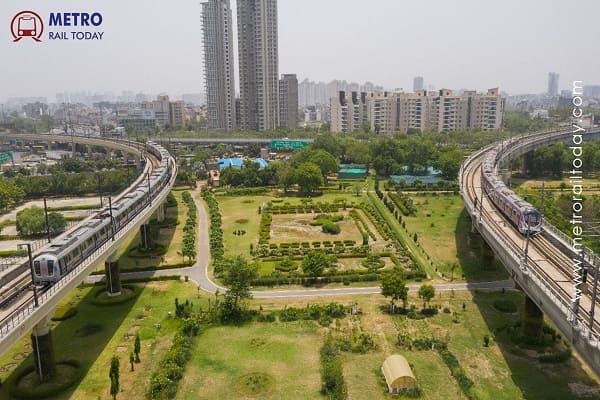
India’s urban mobility landscape is on the cusp of a major transformation, with more than 300 kilometres of new metro and regional rail corridors set to become operational by 2026. From Mumbai to Delhi, Chennai to Pune, and Bhopal to Indore — a series of mega infrastructure projects are entering their final stages, promising faster, cleaner, and smarter public transport for millions.
This historic expansion underscores India’s commitment to developing world-class, sustainable mass transit systems under the Viksit Bharat 2047 vision, combining urban growth with environmental responsibility and commuter convenience.
Mumbai Metro: Lines 2B, 4 and 9 Nearing Completion
Mumbai’s long-awaited metro expansion is gathering pace, with Metro Line 2B (D.N. Nagar–Mandale) expected to open its first phase — between Mandale and Chembur — later this year.
The 23.6 km elevated corridor, costing ₹10,986 crore, will connect the city’s eastern and western suburbs while integrating with multiple metro lines and the monorail.
The 32.3 km Mumbai Metro Line 4 (Wadala–Kasarvadavali) is also nearing readiness, featuring 30 elevated stations linking central Mumbai to Thane. The Line 9 extension (Andheri to CSIA and Dahisar to Mira Bhayandar) has completed inspection of its first 4.5 km section and is slated for launch by December 2025, further strengthening western suburban connectivity.
Delhi Metro: Golden Line and Phase IV Extensions in Final Phase
The Delhi Metro Rail Corporation (DMRC) is set to inaugurate the Pink Line extension (Majlis Park–Maujpur) shortly, completing the city’s first circular metro corridor — spanning 71.6 km with 46 stations.
Meanwhile, the Magenta Line extension (Janakpuri West–RK Ashram) and the Golden Line (Aerocity–Tughlaqabad), key components of Phase IV, are progressing rapidly.
Once operational in 2026, these corridors will add over 50 km to the Delhi Metro network and significantly improve connectivity between south, west, and central Delhi, while supporting seamless interchange across the National Capital Region.
Chennai Metro Phase II: Porur–Power House Section by June 2026
The Chennai Metro Rail Limited (CMRL) is fast-tracking work on Corridor 4 (Poonamallee–Lighthouse), where trial runs between Poonamallee and Porur have begun. The next 8 km stretch — Porur to Kodambakkam Power House — is expected to open by June 2026.
Notably, this phase includes India’s first 4 km double-decker viaduct, where Corridors 4 and 5 share four stations — a landmark engineering achievement in Indian metro construction.
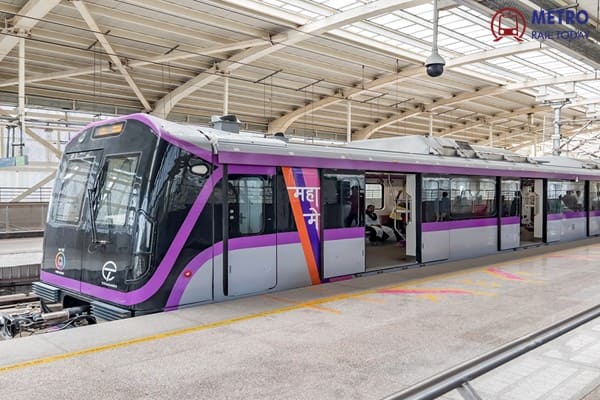
Pune Metro Line 3: India’s First PPP-Based Metro to Launch by March 2026
Pune’s Line 3 (Hinjawadi–Shivajinagar), being developed under India’s first public-private partnership (PPP) metro model by TRIL Urban Transport Pvt Ltd and Siemens Project Ventures GmbH, is now 90% complete.
The 23.2 km elevated line with 23 stations will decongest major IT and business zones and is scheduled for commercial launch by March 2026.
Bhopal Metro: Commercial Operations to Begin Soon
After months of testing, Bhopal Metro’s 7 km priority corridor from Subhash Nagar to AIIMS Bhopal is expected to begin operations shortly. Built at a cost of ₹6,941 crore, the system includes 27 modern trainsets, eight of which are already delivered. The project is part of a larger plan to create an integrated twin-city network with Indore by 2030.
Indore Metro: Phase II Expansion on Track for Early 2026
The Indore Metro is also nearing full operation, with the 17.5 km priority corridor from Gandhi Nagar to Radisson Square expected to open by early 2026. Developed in three phases, the complete 31.3 km system will combine elevated and underground sections, improving connectivity to the Super Corridor, IT hubs, and residential clusters.
Kochi Metro Pink Line set to open by June 2026
The Phase 2 of Kochi Metro Rail project (Pink Line), spanning 11.2 km with 11 stations, carries an estimated cost of ₹1,957 crore. According to KMRL officials, a substantial portion of the civil work along the Pink Line corridor has already been completed. Out of 2,019 total piles, around 1,145 have been built, while 265 of 368 piers and 165 of 469 pile caps are now ready. The first phase of operations will cover five key stations — Palarivattom Junction, Alinchuvadu, Chembumukku, Vazhakkala, and Padamugal. Services on the remaining stations, including Civil Station Junction, Cochin SEZ, Chittethukara, KINFRA, and Infopark, will begin by the end of 2026.
Namo Bharat RRTS: Delhi–Meerut Corridor Set for Full Operation
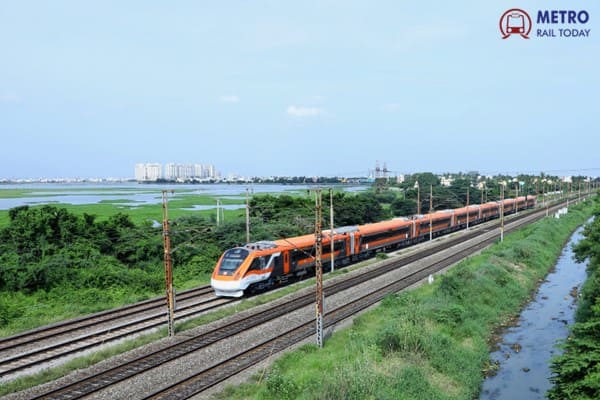
India’s first Regional Rapid Transit System (RRTS) — the Delhi–Ghaziabad–Meerut Namo Bharat Corridor — is nearing full completion.
Currently, 55 km of the 82 km route is operational between New Ashok Nagar and Meerut South, with the remaining stretches — Sarai Kale Khan–New Ashok Nagar and Meerut South–Modipuram — expected to open soon. Once complete, the corridor will cut Delhi–Meerut travel time to under an hour.
“India’s metro and regional rail expansion reflects the nation’s forward-looking vision for sustainable urban growth,” said Mrs. Mamta Shah, MD & CEO of Urban Infra Group. “Adding 300 km of new urban rail network by 2026 will not only enhance mobility but also reduce congestion and emissions. This is a defining moment in India’s journey towards integrated, smart, and people-centric urban transport.”
With over 1,100 km of operational metro network and more than 900 km under construction, India is poised to become the second-largest metro rail network in the world by 2030.
The upcoming launches through 2025–26 reaffirm India’s commitment to transforming public transport into a world-class experience — cleaner, faster, and future-ready.


Dr. Vinod Shah
Dr. Vinod Shah is an experienced urban transport journalist, blogger and key opinion leader.