

Trending Now
 K-RIDE to appoint Detailed Design Consultant for Bengaluru Suburban Rail Project
 Prime Minister Narendra Modi inaugurates first 15-km stretch of Chennai Metro Phase 2
 Karnataka proposes 270-km RRTS Network linking Bengaluru with Tumakuru, Mysuru and KGF
 Alstom and Vingroup sign MoU to supply up to 200 Metro Trains for Hanoi Urban Rail Projects
 Afcons Infrastructure wins ₹1,383 crore Civil Contract for Lucknow Metro Phase 1B Corridor
 GMRL issues ₹1,662 crore Civil Tender for Sector 9–Cyber City Gurugram Metro Rail Corridor
 Madrid unveils €1.57 billion Metro Rail Expansion Programme with 27.8 km of New Corridors
 Global Tender launched for Project Management Consultancy for Abu Dhabi Tram Line 4
 NV Dynamics awarded Noise and Vibration Study contract for Jaipur Metro Phase 2 Project
 Two global consortia bid for India’s 350 kmph High-Speed Rail Design consultancy contract
Indian Railways approves 8.5-km Bengaluru Suburban Rail's Kempegowda Airport Line
MRT Online Desk
Posted on: 2026-02-02 17:07:00
Viewer: 1,558
Comments: 0
Country: India
City: Bengaluru
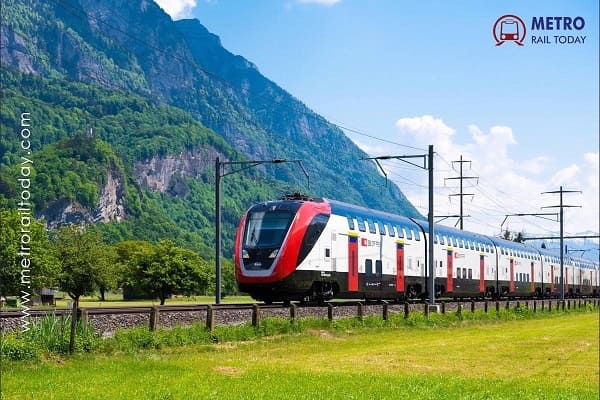
Bengaluru, India (Metro Rail Today): Bengaluru’s long-awaited suburban rail connectivity to Kempegowda International Airport (KIA) has taken a major step forward, with South Western Railway (SWR) approving the alignment of an 8.5-km dedicated airport rail link under the Bengaluru Suburban Railway Project (BSRP).
The airport spur will branch off the 41.4-km KSR Bengaluru–Devanahalli corridor, also known as the Sampige Line, just ahead of the Trumpet Interchange, and will terminate between Terminal 1 and Terminal 2 of the airport. Senior railway and project officials confirmed that the approval marks a critical milestone for integrating the airport with the city’s upcoming suburban rail network.
As per the approved plan, the new line will run at grade for about 5.5 km, while the remaining 3.5 km within the airport premises will be fully underground. Four stations have been planned along the route—BK Halli, KIADB Aerospace Park, Airport City and Airport Terminal. Of these, BK Halli and KIADB Aerospace Park will be at-grade stations, while the two stations inside the airport complex will be underground.
Officials from Railway Infrastructure Development Company (Karnataka) Limited (K-RIDE), the implementing agency for BSRP, said that BK Halli and Airport City stations have been provisioned to meet future demand, while the KIADB Aerospace Park and Airport Terminal stations will be fully operational when the line opens.
The detailed project report for the airport link has been prepared by RITES Limited. According to K-RIDE Managing Director Lakshman Singh, the estimated cost of the airport rail link stands at around ₹4,100 crore. While Bangalore International Airport Limited has declined to fund the suburban rail link, efforts are underway to secure equity participation from the Karnataka government and Indian Railways.
The development comes alongside ongoing metro expansion at the airport. BIAL is currently constructing two metro stations within the airport premises on the Blue Line, with Airport City planned as an at-grade station and Airport Terminal designed to be partially underground. K-RIDE officials clarified that detailed planning and land requirements for the suburban rail stations inside the airport area will be finalised shortly.
Originally, only one suburban rail station was proposed within the airport premises. The plan has since been expanded to include the Airport City station near the Hennur–Bagalur–Begur Road junction, aimed at serving airport staff and passengers from nearby catchment areas.
SWR has also approved the alignment of the main Sampige Line. K-RIDE expects land acquisition for the corridor to be completed within about a year. The entire Sampige Line, including the airport spur, is targeted for completion by March 2030.
In July 2024, K-RIDE had invited tenders for viaduct and station works on the KSR Bengaluru–Yelahanka section of the Sampige Line, covering 17.63 km. However, the contract award for this package is still awaited.
Once operational, the suburban rail airport link is expected to significantly ease road congestion to KIA and provide a fast, reliable rail-based alternative for airport passengers and employees, strengthening Bengaluru’s multi-modal transport ecosystem.

MRT Online Desk
Metro Rail Today is an authentic and global news provider for the Rail & Metro industry from and around the world.