

Trending Now
 Afcons Infrastructure wins ₹1,383 crore Civil Contract for Lucknow Metro Phase 1B Corridor
 GMRL issues ₹1,662 crore Civil Tender for Sector 9–Cyber City Gurugram Metro Rail Corridor
 Madrid unveils €1.57 billion Metro Rail Expansion Programme with 27.8 km of New Corridors
 Global Tender launched for Project Management Consultancy for Abu Dhabi Tram Line 4
 NV Dynamics awarded Noise and Vibration Study contract for Jaipur Metro Phase 2 Project
 Two global consortia bid for India’s 350 kmph High-Speed Rail Design consultancy contract
 Larsen & Toubro (L&T) extends Hyderabad Metro stake sale timeline to 31 December 2026
 Haryana Govt approves ₹1,662 crore construction tender for Gurugram Metro Phase 2
 Hyundai Rotem Targets Fully Autonomous Hydrogen Trams by 2031
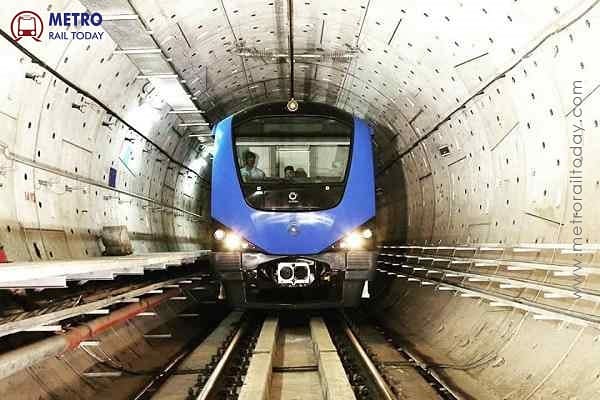 TBM Kaveri records Tunnel Breakthrough at KMC Station for Chennai Metro Phase 2
Spain’s Hyperloop Startup Zeleros files for Insolvency amid funding crunch
MRT Online Desk
Posted on: 2026-04-21 10:41:00
Viewer: 2,054
Comments: 0
Country: Spain
City: Valencia

Valencia, Spain (Metro Rail Today): Spain-based hyperloop startup Zeleros has filed for voluntary insolvency, with a court formally declaring the company insolvent and placing it under external administration. The development marks another setback for the once-hyped hyperloop sector, as the company struggled to secure sufficient funding to sustain its technology development and commercial ambitions.
Founded in 2016 by students from the Polytechnic University of Valencia following their participation in SpaceX’s Hyperloop competition, Zeleros had emerged as one of Europe’s prominent hyperloop innovators. Over the years, the company raised more than €15 million from a mix of private and public investors, enabling it to develop design prototypes, scale models and testing infrastructure.
Innovative Technology, But Limited Commercial Traction
Zeleros differentiated itself from other hyperloop developers through its hybrid propulsion approach. The system combined a linear electric motor for initial acceleration with an onboard electric compressor powered by batteries for cruising. The company claimed this model would reduce infrastructure complexity and improve scalability compared to fully vacuum-based systems.
Despite its technological promise, the startup struggled to transition from prototype development to commercially viable deployment. In recent years, Zeleros attempted to diversify into adjacent sectors, including autonomous rail platforms, freight-focused maglev solutions for ports, and battery technologies for automotive and aviation applications. However, none of these initiatives succeeded in attracting sustained investment.
The financial strain was reflected in its shrinking workforce, which dropped from around 80 employees in 2023 to just 26 in 2026.
Commenting on the development, Mrs. Mamta Shah, MD & CEO, Urban Infra Group, said, “The challenges faced by hyperloop startups highlight the gap between conceptual innovation and commercial scalability in capital-intensive transport technologies. While the vision remains compelling, long-term viability depends on sustained funding, regulatory clarity and demonstrable use cases.”
Asset Sale and Technology Interest from Industry
Coinciding with the insolvency proceedings, Spanish industrial and energy group Amper has submitted a bid to acquire Zeleros’ production unit. According to local media reports, the proposed deal is valued at approximately €958,000, with around €445,000 expected to be used to settle outstanding debts.
Amper has expressed interest in Zeleros’ electromagnetic linear motor technology, which it plans to repurpose as a launch system for unmanned aerial vehicles (UAVs), as well as its battery development capabilities. This suggests that while the hyperloop vision may be faltering, certain underlying technologies continue to hold industrial value.
Hyperloop Sector Faces Mounting Setbacks
Zeleros becomes the second hyperloop startup to collapse in 2026, following the bankruptcy of Dutch firm Hardt Hyperloop. Earlier, US-based Hyperloop One ceased operations in early 2024, signalling a broader slowdown in the sector.
While vacuum-based high-speed transport concepts have struggled to achieve commercial traction in Europe and the United States, development efforts remain active in countries such as India and China, where governments continue to explore next-generation mobility solutions.
A Turning Point for Futuristic Mobility Concepts
The insolvency of Zeleros reflects a broader recalibration within the global transport innovation ecosystem, where ambitious concepts are increasingly being tested against financial and operational realities. While hyperloop technology may not have yet delivered on its early promise, elements of its research—particularly in propulsion, materials and energy systems—are likely to find applications across other sectors.
As the industry evolves, the focus is expected to shift toward scalable, cost-effective and immediately deployable solutions, even as research into next-generation mobility continues.


MRT Online Desk
Metro Rail Today is an authentic and global news provider for the Rail & Metro industry from and around the world.