

Trending Now
 NCRTC begins groundwork for 136-km Delhi–Panipat–Karnal Namo Bharat RRTS Corridor
 India targets March 2027 Rollout of First Indigenous Bullet Train 'Bharat B28’
 JICA approves ¥92.4 billion ODA Loan for Mumbai Metro Line 11
 CLW sets Global Benchmark with record 800 Electric Locomotives production in FY 2025–26
 NMRC invites Applications for Key Executive Positions for Noida Metro Rail Project
 Central Govt rejects revised DPR of 7.5 km Noida-Greater Noida Metro Rail Extension Project
 Revised DPR of Prayagraj Metro focuses on seamless Rail-Air connectivity
 DMRC floats Tender for Central Vista Depot Design in Delhi Metro Phase V Expansion
- MMRDA seeks ₹14,100 Crore Loan for two upcoming Mumbai Metro Corridors
 Jupiter Wagons Eyes ₹20,000-Crore Mumbai Suburban Mega Rolling Stock Tender
Indian Railways restructures Railway Board, Redeploys 50 Senior Officers to Field Duty
MRT Online Desk
Posted on: 2026-03-12 16:03:00
Viewer: 816
Comments: 0
Country: India
City: New Delhi
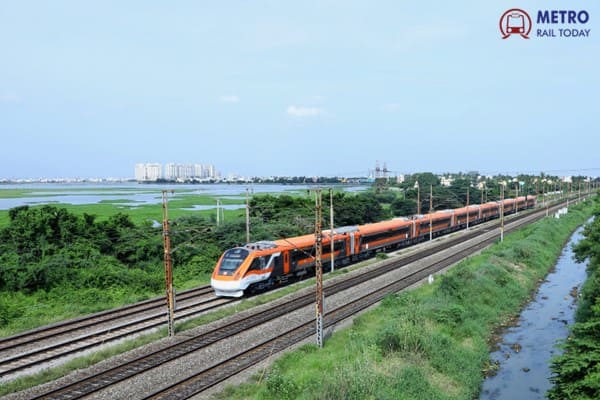
New Delhi, India (Metro Rail Today): In a major administrative reform aimed at decentralising decision-making and speeding up infrastructure development, Indian Railways has initiated a significant restructuring of the Railway Board, reducing the strength of senior officers at Rail Bhawan from 200 to 150.
As part of the “rightsizing” exercise, 50 senior officials holding Director and Executive Director ranks will be redeployed from the Railway Board headquarters in New Delhi to key Zonal and Divisional headquarters across the country. The move is designed to shift decision-making closer to project sites and improve the pace of railway infrastructure execution.
Officials indicated that the restructuring represents a strategic shift from a highly centralised administrative model to a field-oriented operational structure focused on faster implementation and accountability.
Shift Towards Field-Based Leadership
Under the restructuring plan, senior officers will move from policy roles at Rail Bhawan to on-ground leadership positions in railway zones and divisions, where they will directly oversee infrastructure development and operational improvements.
According to officials familiar with the process, the blueprint for the reorganisation has already been finalised. The list of posts that will be abolished or shifted is expected to be completed by the end of March.
The first batch of officers is scheduled to be redeployed from April 1, 2026, while the full transition is expected to be completed by September 2026.
Although the idea of restructuring the Railway Board was first proposed in 2017, the plan has taken nearly nine years to reach full implementation.
Reducing Bureaucratic Delays
The primary objective of the restructuring is to eliminate administrative bottlenecks that have traditionally slowed project approvals and implementation.
Currently, even relatively small technical decisions often require files to be sent from zonal offices to the Railway Board in New Delhi, resulting in lengthy delays.
By positioning senior decision-makers directly in the field, the Ministry of Railways expects the pace of project execution to improve by up to 40 percent.
Officials say that the redeployment will allow experienced officers to take faster decisions on project approvals, engineering issues and operational challenges at the regional level.
Deploying Expertise Where It Is Needed
The restructuring strategy also focuses on matching technical expertise with the specific needs of different railway zones.
For example, zones where the rollout of the ‘Kavach’ anti-collision system has progressed slowly are expected to receive signalling and telecommunications experts from the Railway Board to oversee implementation.
Under the new approach, senior officers will be directly responsible for delivering measurable progress on projects rather than focusing primarily on administrative oversight from the capital.
Expected Impact on Passenger Services
Railway officials believe the restructuring could lead to noticeable improvements in passenger services and operational efficiency.
Direct supervision of infrastructure activities such as track maintenance, yard remodelling and signalling upgrades is expected to enhance operational safety and improve train punctuality.
The redeployed officers will also monitor the progress of station modernisation projects under the Amrit Bharat Station Scheme, ensuring better quality construction and improved passenger amenities.
Additionally, the presence of senior officers in the field is expected to help resolve issues related to station cleanliness, food services and passenger facilities more quickly.
Commenting on the reform, Mrs. Mamta Shah, MD & CEO, Urban Infra Group, said that decentralising decision-making can significantly improve the pace of large infrastructure programmes.
“For a vast and complex network like Indian Railways, empowering field leadership is essential for faster project execution. When senior decision-makers are directly involved at the project level, it reduces administrative delays and improves accountability, ultimately leading to better infrastructure delivery and enhanced passenger services,” she said.
She added that such reforms are particularly important as Indian Railways continues to invest heavily in modernisation initiatives including high-speed rail corridors, advanced signalling systems and large-scale station redevelopment programmes.
Towards a More Agile Railway System
The restructuring of the Railway Board represents one of the most significant administrative reforms in the organisation in recent years.
By moving experienced officers from the central headquarters to operational zones, Indian Railways aims to create a more agile and responsive system capable of delivering complex infrastructure projects more efficiently.
The reform is expected to play an important role as the national transporter continues to expand its network, upgrade technology and prepare for the next phase of high-speed and high-capacity railway development in India.


MRT Online Desk
Metro Rail Today is an authentic and global news provider for the Rail & Metro industry from and around the world.