


Trending Now
 Japanese Delegation visits KRIDE to explore Bengaluru Suburban Rail Project opportunities
 GMRC issues ₹879 crore Civil Tender for Airport Extension under Ahmedabad Metro Phase 2A
 Global Mobility Leaders Alstom and Siemens become Corporate Member of Chamber of Railway Industries
 L&T-MHI JV wins contract for Automated People Mover at Dubai’s Al Maktoum International Airport
 Delhi Metro Rail Network to expand to 695 km by 2047, Six new RRTS Corridors planned
 HÜBNER at InnoTrans 2026: Global rail expertise and local capability for India’s Next-Gen Mobility
 Australia shortlists three firms/consortia for Sydney–Newcastle High Speed Rail Project
 MRVC set to procure 238 AC Vande Metro Trainsets worth ₹19,293 crore from Indian Railways
 Maharashtra approves ₹17,725 crore Mumbai Metro Line 13 linking Mira-Bhayandar with Vasai-Virar
 Gujarat issues three tenders for 48.38-km Metro-RRTS Hybrid corridors under Ahmedabad Metro Phase 3
Italian State Railways acquires Titagarh Firema from Titagarh Rail Systems Limited
MRT Online Desk
Posted on: 2026-03-05 06:11:00
Viewer: 3,406
Comments: 0
Country: Italy
City: Anzio
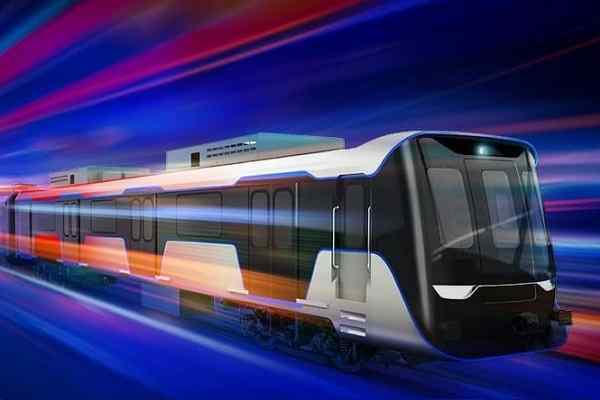
Rome, Italy (Metro Rail Today): The FS Group (Italian State Railways) has finalized the acquisition of a business unit comprising the operating assets of Titagarh Firema, a company engaged in the design and manufacturing of railway vehicles. The move forms part of FS Group’s 2025–2029 Strategic Plan aimed at industrial strengthening and consolidation of its production value chain.
The acquisition will be integrated through FS’s subsidiary, FS Fabbrica Italiana Treni, reinforcing the Group’s capabilities in rolling stock manufacturing. According to FS, the transaction is expected to enhance coordination between design and production functions, improve cost control, strengthen oversight of critical supplies and optimise production timelines. It also ensures industrial continuity for the acquired assets following the recovery process initiated in 2025 as part of the negotiated resolution of the company’s crisis.
During 2025, FS had already undertaken vertical integration initiatives in tourism and freight transport, underscoring value-chain integration as a strategic lever for operational autonomy, resilience and competitiveness.
While the development has triggered speculation regarding its potential impact on India’s metro and rolling-stock ecosystem, the structural reality is more nuanced.
Titagarh Firema SpA (Italy), the entity involved in the acquisition, was originally acquired in 2015 by Titagarh Rail Systems Limited (TRSL) after it purchased a majority stake in Firema Trasporti. However, TRSL — the Indian parent company — remains a separate legal and operational entity with its own manufacturing facilities in India.
The FS acquisition primarily concerns Italian manufacturing assets located in Caserta, Spello and Tito. Indian production facilities at Uttarpara, Titagarh and Bharatpur operate independently and are structurally insulated from the Italian operations.
TRSL continues to maintain a substantial order book within India. Its ongoing projects include the supply of 34 driverless metro trainsets for Bengaluru Metro’s Yellow Line, metro rolling stock contracts for Pune, Ahmedabad and Surat, and a major consortium contract with Bharat Heavy Electricals Limited (BHEL) for the manufacture and maintenance of 80 Vande Bharat trainsets valued at approximately ₹24,000 crore.
As of March 31, 2024, TRSL reported an order book of around ₹14,750 crore, providing significant revenue visibility. All these contracts are being executed at Indian manufacturing facilities and are not dependent on Italian production assets.
Industry observers indicate that the operational impact on India is expected to be limited for several reasons. Indian manufacturing operations are legally and structurally independent from the Italian subsidiary. Over the past few years, TRSL has also diversified its technology partnerships to reduce reliance on overseas technology flows.
A strategic collaboration with ABB Ltd now covers propulsion systems, traction motors, auxiliary converters and full transfer of GoA4 driverless Train Control and Management System (TCMS) software. This reduces dependence on Italian-origin technology for metro and mainline rolling stock projects.
The ownership change in Italy may involve dilution or write-down of TRSL’s stake in the subsidiary, but this does not directly affect execution of Indian contracts.
The Italian operations historically possessed expertise in aluminium-body rolling stock manufacturing, which could be relevant for future technology evolution. However, Indian manufacturers are increasingly investing in localisation, domestic capability development and diversified global partnerships.
Commenting on the development, Mrs. Mamta Shah, MD & CEO, Urban Infra Group, said, “The FS acquisition is primarily a strategic consolidation move within Italy’s industrial ecosystem. For India, the impact appears limited because domestic manufacturing and technology partnerships have already evolved toward greater localisation and self-reliance. The broader trend in India’s rolling stock sector remains one of capability expansion and reduced external dependency.”
While the Italian chapter may be entering a new phase under FS ownership, India’s metro and high-speed rolling stock manufacturing ecosystem continues to expand, supported by a strong order pipeline, localisation policies and strategic technology collaborations.

MRT Online Desk
Metro Rail Today is an authentic and global news provider for the Rail & Metro industry from and around the world.