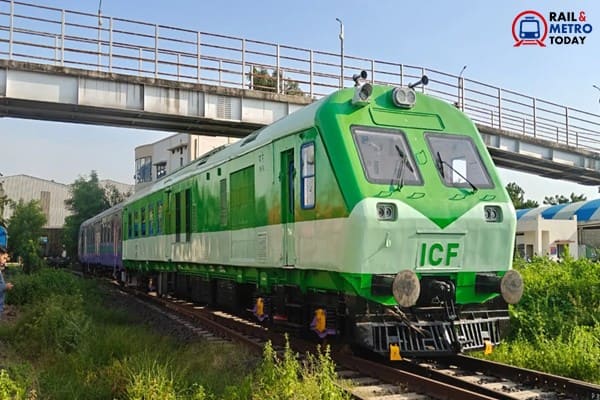
From funding 80% of India’s rolling stock to emerging as a strategic financier for metros, high-speed rail, and logistics ecosystems, IRFC is redefining infrastructure financing under its ‘2.0’ vision
India’s rail infrastructure story is entering a decisive new phase—one defined not just by engineering ambition but by financial innovation. At the heart of this transformation stands the Indian Railway Finance Corporation (IRFC), a once single-mandate financier that is now evolving into a diversified funding powerhouse for the entire rail and mobility ecosystem.
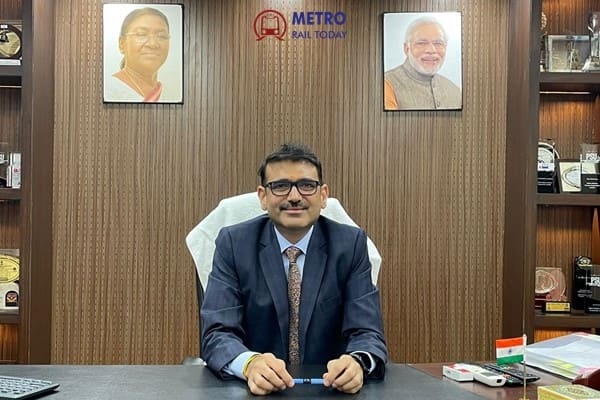
In an exclusive interaction with Metro Rail Today, Shri Manoj Kumar Dubey, Chairman & Managing Director & CEO of IRFC, outlines how the organisation is transitioning from a traditional rolling stock financier into a strategic enabler of India’s multi-modal transport future—spanning metro rail, regional rapid transit systems (RRTS), dedicated freight corridors (DFCs), and high-speed rail (HSR).
From National Service to Financial Strategy: A Leadership Rooted in Railways
Shri Dubey’s leadership philosophy is deeply shaped by over three decades in the Indian Railway Accounts Service. His experience reflects a rare combination of public service ethos and financial discipline—two elements that continue to define IRFC’s operational DNA.
“Railways taught me that every action is part of national service, while also ensuring financial viability. Balancing service with sustainability is the core principle I carry into IRFC,” he explains.
Having worked across divisions, Railway Board, PPP policy frameworks, and later at CONCOR, Dubey has witnessed firsthand the scale, complexity, and evolving financial needs of India’s rail ecosystem. This exposure now informs IRFC’s strategic pivot.
40 Years of IRFC: From Rolling Stock Financier to Infrastructure Catalyst
Since its inception, IRFC has played a foundational role in India’s railway growth story. For nearly four decades, its primary mandate was clear—raise cost-effective capital to finance Indian Railways’ rolling stock requirements.
The scale of its contribution is staggering:
- Over 80% of Indian Railways’ rolling stock—including Rajdhani, Shatabdi, Tejas, and Vande Bharat trains—has been financed by IRFC
- A loan book exceeding ₹4 lakh crore, with nearly 50% now allocated to project financing
- A long-term lending model spanning 30 years (15+15 structure)
But as Dubey points out, the turning point came when India’s infrastructure ambitions began to accelerate rapidly.
“The aspirations of Indian Railways have grown manifold. From financing rolling stock, we have now moved into large-scale project financing—this is the foundation of IRFC’s next phase,” he notes.
IRFC 2.0: Expanding Beyond Railways into a Unified Mobility Ecosystem
The launch of IRFC 2.0 marks a strategic redefinition of the organisation’s mandate. Faced with a scenario where government budgetary support began fully covering railway capex in recent years, IRFC was compelled to rethink its role.
Instead of remaining a passive lender, it has repositioned itself as a proactive infrastructure financier.
“Our mandate allowed us to fund anything linked to railways—we simply had not utilised it earlier. IRFC 2.0 is about unlocking that potential,” Dubey states.
Under this new framework, IRFC has already taken significant steps:
- Financing NTPC Green Energy projects powering railways
- Refinancing high-cost loans such as the World Bank-funded DFC debt
- Funding SPVs, fertiliser companies, and logistics-linked industries
- Sanctioning over ₹80,000 crore in assets within the first year of IRFC 2.0
The organisation’s competitive advantage lies in its lean structure and financial discipline.
“We are a zero-NPA organisation with one of the lowest overhead costs in the industry. This allows us to pass on cheaper financing—often 70 to 100 basis points lower than peers,” he highlights.
Landmark Financing: The ₹10,000 Crore DFC Refinancing Deal
Among IRFC’s most significant recent achievements is the refinancing of the Eastern Dedicated Freight Corridor’s World Bank loan—a move that has set a new benchmark in infrastructure financing.
The transaction, valued at over ₹10,000 crore (USD 1.2 billion), resulted in savings of approximately ₹2,700 crore.
“This deal demonstrated how domestic financial institutions can step in post-construction, replacing high-cost multilateral loans with more efficient financing,” Dubey explains.
More importantly, it establishes a scalable model for future collaboration between IRFC and global financial institutions.
Metro Rail Financing: A ₹1 Lakh Crore Opportunity
As India’s urban mobility landscape expands rapidly, IRFC is positioning itself as a key financier in the metro rail segment—one of the most capital-intensive yet socially critical infrastructure domains.
The numbers underline the scale of opportunity:
- 100 km of metro rail targeted annually
- ₹200 crore per km average cost
- Annual financing requirement ranging between ₹50,000 crore to ₹1 lakh crore
“Metro rail is not profit-making in the traditional sense, but its economic returns are immense. It improves air quality, reduces congestion, and enhances productivity,” Dubey emphasises.
Until now, metro projects have largely depended on multilateral and bilateral funding agencies. IRFC aims to emerge as a third financing pillar—or even a co-financing partner in hybrid structures.
“We are among the most cost-effective NBFCs. With Navratna status, we now have the mandate and the capability to finance metro systems across India,” he adds.
The Next Frontier: High-Speed Rail, DFCs and Multimodal Logistics
India’s infrastructure pipeline is expanding beyond conventional rail into high-speed corridors, new freight networks, and integrated logistics systems.
With announcements such as:
- 7 High-Speed Rail corridors
- New Dedicated Freight Corridors (DFCs)
- Massive investments in port connectivity and industrial corridors
…the demand for long-term, low-cost financing is set to surge.
“The first raw material for any infrastructure project is financing. Without timely and affordable capital, execution cannot begin,” Dubey states.
IRFC is already engaging with multilateral agencies to develop co-financing frameworks for these mega projects.
“There is a natural convergence between IRFC and global institutions. We may fund projects during or after construction, creating a seamless financing lifecycle,” he notes.
PPP Models and Financial Realism in Infrastructure
As India revisits Public-Private Partnership (PPP) models in infrastructure, IRFC’s role could become even more critical in bridging financial gaps and mitigating risks.
Dubey emphasises that infrastructure financing must be grounded in realism:
“Projects must be structured with long gestation periods in mind. Financing must be efficient, and execution must be timely—only then can viability be ensured.”
He also underlines the importance of accountability across stakeholders:
“As lenders, we must not pass inefficiencies to borrowers. At the same time, we must act as responsible partners ensuring project discipline.”
A Strong Balance Sheet, A Wider Mandate
One of IRFC’s key strengths remains its robust financial position:
- Zero Non-Performing Assets (NPAs)
- Increasing Net Interest Margins (NIM)
- Strong access to low-cost capital markets
This allows it to operate flexibly across different segments—from cost-plus lending to Indian Railways to higher-yield financing for other infrastructure entities.
“Our balance sheet gives us the headroom to finance both Indian Railways and the broader ecosystem. The opportunity is vast, and we are ready,” Dubey affirms.
The Road Ahead: Financing Viksit Bharat’s Rail Vision
Looking ahead, IRFC is set to play a central role in India’s long-term infrastructure vision. With railway capex expected to remain at around ₹3 lakh crore annually for the next decade, the demand for innovative financing solutions will only intensify.
Dubey sees IRFC not just as a lender, but as a strategic partner in nation-building.
“Capital expenditure must be seen as national service. When financing becomes efficient and execution remains disciplined, there is no limit to what India can achieve,” he concludes.
Beyond Financing—Enabling a Mobility Revolution
IRFC’s transformation reflects a broader shift in how infrastructure is conceived and delivered in India. No longer confined to traditional roles, financial institutions are emerging as strategic enablers—shaping not just projects, but entire ecosystems.
As India accelerates toward its Viksit Bharat 2047 vision, IRFC’s ability to combine financial discipline with strategic foresight may well determine how quickly—and how efficiently—the country’s rail revolution moves forward.



 Siemens Mobility awarded $772 million Trainset Contract for California High-Speed Rail Project
 RITES submits fresh DPR to UPMRC for ₹12,000 crore Prayagraj Metro Rail Project
 Paras Railtech wins ₹84.72 crore Ballastless Track Contract for Jaipur Metro Rail Project
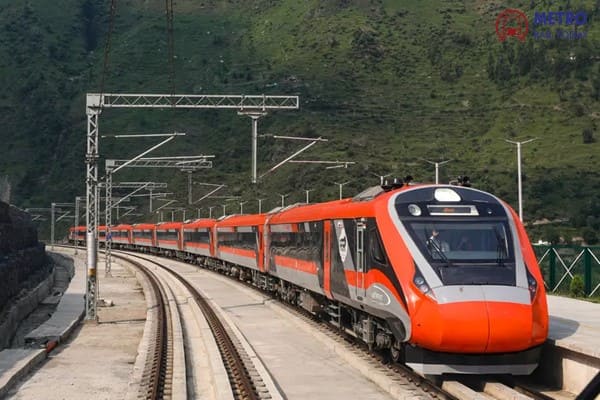 Indian Railways announces 3,548 Graduate-Level Vacancies under NTPC Recruitment 2026
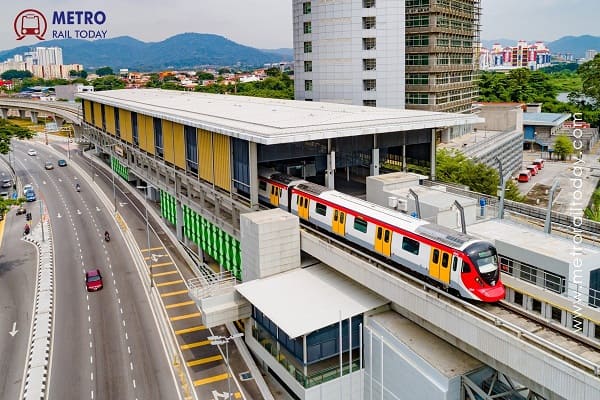 European Union sanctions €10 million to support extension of Hanoi Metro Line 3
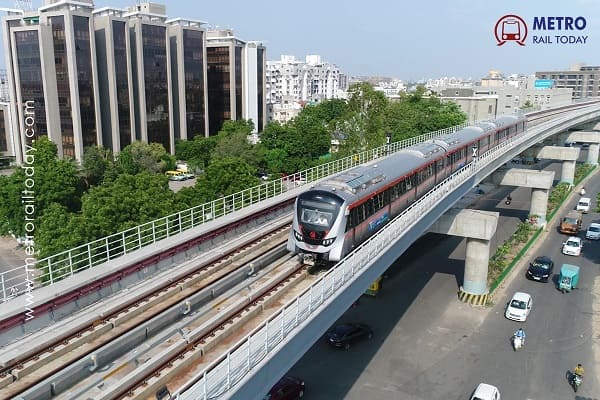 GMRC issues ₹683 crore Tender for construction of 8.68 km stretch for Ahmedabad Metro
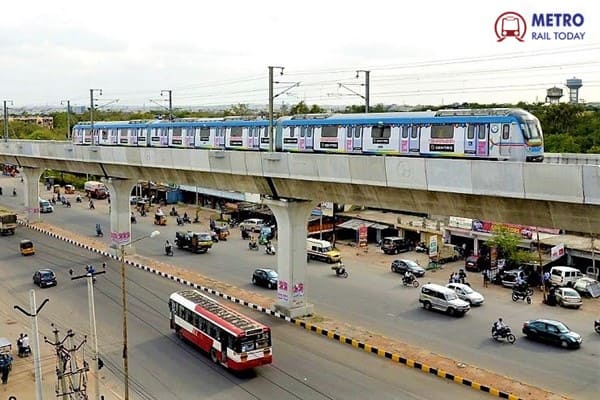 Global tender issued for procurement of 60 Rolling Stock coaches for Hyderabad Metro Rail Project
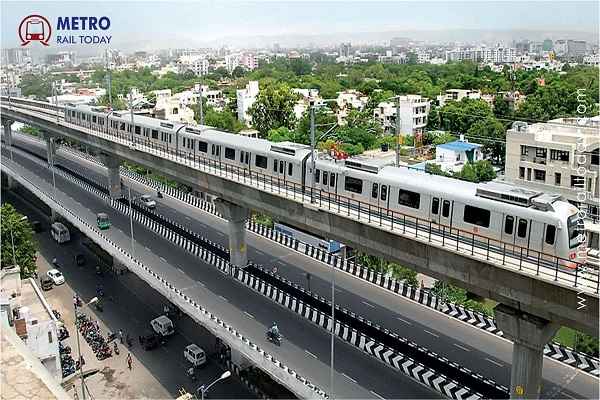 Global tender issued for procurement of 102 Rolling Stock coaches for Patna Metro Rail Project
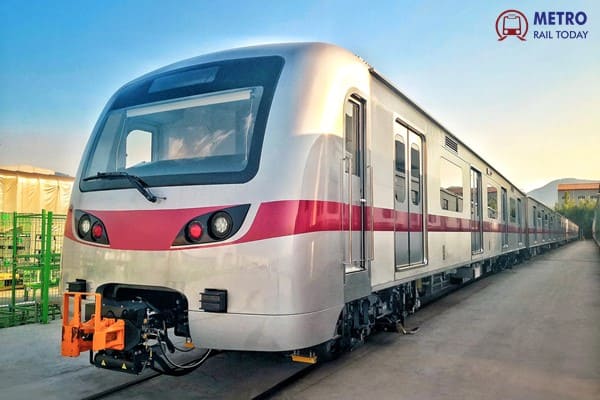 Gamuda awarded RM3.7 billion contract to build Keelung Mass Rapid Transit in Taiwan