


Trending Now
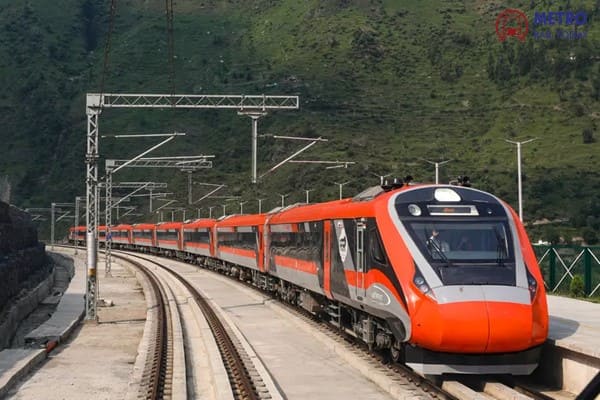 Japanese Delegation visits KRIDE to explore Bengaluru Suburban Rail Project opportunities
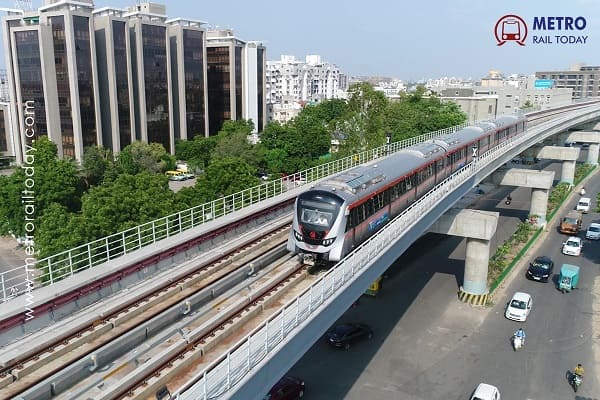 GMRC issues ₹879 crore Civil Tender for Airport Extension under Ahmedabad Metro Phase 2A
 Global Mobility Leaders Alstom and Siemens become Corporate Member of Chamber of Railway Industries
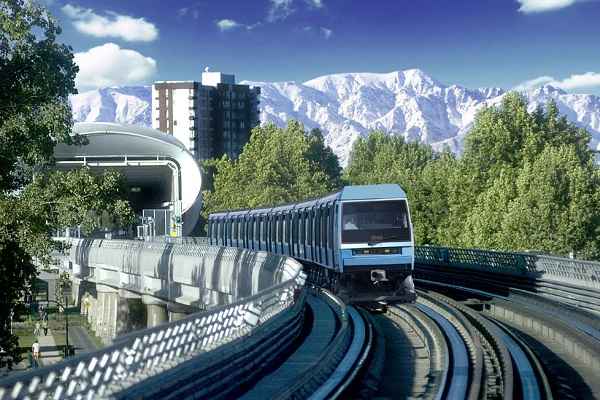 L&T-MHI JV wins contract for Automated People Mover at Dubai’s Al Maktoum International Airport
 Delhi Metro Rail Network to expand to 695 km by 2047, Six new RRTS Corridors planned
 HÜBNER at InnoTrans 2026: Global rail expertise and local capability for India’s Next-Gen Mobility
 Australia shortlists three firms/consortia for Sydney–Newcastle High Speed Rail Project
 MRVC set to procure 238 AC Vande Metro Trainsets worth ₹19,293 crore from Indian Railways
 Maharashtra approves ₹17,725 crore Mumbai Metro Line 13 linking Mira-Bhayandar with Vasai-Virar
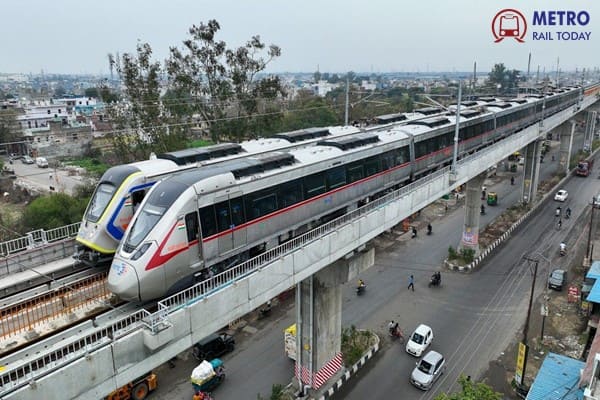 Gujarat issues three tenders for 48.38-km Metro-RRTS Hybrid corridors under Ahmedabad Metro Phase 3
Kerala Govt approves 583-km RRTS Corridor from Thiruvananthapuram to Kasaragod
MRT Online Desk
Posted on: 2026-02-03 16:50:00
Viewer: 998
Comments: 0
Country: India
City: Kochi
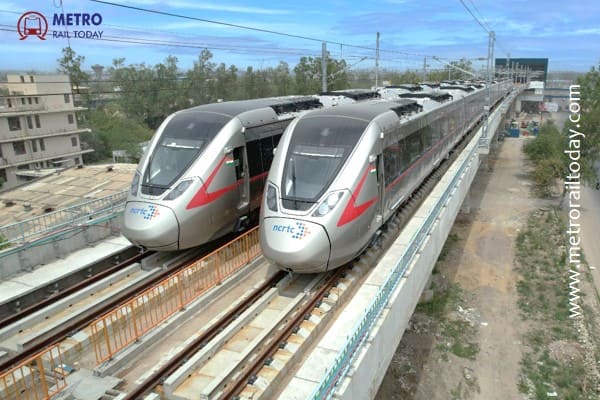
Thiruvananthapuram, India (Metro Rail Today): In a significant move aimed at addressing long-standing connectivity challenges, the Kerala government has granted in-principle approval for a 583-kilometre Regional Rapid Transit System (RRTS) corridor from Thiruvananthapuram to Kasaragod. The decision comes amid uncertainty over the Centre-backed high-speed rail corridor and the absence of any such proposal for Kerala in the Union Budget.
The proposed RRTS project is estimated to cost ₹1.92 lakh crore, nearly three times the projected cost of the earlier SilverLine semi-high-speed rail project. The final investment figure will be determined after the preparation of the Detailed Project Report (DPR). The state government has indicated that the corridor could be completed over a 12-year timeframe, subject to statutory approvals and funding arrangements.
The project has already received cabinet approval, and the state will now approach the Union government for mandatory clearances, a crucial step given the scale and strategic importance of the corridor.
Phased Development Strategy
As per the transport department’s order, the RRTS will be implemented in four phases. The first phase, referred to as the Travancore Line, will span 284 km between Thiruvananthapuram and Thrissur, with construction planned between 2027 and 2033. Subsequent phases will extend the corridor to Kozhikode, Kannur, and Kasaragod, creating a continuous high-speed spine across the state.
The proposal also includes provisions for future interstate extensions towards Coimbatore, Kanyakumari, and Mangaluru, potentially strengthening regional economic integration across southern India.
Commenting on the development, Mrs. Mamta Shah, Managing Director & CEO, Urban Infra Group, said the state’s move reflects a pragmatic shift in approach.
“Kerala’s decision to pursue an RRTS corridor demonstrates a mature understanding of its unique urban form and environmental sensitivities. A viaduct-based, regionally integrated rapid transit system can deliver high capacity mobility while minimising land acquisition and social disruption. If planned and executed well, this project could emerge as a national benchmark for sustainable high-speed regional rail development,” she said.
Integration with Metro Networks
A key aspect of the proposal is the integration of the RRTS with existing and proposed metro systems in Thiruvananthapuram, Kochi, and Kozhikode. The government aims to develop a seamless multimodal transport network, improving last-mile connectivity and reducing dependence on private vehicles.
While the government has maintained that the SilverLine project has not been formally shelved, the order acknowledges that it could not progress due to technical objections, environmental concerns, and public resistance. The RRTS is being positioned as a more acceptable alternative, with the alignment proposed largely on elevated viaducts instead of embankments, reducing ecological impact and addressing public concerns.
Funding and Outlook
The funding model is expected to follow the Delhi–Meerut RRTS pattern, with 20% contribution each from the state and Union governments, and the remaining 60% financed through long-term international loans.
The Kerala government reiterated that a high-speed regional transit system is critical for the state’s socio-economic growth, given its dense population, linear urbanisation, and constrained geography. If realised, the RRTS corridor could mark a transformational shift in Kerala’s intercity mobility landscape, offering faster, cleaner, and more integrated transport for the decades ahead.


MRT Online Desk
Metro Rail Today is an authentic and global news provider for the Rail & Metro industry from and around the world.