

Trending Now
 STUP Consultants–Assystem JV wins ₹14.20 crore Design Consultancy for Ahmedabad Metro
 Three Global Firms bid for General Consultancy Contract of Lucknow Metro Phase 1B Project
 ETA Engg - PISCESIA JV awarded ₹225.87 crore E&M Contract for Delhi Metro Phase 5A Project
 Mumbai–Ahmedabad Bullet Train cost rises to ₹2.03 Lakh crore; ₹92,761 crore spent by March 2026
 Global Rail & Metro Infrastructure Market to Reach USD 462.13 Billion by 2033
 Malaysia awards RM2.69 billion contract for Penang Mutiara Line’s Cross-Sea LRT Extension
 Afcons Infrastructure wins ₹876.51 crore contract for Pune Metro Viaduct and Elevated Road Project
 SYSTRA–led JV wins ₹228.78 crore Design Consultancy Contract for two 350 kmph Bullet Train Corridors
 Paras Railtech wins ₹84.72 crore Ballastless Track Contract for Jaipur Metro Phase 1C Project
 SYSTRA India wins DPR Consultancy Contract for Chennai Metro Phase II Corridor 5 Extension
Madrid unveils €1.57 billion Metro Rail Expansion Programme with 27.8 km of New Corridors
MRT Online Desk
Posted on: 2026-10-01 15:55:00
Viewer: 2,705
Comments: 0
Country: Spain
City: Madrid
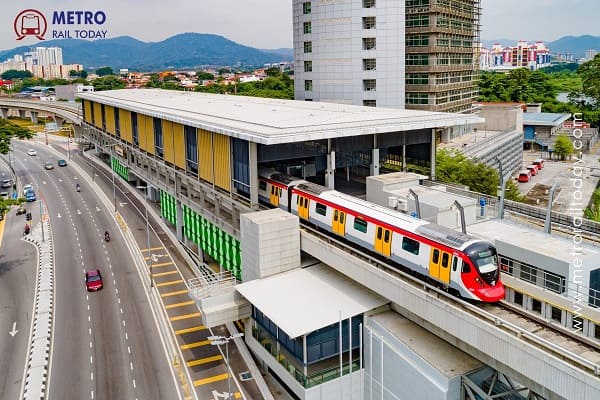
Madrid, Spain (Rail & Metro Today): The regional government of Madrid has announced a €1.57 billion, 10-year urban rail expansion programme that will add approximately 27.8 km of new metro and light rail lines across the Spanish capital's metropolitan region.
The programme will focus on extensions to Metro Lines 1, 10 and 11, along with an extension of the Metro Ligero light rail network. Feasibility and engineering studies are scheduled to take place between 2027 and 2029, followed by major civil construction works planned between 2030 and 2034.
€1.05 Billion Line 10 Extension
The largest individual project under the programme is a €1.05 billion extension of Metro Line 10 southwards from its current terminus at Puerta del Sur towards Móstoles.
The project will add approximately 6.5 km of double track and at least six new stations, creating a new metro connection between the existing network and Móstoles.
The extension represents the largest single investment within the newly announced urban rail programme and is expected to strengthen connectivity in the southern part of the Madrid metropolitan area.
Line 1 and Line 11 Extensions
To the north of Madrid, Metro Line 1 will be extended by approximately 1.5 km from Pinar de Chamartín to Las Tablas. The €150 million project will include up to two new stations.
Meanwhile, Line 11 will receive a much longer extension. The line will be extended 18.3 km southwards from La Fortuna to Poza del Agua in Leganés. The project forms part of Madrid's wider plan to develop a 33-km diagonal metro corridor across the capital.
The Line 11 development is intended to improve cross-city connectivity and provide a new strategic link between areas currently served by different parts of Madrid's transport network.
Metro Ligero Extension in Boadilla del Monte
The programme also includes a 1.5-km extension of Metro Ligero Line ML3 to serve the Valenoso development in Boadilla del Monte.
The €25 million project will add two new stops, extending light rail connectivity to the growing development and surrounding communities.
Together, the planned metro and light rail extensions form a substantial addition to Madrid's urban rail infrastructure over the coming decade.
Part of €3.74 Billion Metro Modernisation Programme
The €1.57 billion expansion programme forms part of a broader €3.74 billion metro modernisation programme for the Madrid region.
The wider investment package includes €1.22 billion for extension projects already underway on Metro Lines 3, 5 and 11, while another €950 million has been allocated for completing the full automation of Line 6.
The combination of network expansion, modernisation and automation is intended to increase capacity and improve the performance of Madrid's metro system as passenger demand continues to grow.
Strategic Transport Plan to Guide Expansion
Madrid's long-term transport infrastructure pipeline will also be guided by a 30-month strategic transport plan commissioned by the regional transport consortium, CRTM.
The study will establish investment priorities and network planning requirements through 2042, providing a long-term framework for future public transport development.
The planning exercise comes amid strong demand for public transport in the Madrid region. The metro network recorded 389.6 million passenger journeys during the first half of the year, highlighting the need for additional capacity and improved connectivity.
With studies scheduled to begin in 2027 and major civil works planned from 2030, Madrid's latest investment programme represents a long-term strategy to expand and modernise its urban rail network while preparing the system for continued growth in passenger demand.


MRT Online Desk
Metro Rail Today is an authentic and global news provider for the Rail & Metro industry from and around the world.