


Trending Now
 Jupiter Wagons bags ₹1,140 crore order from Indian Railways for 2,583 Freight Wagons
 Jakson Limited wins ₹299.88 crore E&M Systems Contract for Bhopal Metro Rail Project
 Titagarh Rail Systems awarded additional ₹1,717 crore order for 4,955 BOXNHL Wagons
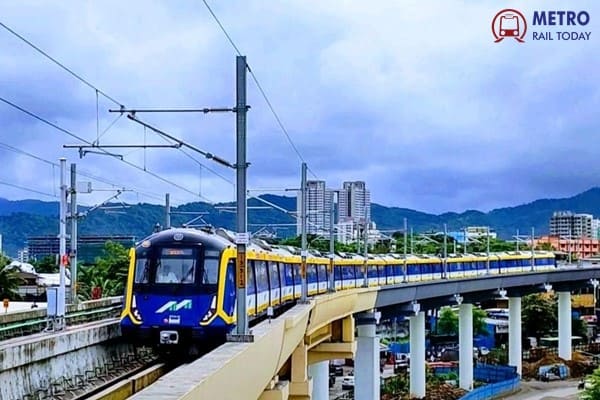 Maharashtra approves ₹13,856 crore Mumbai Metro Line 12A to connect Katai Naka and Taloja
 STUP Consultants Wins Station Design Consultancy Contract for Thane Metro Rail Project
 Larsen & Toubro bags Design-and-Build Contracts for Bangladesh’s Dhaka Metro Line 1 Project
 Wabtec Corporation awarded ₹839 crore contract for India's Vande Bharat Sleeper Train Project
 How Indigenous Engineering and Japanese Technology are transforming India's first Bullet Train?
 India's Metro Rail Network set to cross 2000-km mark soon, become second largest in World
 Alstom to deploy DTG Signalling System for Jaipur Metro’s 5.2-km Phase-1 Extension
Maharashtra approves ₹13,856 crore Mumbai Metro Line 12A to connect Katai Naka and Taloja
MRT Online Desk
Posted on: 2026-10-28 15:45:00
Viewer: 81
Comments: 0
Country: India
City: Mumbai
Mumbai, India (Rail & Metro Today): The Maharashtra government has approved the construction of Metro Line 12A, an 18.4-kilometre elevated corridor connecting Manpada–Katai Naka to Taloja via Kalyan Phata, at an estimated cost of ₹13,856.37 crore. The project is expected to strengthen public transport connectivity across the Mumbai Metropolitan Region (MMR), linking growing residential areas with industrial and logistics hubs.
The Mumbai Metropolitan Region Development Authority (MMRDA) will implement the project. Chief Minister Devendra Fadnavis has set a target of completing the corridor within three-and-a-half years, according to the project details provided. The line will feature 12 elevated stations and is intended to provide an alternative to road-based travel in a rapidly developing part of the region.
Alongside the elevated metro corridor, the project includes 15.62 kilometres of integrated road flyovers, with four-lane and six-lane sections. The combined transport infrastructure is designed to improve traffic movement, reduce congestion and provide more efficient connections between key urban centres.
Officials estimate that Metro Line 12A could serve approximately 4.74 lakh passengers daily. The corridor is also expected to reduce travel times by around 40% to 50% compared with existing road journeys, although actual savings will depend on operating services, passenger demand and prevailing traffic conditions.
The project’s interchange facilities will connect passengers with other major transport networks. These include the Mumbai–Ahmedabad bullet train corridor at Katai Naka, Metro Line 14 at Kalyan Phata and Navi Mumbai Metro Line 1 at Amandoot. Feeder bus services are also planned for all 12 stations to improve last-mile connectivity and make metro travel more convenient.
- Manpada
- Katai Naka
- Desai Naka
- Padle
- Kalyan Phata
- Gotheghar
- Dahisar Mori
- Dahisar Gaon
- Kiravali
- Rohinjan
- Khutari
- Amandoot
Metro Line 12A is expected to improve access to employment centres, industrial areas and logistics facilities across the region. Better public transport links could support the movement of workers and commuters while helping reduce dependence on private vehicles.
The project is also expected to complement Metro Line 12, a separate 23.57-kilometre corridor connecting Kalyan with Taloja via Dombivli MIDC and other growth areas. Together, the two corridors are intended to strengthen connections between Kalyan-Dombivli, Taloja and adjoining development zones.
By providing a high-capacity public transport alternative, Metro Line 12A could encourage a shift from private vehicles to mass transit, helping ease road congestion and reduce transport-related emissions. Its effectiveness will depend on reliable metro operations, integrated interchange facilities and well-planned feeder services.
With government approval secured, the next stages will involve project implementation and the associated planning and construction processes. The corridor represents a substantial investment in regional mobility, with the potential to improve connectivity between residential communities, industrial hubs and other transport networks across the Mumbai Metropolitan Region.

MRT Online Desk
Metro Rail Today is an authentic and global news provider for the Rail & Metro industry from and around the world.