


Trending Now
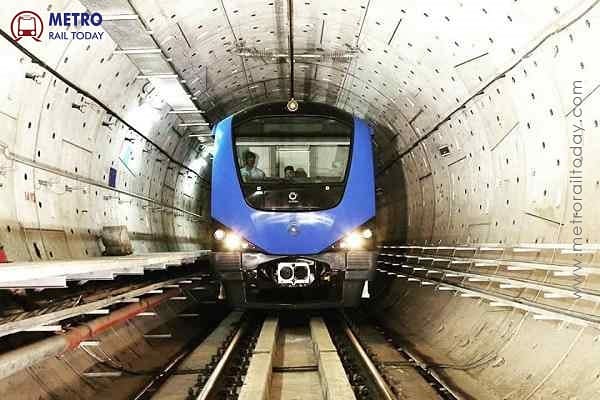 TBM Servarayan achieves Tunnel Breakthrough on Corridor 3 of Chennai Metro Phase 2
 India targets 350 kmph Indigenous Bullet Train to accelerate High-Speed Rail ambitions
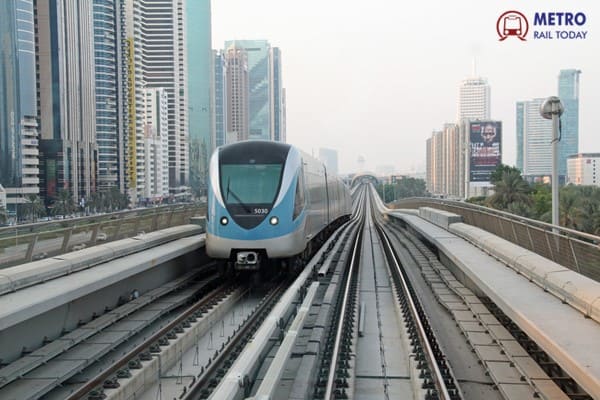 RTA invites bids for $9.2 billion Dubai Metro's Gold Line Expansion Project
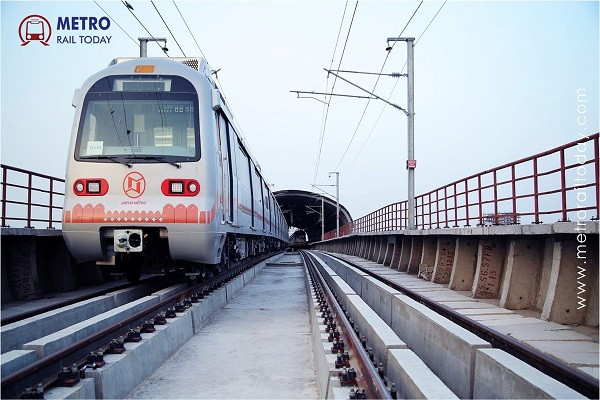 ICT–RINA JV awarded Design Consultancy Contract for Jaipur Metro Phase 2
 J. Kumar Infraprojects achieves TBM Breakthrough at Mahipalpur for Delhi Metro Phase IV
- DPR submitted for 671 km Hyderabad–Pune–Mumbai High-Speed Rail Corridor
 Former Railway Board Member Anil Kumar Khandelwal Joins Advisory Board of Rail Chamber
 Govt proposes 270-km Orbital Rail Corridor to transform Regional connectivity in Delhi-NCR
 Tamil Nadu approves ₹9,335 Crore Chennai Airport–Kilambakkam Metro Corridor
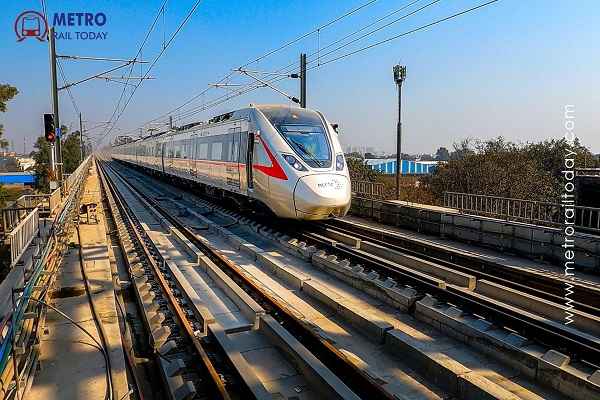 NCRTC to appoint General Consultant for Delhi–Panipat–Karnal Namo Bharat RRTS Corridor
Maharashtra approves ₹22,862 Crore Mumbai Metro Line 8 connecting Mumbai and Navi Mumbai Airports
Construction is scheduled to begin in June 2026, with completion targeted for May 2031.
MRT Online Desk
Posted on: 2026-02-24 16:20:00
Viewer: 6,232
Comments: 0
Country: India
City: Mumbai
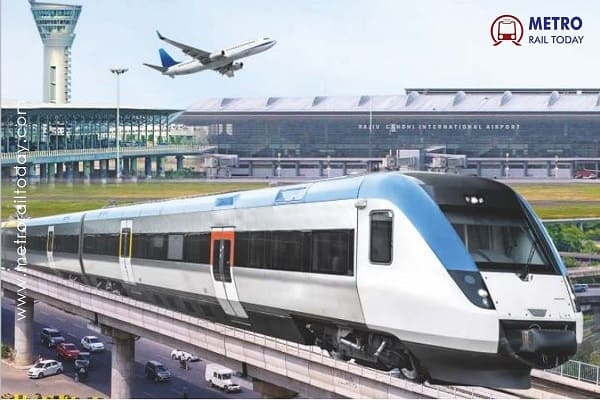
Mumbai, India (Metro Rail Today): The Maharashtra government on Tuesday issued a Government Resolution approving the construction of Metro Line 8, a 34.9-km high-speed corridor connecting Chhatrapati Shivaji Maharaj International Airport (CSMIA) with Navi Mumbai International Airport (NMIA). The project is estimated to cost ₹22,862.07 crore and will be implemented under the Design, Build, Finance, Operate and Transfer (DBFOT) model with 40 percent Viability Gap Funding (VGF).
Under the approved framework, the project will be executed by the City and Industrial Development Corporation (CIDCO) through a Public-Private Partnership (PPP). The VGF component will be shared equally by the central and state governments, each contributing 20 percent of the total project cost, amounting to ₹3,446 crore each. The private concessionaire will finance approximately 56.72 percent of the total cost, estimated at ₹9,773 crore, while Navi Mumbai International Airport will contribute ₹564 crore. The state government has clarified that it will not provide a sovereign guarantee for loans raised by either the concessionaire or CIDCO.
Metro Line 8 will comprise 20 stations, including 14 elevated and six underground stations. Of the total alignment, 25.09 km will be elevated and 9.8 km will run underground. The corridor is expected to ease congestion on key routes between Mumbai and Navi Mumbai, including the Sion–Panvel Highway and the Atal Setu (Sewri–Nhava Sheva sea link), while providing seamless airport-to-airport connectivity.
Following the commencement of operations at Navi Mumbai International Airport’s first phase on December 25, 2025, the state government has classified the metro link as a “Vital Urban Transport Project” to ensure efficient inter-airport movement. The line is expected to significantly reduce travel time between the two international gateways and strengthen multimodal integration in the Mumbai Metropolitan Region.
Construction is scheduled to begin in June 2026, with completion targeted for May 2031. A 27.2-hectare metro car depot will be developed at Mandale on designated forest land to support operations and maintenance. Operational projections indicate that trains will run at intervals of 5.32 minutes during the initial phase in 2031, improving to a frequency of 3.02 minutes by 2061. Daily ridership is projected at approximately 9.82 lakh passengers in 2031. Proposed fares for 2031–32 are expected to start at ₹15 for the first three kilometres and go up to ₹125 for journeys exceeding 42 km.
A high-power committee chaired by the Chief Secretary will oversee project implementation to ensure adherence to timelines. The government has also outlined rehabilitation measures for project-affected persons, including housing provisions or one-time compensation packages.
Commenting on the approval, Mrs. Mamta Shah, MD & CEO, Urban Infra Group, said, “Metro Line 8 is a transformative mobility intervention for the Mumbai Metropolitan Region. Seamless airport-to-airport connectivity will not only enhance passenger convenience but also position Mumbai as a globally competitive aviation and business hub. However, timely execution under the DBFOT model and effective coordination between stakeholders will be critical to realizing the corridor’s full potential.”
The approval of Metro Line 8 marks a significant step toward integrated regional mobility, reinforcing Mumbai’s long-term infrastructure roadmap and multimodal transport strategy.

MRT Online Desk
Metro Rail Today is an authentic and global news provider for the Rail & Metro industry from and around the world.