

Trending Now
 UPMRC floats ₹670 Crore Rolling Stock Tender for 45 Metro Cars for Lucknow Metro Phase 1B
 Maha Metro launches ₹994.78 crore Rolling Stock Tender for Nagpur and Pune Metro Phase 2
 Afcons Infrastructure wins ₹1,045 crore Civil Contract for Ramwadi–Wagholi Metro Corridor in Pune
 Keralam High-Speed Rail proposal is technically feasible but project cost may double: Expert Panel
 DMRC begins Construction work on Inderlok–Indraprastha Corridor under Delhi Metro Phase 4 Expansion
 Bihar approves RRTS Plan to connect Patna with Gaya, Muzaffarpur, Ara and Begusarai
 Indian Prime Minister Narendra Modi to Flag Off Asia's First Hydrogen-Powered Train on July 17
 DMRC launches Delhi Metro International Limited to expand Urban Transit Expertise Globally
 Prime Minister Narendra Modi lays Foundation Stone for ₹13,037 Crore Jaipur Metro Phase 2 Project
 MRVC seeks Capital Infusion to Fast-Track ₹64,644 crore Railway Infrastructure Pipeline in Mumbai
Maharashtra drops PPP Model for Mumbai Metro Line 14; Opts for Government-Funded Execution
MRT Online Desk
Posted on: 2026-02-20 15:30:00
Viewer: 4,348
Comments: 0
Country: India
City: Mumbai
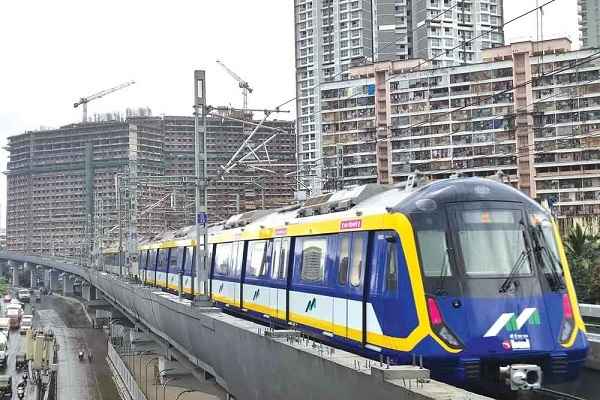
Mumbai, India (Metro Rail Today): In a significant strategic shift, the Maharashtra government has decided to abandon the Public-Private Partnership (PPP) model for Mumbai Metro Line 14 and instead execute the project through government-backed financing. The move follows a muted response from private developers during the Expression of Interest (EOI) phase initiated in May 2025.
Mumbai Metro Line 14, also known as the 45-km Magenta Line, is planned to connect Kanjurmarg in Mumbai’s eastern suburbs to Badlapur in the extended Mumbai Metropolitan Region (MMR). The corridor is expected to include around 15 to 20 stations, passing through key nodes such as Vikhroli, Mahape and Ambernath, creating a vital east–west mobility spine.
Shift to Government-Led Funding
Officials indicated that private investors expressed concerns over long-term revenue uncertainty, particularly due to regulated metro fare structures and extended payback periods. Under the revised approach, the project will now be implemented through an EPC (Engineering, Procurement and Construction) or fully government-led model, with funding sourced through state-backed loans and international financial institutions. The OPEC Fund for International Development has reportedly shown interest in supporting the project.
The estimated project cost stands at approximately ₹18,000 crore. Construction is targeted to begin by late 2026, with completion aimed for 2030. Once operational, the corridor is projected to carry over seven lakh passengers daily and reduce travel time between Badlapur and Kanjurmarg from nearly two hours to under 60 minutes.
Why the PPP Model Did Not Gain Traction
Metro projects typically involve high capital expenditure and long gestation periods, often exceeding 20 years before substantial returns are realised. Private developers were reportedly cautious about the low Financial Internal Rate of Return (FIRR) and the political sensitivity surrounding fare revisions. Fare caps and regulatory oversight limit flexibility in adjusting ticket prices, which affects revenue predictability.
Environmental and regulatory risks also contributed to investor hesitation. The proposed alignment passes through ecologically sensitive areas such as the Thane Creek Flamingo Sanctuary and Parsik Hills, requiring stringent Coastal Regulation Zone (CRZ) clearances and advanced engineering solutions. Additionally, the experience of Mumbai Metro Line 1 — which saw fare disputes and revenue challenges under a PPP structure — reinforced concerns among private bidders.
Industry experts have long maintained that metro systems function primarily as public utilities rather than profit-driven ventures. The shift to a government-funded model reflects this philosophy, prioritising long-term public mobility benefits over commercial returns.
Corridor Design and Connectivity
Line 14 will serve as a major alternative to the congested Central Railway suburban line, linking deep eastern suburbs with Mumbai’s core and Navi Mumbai. The alignment will include underground stretches in dense areas such as Kanjurmarg and elevated sections across Navi Mumbai and the extended eastern belt toward Badlapur.
The corridor will integrate with multiple metro lines, including Line 4 (Wadala–Thane), Line 6 (Swami Samarth Nagar–Vikhroli) and potentially Line 12 (Kalyan–Taloja), strengthening multimodal connectivity across the region.
Environmental and Engineering Complexities
The project’s high cost and planning complexity stem from varied terrain and ecological sensitivities. Crossing the Thane Creek Flamingo Sanctuary will require specialised construction methods to minimise environmental impact. Tunnelling through Parsik Hills toward the Ambernath–Badlapur region will involve advanced engineering techniques. A hybrid design combining underground and elevated sections has been adopted to balance urban density constraints and cost efficiency.
Strategic Importance for “Third Mumbai”
Line 14 is expected to play a pivotal role in supporting the state’s “Third Mumbai” development vision near the Mumbai Trans Harbour Link (MTHL) and Navi Mumbai International Airport. By providing a high-speed alternative to suburban rail, the line is anticipated to drive economic decentralisation, boost real estate development in areas such as Shil Phata and Badlapur, and enhance regional integration.
Commenting on the development, Mrs. Mamta Shah, MD & CEO, Urban Infra Group, said, “The shift from PPP to a government-led execution model reflects the structural realities of metro financing in India. Large-scale urban transit systems require stable, long-term capital and policy control over fares. By leveraging institutional loans and structured land monetisation, the state can ensure timely execution while retaining operational flexibility. Line 14 has the potential to reshape east–west mobility and catalyse growth across the extended Mumbai Metropolitan Region.”
As MMRDA advances environmental clearances and financing arrangements, Line 14 is poised to become one of the most transformative corridors in Mumbai’s expanding metro network.

MRT Online Desk
Metro Rail Today is an authentic and global news provider for the Rail & Metro industry from and around the world.