


Trending Now
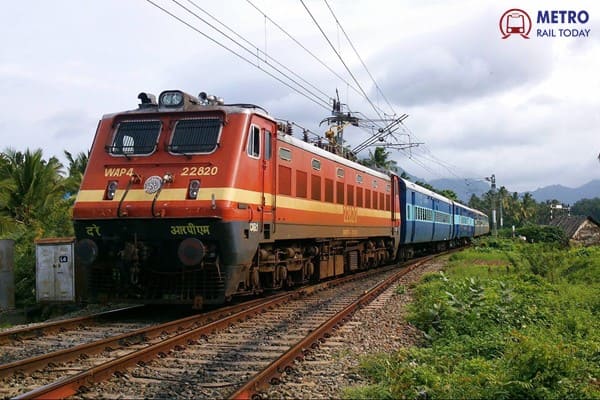 CLW sets Global Benchmark with record 800 Electric Locomotives production in FY 2025–26
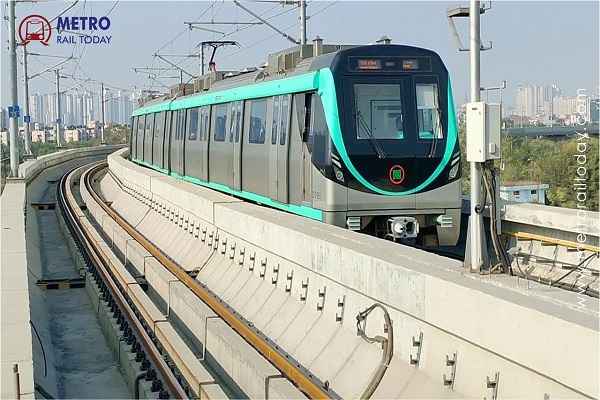 NMRC invites Applications for Key Executive Positions for Noida Metro Rail Project
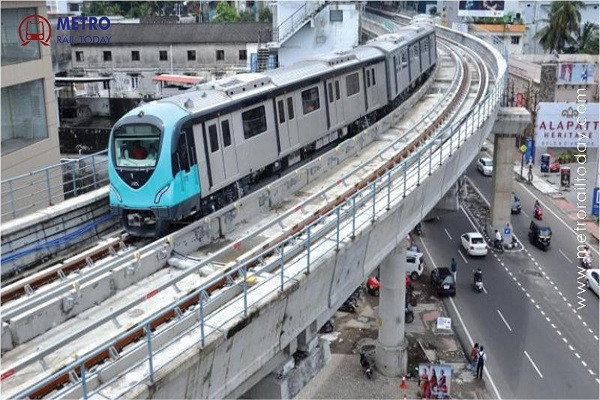 Central Govt rejects revised DPR of 7.5 km Noida-Greater Noida Metro Rail Extension Project
 Revised DPR of Prayagraj Metro focuses on seamless Rail-Air connectivity
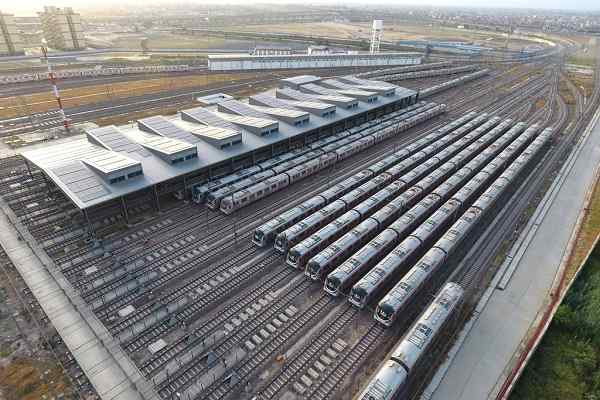 DMRC floats Tender for Central Vista Depot Design in Delhi Metro Phase V Expansion
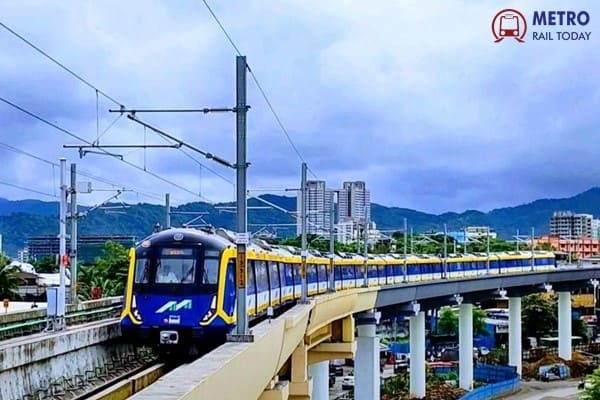 MMRDA seeks ₹14,100 Crore Loan for two upcoming Mumbai Metro Corridors
 Jupiter Wagons Eyes ₹20,000-Crore Mumbai Suburban Mega Rolling Stock Tender
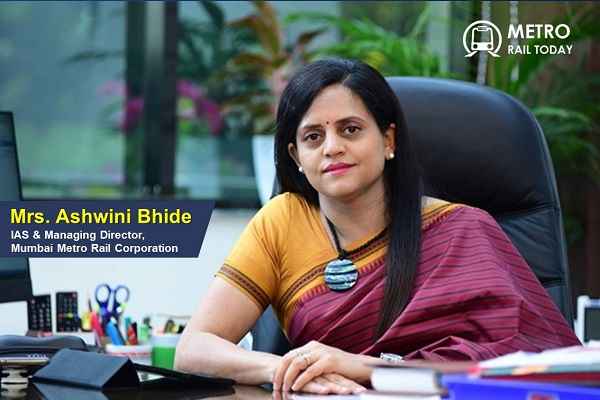 Mumbai Metro Chief Ashwini Bhide appointed as First Woman BMC Commissioner
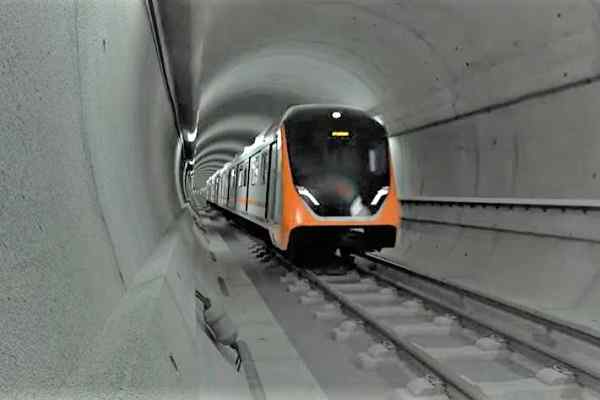 TBM ‘Parvati’ completes Underground Tunnelling on Kanpur Metro Phase 1 Project
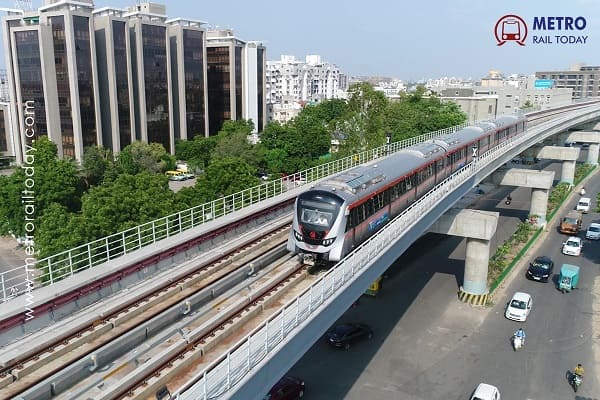 Surat Metro begins First Trial Run on 8.5 km Diamond Corridor between Dream City and Althan Tenement
MMRDA allocates record ₹13,839 crore for Mumbai Metro Rail Project for FY2026-27
MRT Online Desk
Posted on: 2026-02-16 17:00:00
Viewer: 1,010
Comments: 0
Country: India
City: Mumbai
Mumbai, India (Metro Rail Today): The Mumbai Metropolitan Region Development Authority (MMRDA) has presented its Budget for FY 2026–27 with a total outlay of ₹48,072.57 crore, marking its first surplus Budget since 2017–18 and signalling a decisive fiscal turnaround.
After recording a deficit of ₹7,468 crore in FY 2024–25, the authority has achieved a surplus of ₹2.17 crore (₹217 lakh) within three years. Estimated receipts stand at ₹48,072.57 crore against proposed expenditure of ₹48,072.40 crore. Officials described the surplus as the outcome of structured land monetisation, strengthening of the Urban Transport Fund (UTF), improved project-linked revenues, and calibrated capital mobilisation through institutional financing and international partnerships.
Notably, ₹42,026.14 crore — accounting for 87.42% of total expenditure — has been earmarked for development projects and schemes. The proposed Budget outlay is 58.57% higher than the revised estimate of ₹30,316.18 crore for FY 2025–26, while proposed expenditure is 53.52% higher than the previous year’s revised estimate of ₹31,313.13 crore. The scale of expansion alongside a surplus position marks a structural shift in MMRDA’s financial trajectory. From FY 2017–18 to FY 2025–26, the authority had largely operated under deficit conditions before restoring fiscal balance in FY 2026–27.
The Budget outlines a coordinated regional transformation strategy integrating mobility, economic decentralisation, water security, climate resilience and housing reform.
Hon’ble Chief Minister Shri Devendra Fadnavis stated that MMRDA’s first surplus Budget since 2017–18 marks a defining institutional milestone, reflecting global investor confidence and a long-term infrastructure-led growth vision for the Mumbai Metropolitan Region. Hon’ble Deputy Chief Minister and Chairman, MMRDA, Shri Eknath Shinde, said that with 87% allocation towards projects, the Budget demonstrates focused and accountable governance under the Growth Hub framework. Metropolitan Commissioner Dr. Sanjay Mukherjee, IAS, noted that the surplus Budget is the outcome of fiscal discipline and calibrated capital mobilisation, marking a transition from financial stress to financial stability while maintaining development momentum.
Underground Mobility Infrastructure
MMRDA continues to expand high-capacity underground corridors to decongest the urban core and improve east–west connectivity. Allocations include ₹1,250 crore for the Orange Gate–Marine Drive Coastal Road underground tunnel, ₹75 crore for the Gaimukh–Fountain Hotel tunnel, ₹3,029.51 crore for the Thane–Borivali four-lane underground tunnel, and ₹1,189 crore for the Mumbai Integrated Tunnel linking BWSL, BKC, HSR and T2. The total allocation for underground tunnel infrastructure stands at ₹5,543.51 crore.
Major Arterial Connectivity & Multi-Ring Road Network
The Budget strengthens the multi-ring road strategy aimed at redistributing traffic flows and supporting economic growth corridors. Key allocations include ₹603 crore for the Atal Setu–Mumbai–Pune Expressway link, ₹880.12 crore for the Anand Nagar–Saket elevated road, ₹1,025.77 crore for the Thane Coastal Road, ₹936.07 crore for the Worli–Sewri elevated corridor, ₹2,000 crore for the Mumbai–Vadhavan Expressway corridor, and ₹2,362.20 crore for extended Mumbai urban infrastructure projects. The total allocation under major arterial and ring road connectivity amounts to ₹12,816.53 crore.
Growth Hubs and Mumbai 3.0
Economic decentralisation is being advanced through the Growth Hub framework under Mumbai 3.0. A total of ₹4,600 crore has been allocated, including ₹4,000 crore for the Karnala–Sai–Chirner (KSC) New Town, ₹500 crore for the Raigad Pen Growth Centre and ₹100 crore for the Kharbav Integrated Business Park. The Mumbai 3.0 initiative is envisioned as a new urban frontier to decongest Mumbai and create structured employment ecosystems aligned with NITI Aayog’s Growth Hub concept.
MMR Integrated Metro Network
MMRDA continues execution of India’s largest metro expansion programme by a single implementing agency. The total allocation for metro projects in FY 2026–27 stands at ₹13,838.88 crore. Major allocations include ₹3,630.71 crore for Metro Line 4 (Wadala–Kasarvadavali), ₹2,407.78 crore for Metro Line 6 (Swami Samarth Nagar–Kanjurmarg), ₹1,309.30 crore for Metro Line 5 (Thane–Bhiwandi–Kalyan), ₹1,224.60 crore for Metro Line 2B (D.N. Nagar–Mandale), and ₹1,054.54 crore for Metro Line 12 (Kalyan–Taloja). Additional allocations cover Metro Line 9 & 7A extensions, Metro Line 14, Mandale Metro Bhavan, employee housing, digital mobility platforms and multi-modal integration planning.
The metro expansion is central to strengthening high-capacity public transport and long-term congestion mitigation across the Mumbai Metropolitan Region.
Social Infrastructure and Housing
Under social infrastructure and inclusive urbanism, ₹551 crore has been allocated for the Mata Ramabai Ambedkar Nagar SRA project, ₹150 crore for rehabilitation and resettlement, and ₹30.33 crore for affordable rental housing, bringing the total housing and social infrastructure allocation to ₹731.33 crore.
Commenting on the Budget, Mrs. Mamta Shah, MD & CEO, Urban Infra Group, said, “MMRDA’s surplus Budget represents a structural financial turnaround achieved alongside record-scale capital deployment. Allocating over 87% of expenditure to development while maintaining fiscal balance reflects disciplined governance and strategic capital planning. The integrated focus on metro expansion, underground mobility, ring roads and new growth hubs positions the Mumbai Metropolitan Region as a globally competitive and investment-ready urban economy.”
More than a financial statement, the FY 2026–27 Budget serves as a comprehensive roadmap for transforming the Mumbai Metropolitan Region into a resilient, sustainable and globally competitive metropolitan ecosystem.


MRT Online Desk
Metro Rail Today is an authentic and global news provider for the Rail & Metro industry from and around the world.