


Trending Now
 Ghaziabad plans New Metro Corridor linking Vaishali to Gokulpuri via Hindon Airport
 Telangana Government takes full control of Hyderabad Metro from L&T in ₹1,461 crore Deal
 R Mohanraja appointed as new Secretary of Railway Board, Ministry of Railways
 Adani Group's construction arm bags first ₹1,024 crore Civil Contract of Delhi Metro Phase 5
 Govt approves permanent absorption of NCRTC Managing Director Shalabh Goel from Indian Railways
 Hyundai Rotem signs $332 million Rolling Stock Contract with Vietnam for Ho Chi Minh City Metro
 Maharashtra approves ₹18,130 Crore Mumbai Metro Line 5 Expansion & New Line 5A
 Telangana Govt approves ₹13,615 crore IRFC loan to takeover Hyderabad Metro from L&T
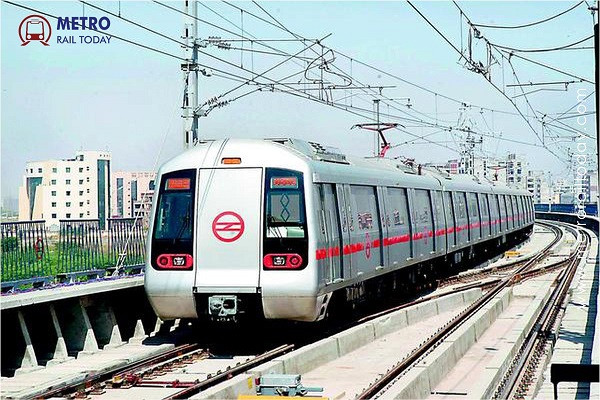 DMRC appoints Sanjay Jamuar as First CEO of Delhi Metro International Limited
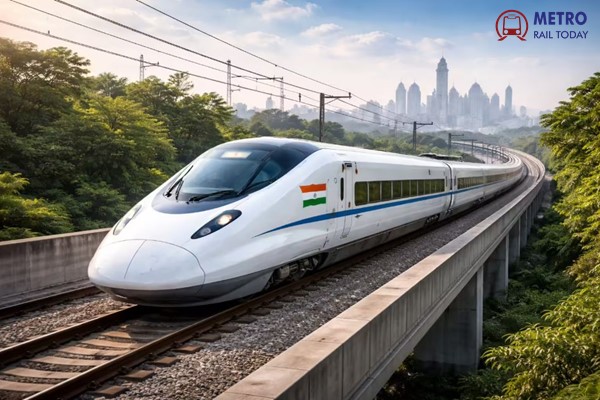 India launches first High Speed Bullet Train Manufacturing Complex in Bengaluru
NCRTC commences first trial runs of Meerut Metro trainsets on Namo Bharat Track
MRT Online Desk
Posted on: 2025-01-12 17:00:00
Viewer: 1,133
Comments: 0
Country: India
City: Meerut

Meerut, India (Metro Rail Today): In a groundbreaking move, the National Capital Region Transport Corporation (NCRTC) on 12th January 2025 (Sunday) launched the trial runs for the highly-awaited Meerut Metro, bringing the city closer to its long-anticipated metro service. Notably, this marks the first time in India that a local metro system will operate on the same corridor as the semi-high-speed Namo Bharat train, part of the ongoing Rapid Rail Transit System (RRTS) project.
The Delhi-Meerut RRTS, which connects New Ashok Nagar in Delhi to Meerut South, is expected to be fully operational by June 2025. The trial phase for the Meerut Metro will ensure that the system adheres to international standards of safety, performance, and comfort. Key tests conducted during these trials included weight load assessments, dynamic safety evaluations, and tests for overall passenger comfort.
Trains on the new metro line will navigate varying terrains and curves within the 23-km corridor—18 km elevated and 5 km underground. These assessments are critical to ensuring the seamless integration of all systems, including signaling, platform screen doors (PSDs), and the overhead power supply.
The metro features 12 train sets, each with three coaches, manufactured at the Alstom's Savli plant in Gujarat. Ten of these have already been delivered to the Duhai depot, and the metro's network, which boasts 13 stations, is set to transform urban mobility. The NCRTC is working to complete all civil work and stations so that the full corridor can be made operational by the end of 2025.
The trial run focused on testing the metro’s performance between Meerut South and near Meerut Central station, with trains gradually accelerating from a speed of 40 km/h to the designed maximum speed of 135 km/h. Manual operations under the Train Control Management System (TCMS) were employed during this phase, helping evaluate both the track and traction systems.
Designed with passenger comfort in mind, the Meerut Metro offers modern amenities such as ergonomic seating, USB charging ports, air-conditioning, grab handles, and luggage racks—all features borrowed from the Namo Bharat train.
As these trials continue, the NCRTC aims to ensure that the Meerut Metro will be ready to provide a safe, fast, and reliable public transport option, contributing significantly to reducing congestion and promoting sustainable urban development.

MRT Online Desk
Metro Rail Today is an authentic and global news provider for the Rail & Metro industry from and around the world.