


Trending Now
 NCRTC begins groundwork for 136-km Delhi–Panipat–Karnal Namo Bharat RRTS Corridor
 India targets March 2027 Rollout of First Indigenous Bullet Train 'Bharat B28’
 JICA approves ¥92.4 billion ODA Loan for Mumbai Metro Line 11
 CLW sets Global Benchmark with record 800 Electric Locomotives production in FY 2025–26
 NMRC invites Applications for Key Executive Positions for Noida Metro Rail Project
 Central Govt rejects revised DPR of 7.5 km Noida-Greater Noida Metro Rail Extension Project
 Revised DPR of Prayagraj Metro focuses on seamless Rail-Air connectivity
 DMRC floats Tender for Central Vista Depot Design in Delhi Metro Phase V Expansion
- MMRDA seeks ₹14,100 Crore Loan for two upcoming Mumbai Metro Corridors
 Jupiter Wagons Eyes ₹20,000-Crore Mumbai Suburban Mega Rolling Stock Tender
Spain floated €357.6 Million civil works tender for Burgos–Vitoria High-Speed Rail Line
MRT Online Desk
Posted on: 2026-03-13 07:58:00
Viewer: 820
Comments: 0
Country: Spain
City: Madrid
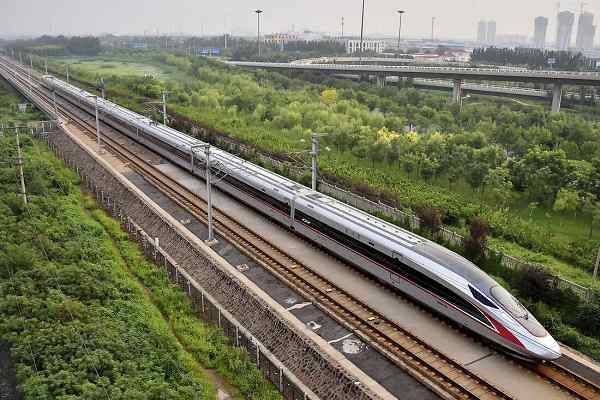
Madrid, Spain (Metro Rail Today): Spain’s high-speed rail infrastructure manager Adif Alta Velocidad (Adif AV) has invited tenders for civil works on another section of the Burgos–Vitoria high-speed rail line, marking continued progress on one of the country’s key strategic railway corridors.
The latest contract covers 22.7 kilometres of alignment between Piérnigas and Pancorbo, with an estimated civil works budget of €357.6 million.
The section will involve major engineering works, including the construction of 12 viaducts, among them two major structures measuring 1.8 km and 1.4 km over the River Oroncillo, as well as a 900-metre viaduct crossing the River Oca.
Progress on the Burgos–Vitoria Corridor
The Piérnigas–Pancorbo contract represents the fourth civil works package to be tendered for the Burgos–Vitoria high-speed line, a critical link in Spain’s expanding high-speed rail network.
Earlier contracts include the 16.7-km Burgos–Valle de las Navas section and the 7-km Manzanos–La Puebla de Arganzón section, with a combined estimated budget of €356.7 million.
Meanwhile, construction is already underway on the 8.4-km Pancorbo–Ameyugo section, indicating steady progress on the project.
According to Adif AV, work is currently underway or out for tender on four of the seven sections of the new line, representing 54.8 km of the total 96.6 km route. Tender documentation is being prepared for the remaining three sections.
The Burgos–Vitoria line forms a crucial component of the Atlantic Corridor of the Trans-European Transport Network (TEN-T).
Once completed, the corridor will connect with the Basque Y high-speed rail network at Vitoria, enabling high-speed train services between Madrid and the French border at Irún.
The Basque Y network, which meets at Bergara, comprises three branches extending to Vitoria, Bilbao and San Sebastián, forming a key rail backbone for northern Spain and international rail connectivity with France.
Progress on the Basque Y Project
Significant progress has already been made on several sections of the Basque Y high-speed network.
Civil works on the Bergara–San Sebastián section, being developed by the Basque regional government, are largely complete, except for the connection to the 1,668 mm gauge conventional railway network at Astigarraga.
To facilitate high-speed train operations, Adif is installing a third rail on the Astigarraga–Irún main line, enabling 1,435 mm standard-gauge high-speed trains to run alongside conventional services.
In addition, Adif AV has awarded an €18 million contract to construct a track-laying base at Martutene, which will support the installation of rails and turnouts between Bergara and Astigarraga.
The contract also includes:
-
A ballast supply facility at Ezkio Itsaso
-
35 supply points to support slab track installation along the route
Preparations are currently underway for the tender of the main track-laying contract.
Advancing Spain’s High-Speed Rail Network
Adif AV reports that civil works have been completed on 15 sections of the Vitoria–Bilbao portion of the Basque Y network. Work is still underway on the remaining four sections, including three located around the complex Bergara junction area.
Once fully operational, the corridor will significantly enhance cross-border rail connectivity between Spain and France, strengthening freight and passenger mobility across the Atlantic axis of Europe.
Commenting on the project, Mrs. Mamta Shah, MD & CEO, Urban Infra Group, said that large-scale high-speed rail infrastructure projects continue to play a vital role in strengthening regional connectivity and sustainable transport systems.
“Projects such as Spain’s Burgos–Vitoria high-speed line highlight the importance of integrated rail corridors in improving cross-border mobility and regional economic development. Large infrastructure investments under frameworks like the Trans-European Transport Network are setting strong benchmarks for efficient, sustainable and high-capacity rail systems worldwide,” she said.
She added that high-speed rail corridors are increasingly becoming a cornerstone of modern transport strategies aimed at reducing carbon emissions and promoting long-distance rail travel as an alternative to road and air transport.
With continuous investments in high-speed rail infrastructure, Spain remains one of the global leaders in high-speed rail development, operating one of the largest high-speed rail networks in Europe.
The Burgos–Vitoria line and the broader Basque Y network are expected to further enhance international rail connectivity, regional mobility and sustainable transportation across the Iberian Peninsula and the wider European rail system.


MRT Online Desk
Metro Rail Today is an authentic and global news provider for the Rail & Metro industry from and around the world.