


Trending Now
 Global Tender issued for 45 Metro Coaches and Advanced Signalling for Lucknow Metro Expansion
 Delhi approves ₹48,204 crore plan for 97-km Metro Rail Expansion under Delhi Metro Phase V(B)
 Odisha replans Bhubaneswar Metro into Tri-City Project to connect capital city with Cuttack and Puri
 Kalpataru-SOMA JV bags ₹1,522 Cr Contract for Delhi Metro's Inderlok–Indraprastha Magenta Line Extn
- Ghaziabad plans New Metro Corridor linking Vaishali to Gokulpuri via Hindon Airport
 Telangana Government takes full control of Hyderabad Metro from L&T in ₹1,461 crore Deal
 R Mohanraja appointed as new Secretary of Railway Board, Ministry of Railways
 Adani Group's construction arm bags first ₹1,024 crore Civil Contract of Delhi Metro Phase 5
 Govt approves permanent absorption of NCRTC Managing Director Shalabh Goel from Indian Railways
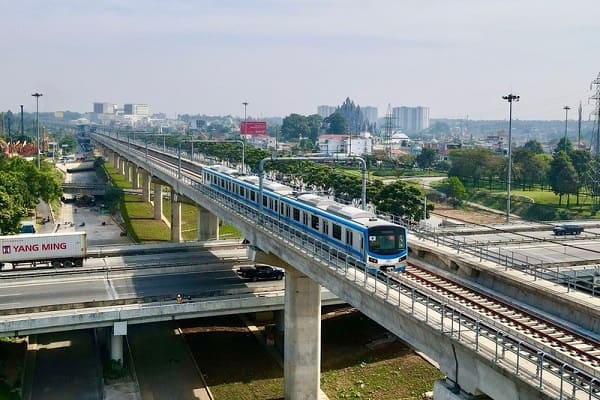 Hyundai Rotem signs $332 million Rolling Stock Contract with Vietnam for Ho Chi Minh City Metro
Odisha replans Bhubaneswar Metro into Tri-City Project to connect capital city with Cuttack and Puri
MRT Online Desk
Posted on: 2026-05-01 08:31:00
Viewer: 70
Comments: 0
Country: India
City: Bhubaneswar
Bhubaneswar, India (Metro Rail Today): The Odisha government has reaffirmed its commitment to the long-awaited metro rail project connecting Bhubaneswar, Cuttack, and Puri, while announcing a strategic pause to rework the project into a more comprehensive regional mobility plan. The revised approach signals a shift from a standalone metro line in Bhubaneswar to an integrated tri-city transit network aimed at boosting connectivity and economic growth across the state’s key urban centres.
Housing and Urban Development Minister Krushna Chandra Mahapatra clarified that the project has not been scrapped but has been placed in abeyance to allow for better planning, improved viability, and stronger integration with existing and future transport infrastructure. He emphasized that all necessary procedures for the project are still underway, even as the government reassesses its scope and execution strategy.
Shift Towards Integrated Tri-City Connectivity
The new vision expands the metro’s reach beyond Bhubaneswar to include Cuttack and Puri, creating a unified transport corridor across Odisha’s most prominent urban and cultural hubs. The move is expected to support regional development, tourism, and daily commuting needs while aligning with the state’s long-term infrastructure goals.
Earlier, Phase I of the project was planned as a 26-km corridor connecting Biju Patnaik International Airport to Trisulia, with around 20 stations including key locations such as Bhubaneswar Railway Station, Vani Vihar, and Patia. However, the government is now revisiting this plan to ensure that the metro system can cater to a broader commuter base and deliver higher economic returns.
Officials indicate that the restructuring also involves reviewing earlier implementation models, including the role of the Delhi Metro Rail Corporation (DMRC), to adopt a more suitable framework for execution.
Balancing Metro Development with Road Infrastructure
A key aspect of the revised strategy is the parallel development of road infrastructure to prevent disruptions during metro construction. The state government has highlighted the importance of strengthening road networks before initiating large-scale metro works, particularly in densely populated urban areas.
The approach reflects lessons learned from other cities, where insufficient planning for alternate routes has led to traffic congestion and commuter inconvenience during metro construction phases.
Mrs. Mamta Shah, MD & CEO of Urban Infra Group, said, “Odisha’s decision to re-evaluate and expand the metro project into a tri-city model is a forward-looking approach that prioritizes long-term urban mobility over short-term execution. Integrated planning across Bhubaneswar, Cuttack, and Puri can unlock significant economic and social benefits, provided it is supported by strong multimodal connectivity and phased implementation.”
Push for Central Support and Faster Execution
The Odisha government is actively seeking financial and technical support from the central government to move the project forward. At the same time, political stakeholders have called for expediting the process, including early finalisation of the Detailed Project Report (DPR) and initiation of the tendering phase.
Despite the temporary pause, the Bhubaneswar Metro Rail Corporation Limited (BMRCL) continues to remain operational, indicating that institutional groundwork for the project is intact.
With rapid urbanisation and increasing travel demand in the Bhubaneswar-Cuttack-Puri region, the need for a reliable mass transit system has become more critical than ever. The proposed tri-city metro network is expected to play a transformative role in reducing traffic congestion, improving travel efficiency, and enhancing connectivity between key economic, administrative, and tourist destinations.
If executed effectively, the project could mark Odisha’s entry into the league of states with advanced urban rail systems, while setting a benchmark for integrated regional mobility planning in emerging urban clusters across India.


MRT Online Desk
Metro Rail Today is an authentic and global news provider for the Rail & Metro industry from and around the world.