


Trending Now
 Modern Trainlines and the End of Coal Trains: Why Rail Networks Have Moved Forward
 Siemens Bags Order from Titagarh Rail Systems for Pune Metro Extension Trainsets
 Titagarh Rail Systems becomes Corporate Member of Chamber of Railway Industries (Rail Chamber)
 World Bank approves ₹1,400 crore Civil Tender for Gurugram Metro Phase 2
 Bi-RIDE invites ₹200 crore Tender for Soladevanahalli Depot of Bengaluru Suburban Rail Project
 GHV India awarded ₹107.79 crore Civil Contract for Lucknow Metro East-West Corridor
 Pune Metro Line 3 set to launch First 12-km Section on 15 July 2026
 DMRC gets approval to Fell or Transplant 364 Trees for Central Vista Metro Corridor under Phase IV
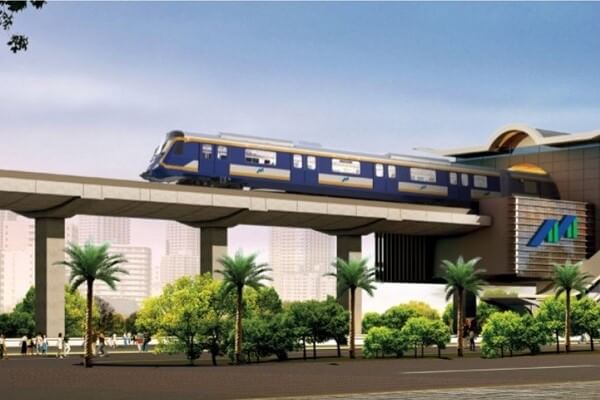 ₹4.5 Lakh crore Metro Rail Investment reaches less than 5% of Urban Population in India
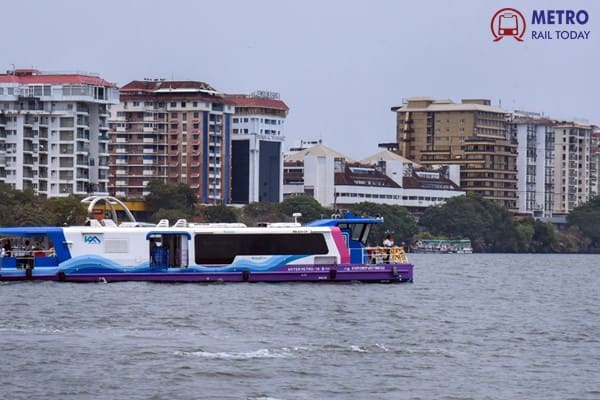 West Bengal plans to launch Water Metro Systems in Kolkata
Delhi approves ₹48,204 crore plan for 97-km Metro Rail Expansion under Delhi Metro Phase V(B)
MRT Online Desk
Posted on: 2026-05-03 16:30:00
Viewer: 2,087
Comments: 0
Country: India
City: New Delhi
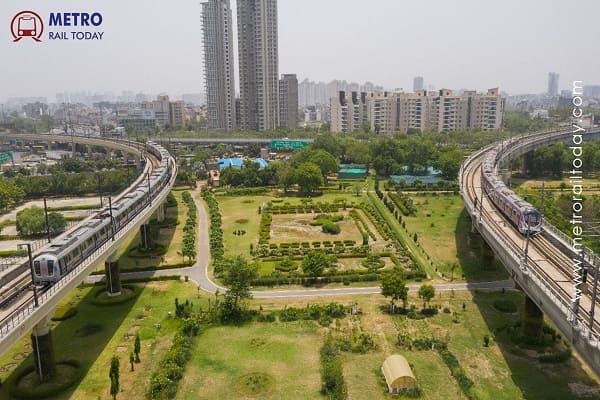
New Delhi, India (Metro Rail Today): In a major push to strengthen urban mobility in the national capital, the Delhi government has approved an ambitious expansion of the Delhi Metro network under Phase V(B), adding over 97 kilometres of new lines and 65 stations across seven corridors. The project, estimated at ₹48,204.56 crore, aims to significantly enhance connectivity between peripheral areas and central Delhi, while bringing several underserved regions onto the metro map.
Chief Minister Rekha Gupta announced that the expansion will play a critical role in ensuring balanced and inclusive urban development, particularly by improving access to fast, reliable public transport in emerging and densely populated areas. The Detailed Project Report (DPR) for the entire Phase V(B) has already been prepared by the Delhi Metro Rail Corporation (DMRC) and submitted to the central government for approval.
Priority Corridors to Be Fast-Tracked
Out of the seven proposed corridors, four have been identified as priority routes and will be implemented on a fast-track basis, with a target completion timeline set for 2029. The DMRC is expected to divide the DPR into priority and non-priority components to enable phased execution and efficient project management.
The proposed expansion will connect key areas such as Najafgarh, Narela, Mithapur, and Khera Kalan, significantly improving accessibility for residents in these fast-growing regions. The plan includes a mix of elevated and underground corridors, with multiple interchange stations designed to seamlessly integrate new lines with the existing metro network.
Mrs. Mamta Shah, MD & CEO of Urban Infra Group, said, “Delhi Metro’s Phase V(B) expansion reflects the city’s continued commitment to building a future-ready and inclusive urban transport system. Expanding connectivity to peripheral and emerging zones will not only reduce congestion but also support economic growth and sustainable urbanisation across the National Capital Region.”
Key Corridors to Enhance Citywide Connectivity
Among the major corridors, the Dhansa Bus Stand–Nangloi line will be a fully elevated stretch of nearly 11.86 km with nine stations, improving connectivity in West Delhi and offering interchanges with the Green and Grey Lines.
The Central Secretariat–Kishangarh corridor, spanning approximately 15.97 km, will largely run underground and connect key institutional and residential areas such as RK Puram and Jawaharlal Nehru University. This corridor will also feature multiple interchange points, strengthening connectivity in Central and South Delhi.
In North Delhi, the Samaypur Badli–Narela corridor will extend metro access by nearly 12.89 km through an elevated alignment, linking rapidly developing areas such as Siraspur, Alipur, and Narela.
The Kirti Nagar–Palam corridor, covering close to 10 km, will connect important industrial and residential hubs including Mayapuri and Janakpuri, further enhancing west-south connectivity.
An independent corridor from Jor Bagh to Mithapur, spanning nearly 17 km, will serve key localities such as Lodhi Colony, Okhla, and Madanpur Khadar, while offering crucial interchanges at major nodes like Lajpat Nagar and Jasola Apollo.
The Shastri Park–Mayur Vihar Phase III corridor will improve east Delhi connectivity through areas like Geeta Colony and Patparganj, while the Keshavpuram–Rohini Sector 34 corridor will strengthen connectivity in North-West Delhi, linking Pitampura and Rohini with the broader network.
Awaiting Final Approvals
While the Delhi government has approved the project, the proposal is currently awaiting final clearance from the Union Cabinet. Financial approvals from both the central and state governments will be required before construction work can commence on the ground.
Officials indicate that once approvals are secured, the project will move into execution mode, further accelerating Delhi Metro’s expansion into new urban frontiers.
With this large-scale addition, Delhi Metro is poised to reinforce its position as the backbone of the city’s public transport system, offering faster, safer, and more efficient travel options while supporting the capital’s long-term urban growth trajectory.


MRT Online Desk
Metro Rail Today is an authentic and global news provider for the Rail & Metro industry from and around the world.