

Trending Now
 Ghaziabad plans New Metro Corridor linking Vaishali to Gokulpuri via Hindon Airport
 Telangana Government takes full control of Hyderabad Metro from L&T in ₹1,461 crore Deal
 R Mohanraja appointed as new Secretary of Railway Board, Ministry of Railways
 Adani Group's construction arm bags first ₹1,024 crore Civil Contract of Delhi Metro Phase 5
 Govt approves permanent absorption of NCRTC Managing Director Shalabh Goel from Indian Railways
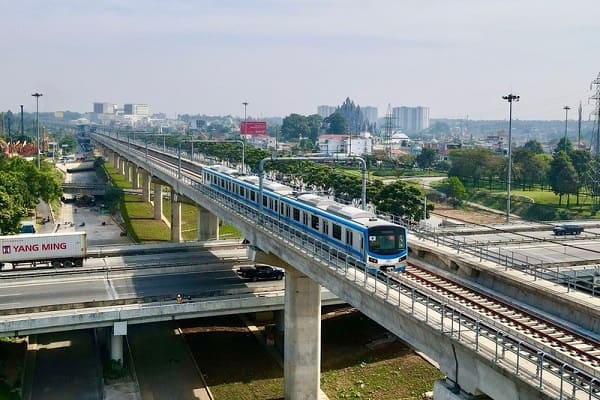 Hyundai Rotem signs $332 million Rolling Stock Contract with Vietnam for Ho Chi Minh City Metro
 Maharashtra approves ₹18,130 Crore Mumbai Metro Line 5 Expansion & New Line 5A
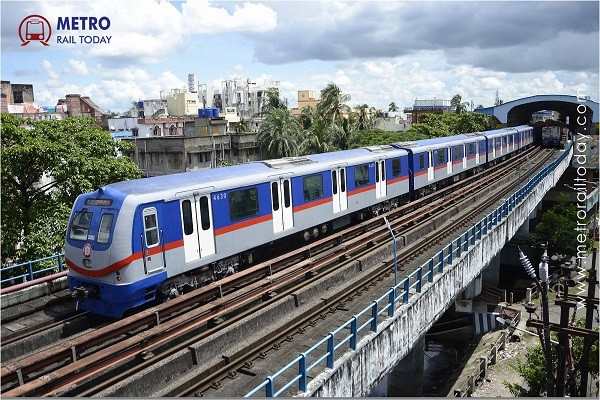 Telangana Govt approves ₹13,615 crore IRFC loan to takeover Hyderabad Metro from L&T
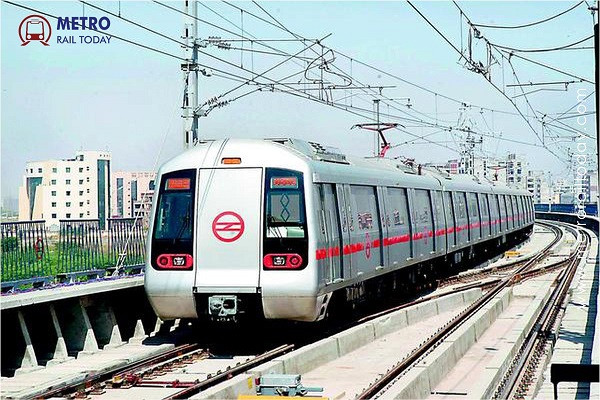 DMRC appoints Sanjay Jamuar as First CEO of Delhi Metro International Limited
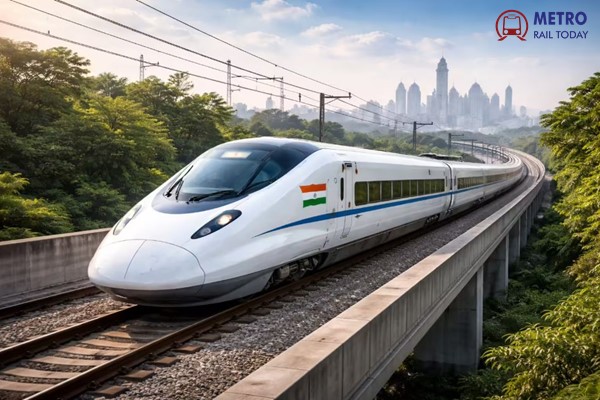 India launches first High Speed Bullet Train Manufacturing Complex in Bengaluru
Rail composites market set to reach $2.4 billion by 2028 as Railways embrace lightweight materials
MRT Online Desk
Posted on: 2026-03-09 09:15:00
Viewer: 9,564
Comments: 0
Country: India
City: New Delhi
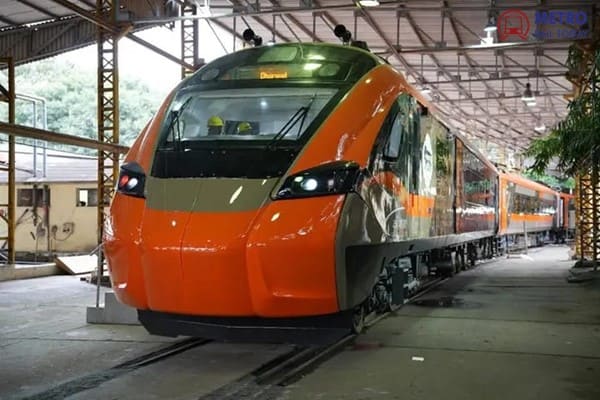
The global railway industry is increasingly turning to advanced composite materials to improve train performance, reduce weight, and enhance passenger comfort. As high-speed rail networks expand and metro systems grow across major cities, rail composites are emerging as a key technology shaping the next generation of rolling stock and railway infrastructure.
According to industry projections, the global rail composites market is expected to reach approximately $2.4 billion by 2028, growing at a compound annual growth rate (CAGR) of around 7.2 percent between 2023 and 2028.
What Are Rail Composites?
Rail composites are fiber-reinforced materials, typically made using glass, carbon, or aramid fibers embedded in polymer resins, which are increasingly replacing traditional metals in railway applications.
These materials offer a high strength-to-weight ratio, corrosion resistance, improved vibration damping, and extended service life, making them particularly suitable for modern train designs.
Composites are now widely used in both rolling stock and railway infrastructure components, including exterior panels, roofs, doors, interior fittings, cable ducts, and certain structural parts.
The shift toward composite materials is also aligned with the rail industry’s broader goal of improving energy efficiency and reducing lifecycle maintenance costs.
Key Factors Driving Market Growth
The rapid growth of the rail composites market is being driven by several structural trends in the global rail sector.
One of the most significant factors is the expansion of high-speed rail and metro networks worldwide, which require lightweight materials capable of supporting higher speeds and improved energy efficiency.
Rail operators are also increasingly focused on reducing emissions and improving fuel efficiency, particularly in hybrid and electric rail systems. Lightweight composite materials help reduce the overall mass of trains, lowering energy consumption during operation.
Another important factor is the growing emphasis on passenger safety, comfort, and noise reduction. Composite materials offer better vibration damping and acoustic insulation compared to traditional metal structures.
In addition, composites typically require less maintenance and offer longer service life, which can significantly reduce lifecycle costs for railway operators.
Market Segmentation
The rail composites market can be segmented based on fiber type, resin type, and application areas within railway systems.
In terms of fiber materials, glass fiber composites currently dominate the market due to their cost-effectiveness and strength, while carbon fiber composites are increasingly being adopted for high-performance structural components. Aramid fibers are also used in specialised applications requiring enhanced durability and impact resistance.
The most commonly used resin systems include polyester, phenolic, epoxy, and vinyl ester resins, each offering specific advantages in terms of strength, heat resistance, and fire safety compliance.
Composite materials are widely used in exterior panels and train roofs, interior components such as wall panels and seating structures, doors and window assemblies, cable trays and ducts, and certain bogie or underframe components.
Regional Market Trends
Geographically, Europe currently leads the global rail composites market, supported by its extensive high-speed rail network and stringent safety and environmental regulations.
The Asia-Pacific region is expected to experience the fastest growth, driven by large-scale metro and high-speed rail projects in countries such as China, India, and Japan.
Meanwhile, North America is witnessing steady growth, supported by modernization programs for both freight and passenger rail infrastructure.
Challenges in Adoption
Despite their advantages, composite materials also present several challenges that the railway industry must address.
One major barrier is the high initial cost of composite materials and manufacturing processes, which can be significantly higher than conventional steel or aluminium components.
Repair and recycling processes for composite structures are also more complex, creating challenges for maintenance and end-of-life disposal.
In addition, railway components must comply with strict Fire, Smoke, and Toxicity (FST) regulations, requiring extensive testing and certification. The qualification process for new materials can therefore be lengthy.
Emerging Trends and Innovations
Technological advancements are helping expand the potential of composite materials in railway applications.
Manufacturers are increasingly developing fire-retardant and low-smoke composite materials that meet stringent railway safety standards.
The use of carbon fiber for structural train components is also gaining traction, particularly in high-speed rail systems where weight reduction is critical.
Advanced manufacturing techniques such as resin transfer moulding (RTM) and pultrusion are enabling more efficient production of complex composite components.
Another emerging trend is the integration of smart sensors within composite structures, which can enable real-time monitoring of structural performance and predictive maintenance.
At the same time, the industry is exploring recyclable and bio-based composite materials to improve sustainability.
Commenting on the growing adoption of advanced materials in rail systems, Mrs. Mamta Shah, MD & CEO, Urban Infra Group, said that composites are playing an increasingly important role in modern railway engineering.
“As rail networks expand and trains operate at higher speeds, the demand for lightweight, durable, and energy-efficient materials is increasing. Composite materials offer significant advantages in terms of performance, corrosion resistance, and lifecycle costs, making them an important component of next-generation rolling stock and rail infrastructure,” she said.
She added that continued innovation in composite manufacturing and material science will be crucial in supporting the future evolution of high-speed rail, metro systems, and sustainable transportation networks.
Several global companies are actively involved in the rail composites market, including Gurit Holdings, Hexcel Corporation, Toray Industries, Solvay, Teijin Limited, 3A Composites, BASF SE, Avient Corporation, Premier Composite Technologies, Exel Composites, and BFG International.
Indian players such as Kineco Limited and Reliance Industries are also emerging as important contributors to the development of composite materials for the rail sector.


MRT Online Desk
Metro Rail Today is an authentic and global news provider for the Rail & Metro industry from and around the world.