

Trending Now
 RITES submits fresh DPR to UPMRC for ₹12,000 crore Prayagraj Metro Rail Project
 Paras Railtech wins ₹84.72 crore Ballastless Track Contract for Jaipur Metro Rail Project
 Indian Railways announces 3,548 Graduate-Level Vacancies under NTPC Recruitment 2026
 European Union sanctions €10 million to support extension of Hanoi Metro Line 3
 GMRC issues ₹683 crore Tender for construction of 8.68 km stretch for Ahmedabad Metro
- GMRC launches ₹439 crore Tender for construction of 5 New Ahmedabad Metro Stations
 Global tender issued for procurement of 60 Rolling Stock coaches for Hyderabad Metro Rail Project
 Global tender issued for procurement of 102 Rolling Stock coaches for Patna Metro Rail Project
 Gamuda awarded RM3.7 billion contract to build Keelung Mass Rapid Transit in Taiwan
 Maharashtra forms special Task Force to plan Rail, Metro and RRTS expansion
Elevated vs. Ground Trains: Which Is Better for Modern Travel?
MRT Online Desk
Posted on: 2026-03-27 15:00:00
Viewer: 44,443
Comments: 0
Country: India
City: New Delhi
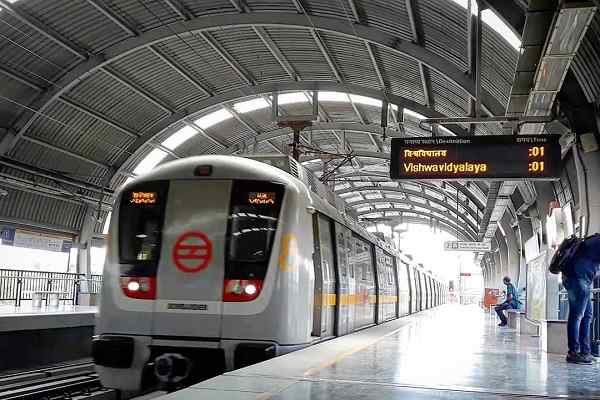
Rail transportation continues to evolve as cities grow denser and travel demands increase. One of the most common debates in urban planning and commuter experience is whether elevated trains or ground-level trains are better. Each system has its own advantages, limitations, and ideal use cases depending on geography, cost, and passenger needs.
In this article, we’ll explore the differences between elevated and ground trains, compare their efficiency, cost, safety, and commuter experience, and even look at how downtime during travel—like enjoying digital entertainment such as GameZone rebate features—fits into the overall journey.
Understanding Elevated and Ground Trains
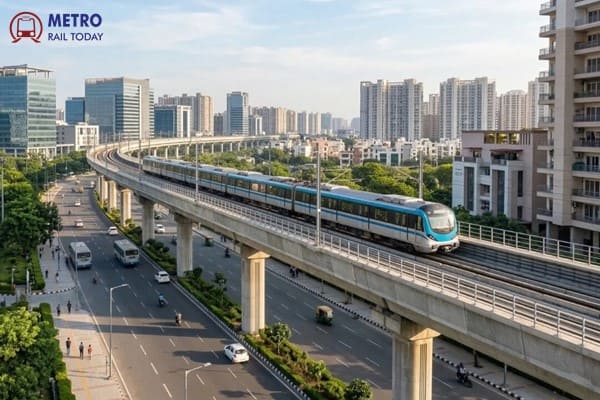
Elevated trains operate on tracks built above ground level, typically on viaducts or concrete structures. These are common in crowded cities where space is limited.
Ground trains, on the other hand, run directly on tracks laid on land. These are widely used in suburban, rural, and long-distance railway systems.
Both systems are essential to transportation networks, but choosing which is “better” depends on several factors.
Efficiency and Speed
When it comes to speed and reliability, elevated trains often have the upper hand in urban environments. Because they are separated from road traffic, they avoid congestion, pedestrian crossings, and vehicle interference. This results in fewer delays and more predictable travel times.
Ground trains, while efficient over long distances, are more susceptible to interruptions. Road crossings, weather conditions, and shared pathways can slow them down, especially in busy areas.
However, in open landscapes, ground trains can achieve very high speeds and cover longer distances more economically. This is why most intercity and regional rail systems still rely on ground-level tracks.
Verdict:
-
Urban travel: Elevated trains are generally better.
-
Long-distance travel: Ground trains remain superior.
Construction and Cost
One of the biggest differences between the two lies in construction costs.
Elevated train systems are significantly more expensive to build. The infrastructure requires strong pillars, elevated tracks, and complex engineering to ensure safety and durability. Maintenance costs are also higher due to exposure to environmental factors like wind and temperature changes.
Ground trains are more cost-effective. Building tracks on land is simpler and requires fewer materials and less specialized labor. Maintenance is also easier since access is more straightforward.
However, land acquisition for ground trains can become expensive in dense cities. In such cases, elevated systems may actually be more practical despite their higher construction costs.
Verdict:
-
Budget-friendly: Ground trains
-
Space-efficient in cities: Elevated trains
Safety Considerations
Safety is a critical factor in any transportation system.
Elevated trains are generally safer from road-related accidents because they are completely separated from vehicles and pedestrians. This reduces the risk of collisions significantly.
Ground trains, especially those that intersect with roads, face higher risks of accidents. Level crossings can be dangerous if not properly managed, although modern systems use barriers and signals to minimize risks.
Verdict:
-
Safer in traffic-heavy areas: Elevated trains
-
Safe with proper systems: Ground trains
Environmental Impact
Both train types are more environmentally friendly compared to cars, but they differ in their impact.
Elevated trains typically have a smaller footprint on the ground, preserving land use below for roads, parks, or buildings. However, their construction can be resource-intensive and may affect city aesthetics.
Ground trains can blend more naturally into landscapes, especially in rural areas. But in urban zones, they may require clearing land, which can disrupt ecosystems and communities.
Verdict:
-
Urban sustainability: Elevated trains
-
Rural integration: Ground trains
Passenger Experience
Passenger comfort and experience can vary between the two.
Elevated trains often provide scenic views of the city, making the journey more enjoyable. They also tend to have smoother rides due to fewer interruptions.
Ground trains, especially long-distance ones, offer more spacious seating and amenities. They are ideal for extended travel, where comfort is a priority.
During longer trips, passengers often look for ways to stay entertained. This is where digital platforms come into play. Many commuters now use mobile apps and games to pass the time. For example, features like GameZone rebate systems allow players to enjoy casual gaming while earning cashback benefits, making travel time feel more productive and rewarding.
Accessibility and Convenience
Ground trains are typically easier to access, especially in smaller towns where stations are built at grade level. They are more integrated into traditional transport systems.
Elevated train stations, while efficient, often require stairs, escalators, or elevators. This can be less convenient for some passengers, although modern designs aim to improve accessibility.
That said, elevated systems often connect seamlessly with other urban transit options, making them highly convenient for daily commuters.
Verdict:
-
Simpler access: Ground trains
-
Better urban connectivity: Elevated trains
Urban Planning and Space Utilization
In densely populated cities, space is a major constraint. Elevated trains solve this problem by using vertical space, allowing roads and buildings to coexist below.
Ground trains, in contrast, require dedicated land. In urban areas, this can lead to displacement or limited expansion opportunities.
This is why many modern cities are investing in elevated rail systems despite the higher cost—they offer a long-term solution to congestion and land scarcity.
The Role of Digital Entertainment in Train Travel
Regardless of whether you’re on an elevated or ground train, one thing remains consistent: travel time can sometimes feel long.
This is where digital entertainment enhances the experience. Many passengers now turn to mobile gaming platforms to stay engaged. Systems like GameZone Rebate add an extra layer of value by offering cashback rewards based on gameplay activity.
Instead of simply passing time, commuters can enjoy interactive entertainment while potentially earning small returns. This trend reflects how modern travel is no longer just about getting from point A to point B—it’s about making the journey itself enjoyable.
For frequent travelers, especially those on long ground train rides, having access to such features can significantly improve the overall experience.
Which Is Better?
There is no one-size-fits-all answer to whether elevated or ground trains are better. The choice depends on the context:
-
Choose elevated trains if:
-
You’re in a dense urban area.
-
You need faster, traffic-free travel.
-
Space is limited.
-
Choose ground trains if
-
You’re traveling long distances.
-
Budget constraints are a concern.
-
Land availability is not an issue.
Both systems play a crucial role in modern transportation networks, and most countries use a combination of both to maximize efficiency.
Final Thoughts
Elevated and ground trains each offer unique advantages that cater to different travel needs. Elevated systems excel in crowded cities with their speed and space efficiency, while ground trains dominate in long-distance and cost-effective travel.
As transportation continues to evolve, the focus is not just on infrastructure but also on enhancing the passenger experience. Whether it’s through better seating, improved connectivity, or digital entertainment like GameZone rebate opportunities, the future of train travel is all about convenience, efficiency, and enjoyment.
In the end, the “better” option isn’t about choosing one over the other—it’s about how well each system is integrated to serve the needs of modern commuters.

MRT Online Desk
Metro Rail Today is an authentic and global news provider for the Rail & Metro industry from and around the world.