


Trending Now
 Japanese Delegation visits KRIDE to explore Bengaluru Suburban Rail Project opportunities
 GMRC issues ₹879 crore Civil Tender for Airport Extension under Ahmedabad Metro Phase 2A
 Global Mobility Leaders Alstom and Siemens become Corporate Member of Chamber of Railway Industries
 L&T-MHI JV wins contract for Automated People Mover at Dubai’s Al Maktoum International Airport
 Delhi Metro Rail Network to expand to 695 km by 2047, Six new RRTS Corridors planned
 HÜBNER at InnoTrans 2026: Global rail expertise and local capability for India’s Next-Gen Mobility
 Australia shortlists three firms/consortia for Sydney–Newcastle High Speed Rail Project
 MRVC set to procure 238 AC Vande Metro Trainsets worth ₹19,293 crore from Indian Railways
 Maharashtra approves ₹17,725 crore Mumbai Metro Line 13 linking Mira-Bhayandar with Vasai-Virar
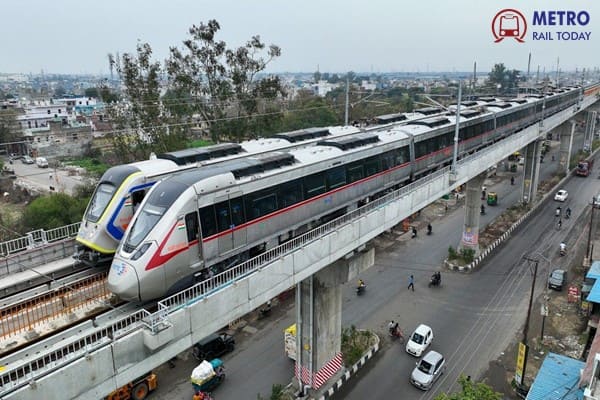 Gujarat issues three tenders for 48.38-km Metro-RRTS Hybrid corridors under Ahmedabad Metro Phase 3
Bangalore Metro gears up for major expansion, Studies over 200 km of New Corridors
MRT Online Desk
Posted on: 2026-01-08 15:30:00
Viewer: 1,963
Comments: 0
Country: India
City: Bengaluru
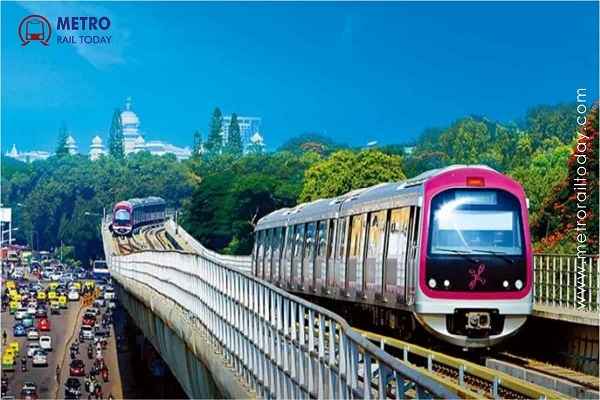
Bengaluru, India (Metro Rail Today): Bangalore Metro Rail Corporation Limited (BMRCL) is accelerating its long-term expansion strategy, with feasibility studies underway for more than 200 kilometres of new metro corridors to meet Bengaluru’s growing urban mobility needs. The move comes as Namma Metro prepares for one of its most significant expansion phases in the coming years.
Speaking at the event titled “Sustainability in Action: Bengaluru’s Urban Challenge”, Abhai Kumar Rai, Advisor (Civil), BMRCL, said that the metro network is set to witness rapid growth over the next two years. He stated that 41 kilometres of new metro lines are scheduled to be commissioned by 2026, taking the operational network length to 137 kilometres by the end of this year. A further 38 kilometres will be added in 2027, expanding the system to around 175 kilometres.
Rai added that BMRCL is moving ahead with Phase 3 of the metro project, spanning 44 kilometres, while Detailed Project Reports for Phase 3A, covering 36 kilometres, have already been prepared and are currently under review for government sanction. He also confirmed that Namma Metro is expected to connect Kempegowda International Airport by the end of 2027, a long-awaited milestone that is expected to significantly ease travel to and from the airport.
Highlighting sustainability initiatives, Rai noted that Namma Metro has adopted regenerative braking technology, enabling trains to recover energy during braking and feed it back into the system. This technology has resulted in energy savings of over 30 percent in train operations, reinforcing the metro’s role as a green mobility solution for the city.
Commenting on the broader implications of Bengaluru’s metro expansion, Mrs. Mamta Shah, Managing Director and CEO of Urban Infra Group, said the city’s approach reflects a mature understanding of sustainable urban transport planning. “Bengaluru’s focus on scaling its metro network while integrating energy-efficient technologies sets a strong example for Indian cities facing similar mobility challenges. Long-term corridor planning and early feasibility studies are essential to avoid congestion-driven retrofitting in the future,” she said.
Meanwhile, progress is also visible on the much-anticipated Pink Line of the Bengaluru Metro. According to media reports, trial runs have officially begun on the 21.25-kilometre corridor connecting Kalena Agrahara to Nagawara. These trials are being conducted to test track alignment, signalling systems and overall safety readiness ahead of passenger operations.
The Pink Line is being developed in phases. The first phase, a 7.5-kilometre elevated stretch between Kalena Agrahara and Tavarekere with six stations, is expected to open by May 2026, subject to statutory safety approvals. The remaining section from Tavarekere to Nagawara will be underground, featuring 12 stations, with operations likely to commence by November once construction and testing are completed.
Once fully operational, the Pink Line is expected to significantly improve north-south connectivity in Bengaluru and ease daily commuting pressures across key residential and commercial zones. With multiple expansion fronts progressing simultaneously, Namma Metro is steadily positioning itself as the backbone of Bengaluru’s future urban transport system.


MRT Online Desk
Metro Rail Today is an authentic and global news provider for the Rail & Metro industry from and around the world.