


Trending Now
 Pune Metro Line 3 targets September-end opening with 17 stations on Hinjawadi–Shivajinagar corridor
 Jupiter Wagons Limited forms New Subsidiary to expand Railway Mobility Business
 Five major firms bid for ₹1,878 crore Underground Section of Lucknow Metro Phase 1B Project
 DMRC focuses on Technology, Financial Sustainability and Global Expansion: Dr. Vikas Kumar
 DMRC seeks opportunity to take up operation and maintenance of the Kochi Metro Rail network
 New Zealand opens country's first Underground City Rail Link in Auckland
 Ireland approves construction of €15.7 billion Dublin MetroLink, tender to be launched soon
 India's Mumbai-Ahmedabad Bullet Train project completes construction of over 365 km Viaduct
 Metro Rail Expansion in India: 1,155 Km Network Across 26 Cities and the Road Ahead
 Mumbai BKC Pod Taxi project faces Architects’ concerns over cost, capacity and environment
Bangalore Metro to float tenders for ₹25,311 crore Hosahalli–Kadabagere Metro Line
MRT Online Desk
Posted on: 2025-12-16 07:11:00
Viewer: 3,548
Comments: 0
Country: India
City: Bengaluru
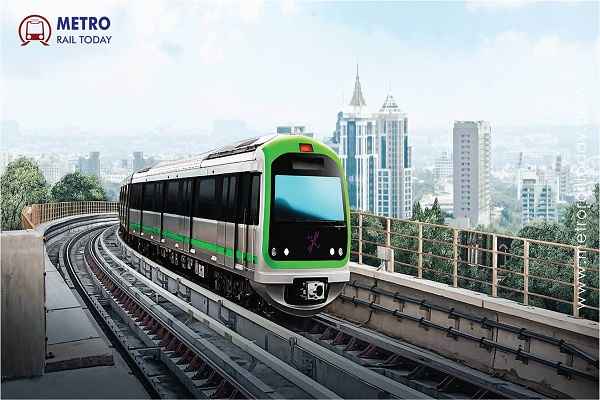
Bengaluru, India (Metro Rail Today): The Bangalore Metro Rail Corporation Limited (BMRCL) is preparing to invite tenders for the Hosahalli–Kadabagere Metro corridor, also known as the Grey Line, under Namma Metro Phase 3. However, officials have acknowledged that the project will be costlier and slower to execute due to its double-decker elevated design.
The 12.15-kilometre corridor, running along Magadi Road, will connect Hosahalli Metro Station to Kadabagere and is intended to improve connectivity in some of west Bengaluru’s most densely populated neighbourhoods.
According to BMRCL officials, tender documents for the Grey Line have already been prepared and the bidding process is expected to begin shortly, although no fixed date has been announced yet.
-
Contractor finalisation: Within 6 months of tendering
-
Likely construction start: June 2026
-
Construction duration: ~5.5 years
If timelines hold, the corridor is expected to be completed in the early 2030s, making it a long-term capacity enhancement rather than an immediate congestion solution.
The Hosahalli–Kadabagere corridor will serve western Bengaluru through the following proposed stations:
-
Hosahalli
-
KHB Colony
-
Kamakshipalya
-
Sumanahalli Cross
-
Sunkadakatte
-
Herohalli
-
Byadarahalli
-
Kamath Layout
-
Kadabagere
The corridor is expected to significantly reduce dependence on buses and private vehicles along Magadi Road, one of the city’s busiest arterial corridors.
Double-Decker Design: Key Reason for Delay
Unlike conventional elevated metro corridors, the Hosahalli–Kadabagere line will follow a triple-layer double-decker configuration, comprising Existing road at ground level, A flyover above the road and the metro viaduct at the top.
BMRCL officials said this configuration substantially increases construction complexity, coordination requirements, and safety clearances.
-
Normal elevated metro pace: 7–8 km per year
-
Double-decker construction pace: 3–5 km per year
The slower execution rate is a major contributor to the extended project timeline.
The project’s cost has emerged as another key concern:
-
Metro viaduct and systems: ₹15,611 crore
-
Flyover component (State-funded): ₹9,700 crore
The combined investment makes the Grey Line one of the most expensive metro corridors in Bengaluru. The metro component cost will be shared between the State and Central governments.
Policy and Approval Bottlenecks
Officials noted that delays were also caused by a State Government policy decision mandating that all future elevated metro corridors adopt the double-decker model. The time taken to issue formal government orders directly impacted project timelines.
In addition, the project faced multiple approval-related hurdles, including:
-
Clearance for Bengaluru’s tallest metro station at Sumanahalli Cross
-
Similar delays at stations near Jayadeva Hospital, Goraguntepalya, and Mysuru Road
Land acquisition and tree-cutting activities have commenced along certain stretches, but progress remains slow due to coordination gaps between government departments and private agencies.
Bengaluru Metro’s Slower Expansion Pace
Metro construction in Bengaluru began in 2002, with an initial ambition of achieving around 175 km of network by 2027. This would have required an average construction pace of nearly 8 km per year.
However, only about 96.1 km has been completed over the past 14 years. Experts point out that Bengaluru’s metro expansion pace remains among the slowest in India, particularly when compared with cities like Delhi, Chennai, and Hyderabad.
Commenting on the project’s challenges, Mrs. Mamta Shah, MD & CEO, Urban Infra Group, said: “Double-decker metro corridors are an innovative response to urban space constraints, but they also demand far greater planning precision and execution discipline. For cities like Bengaluru, balancing design ambition with faster delivery will be critical to ensuring metro expansion keeps pace with rising commuter demand.”
While BMRCL’s move to initiate tendering marks tangible progress, the Hosahalli–Kadabagere Metro line is clearly a long-gestation project. With construction expected to begin only by mid-2026 and completion projected over five years later, commuters along Magadi Road will have to wait before experiencing its benefits.
The project also adds momentum to the ongoing debate on whether double-decker metro designs, despite being space-efficient, are contributing to slower network expansion in already congested cities like Bengaluru.


MRT Online Desk
Metro Rail Today is an authentic and global news provider for the Rail & Metro industry from and around the world.