

Trending Now
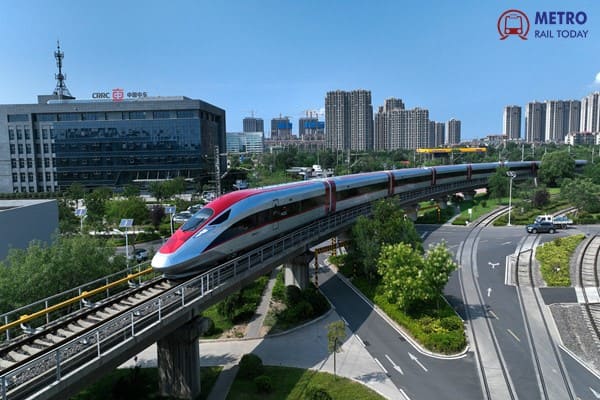 VinSpeed and Siemens sign €1 billion Turnkey Contract for Two High-Speed Rail Lines in Vietnam
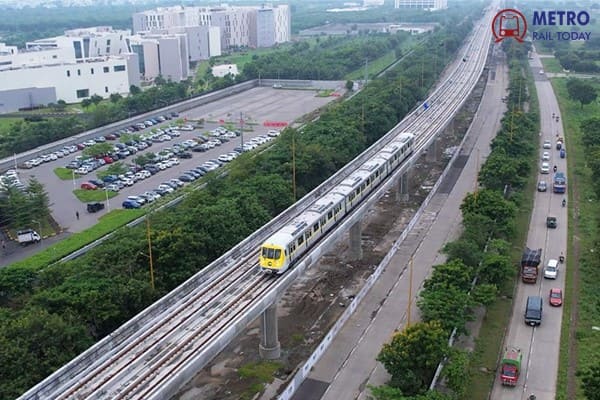 Tender floated for construction of Viaduct, Twin Tunnels and Underground Stations for Indore Metro
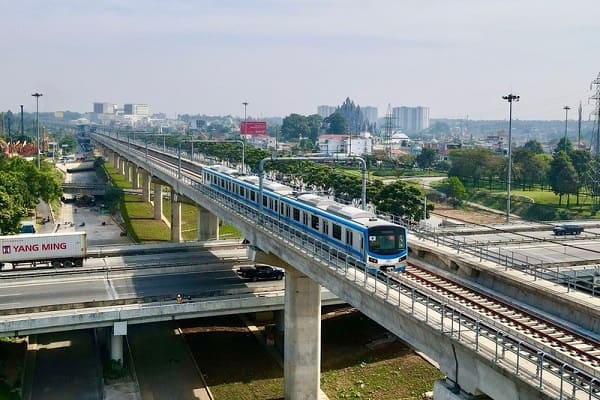 Vietnam needs over 70,000 Engineers and Skilled Workers for Ho Chi Minh City Metro Project
 India targets production of indigenous 350 kmph High Speed Bullet Trains by 2030
 West Bengal proposes four RRTS Corridors linking Kolkata with South Bengal Cities
 Pune Metro Line 3 targets September-end opening with 17 stations on Hinjawadi–Shivajinagar corridor
 Jupiter Wagons Limited forms New Subsidiary to expand Railway Mobility Business
 Five major firms bid for ₹1,878 crore Underground Section of Lucknow Metro Phase 1B Project
 DMRC focuses on Technology, Financial Sustainability and Global Expansion: Dr. Vikas Kumar
 DMRC seeks opportunity to take up operation and maintenance of the Kochi Metro Rail network
Centre rejects Coimbatore and Madurai Metro proposals again, Suggests BRTS as an alternative mode
MRT Online Desk
Posted on: 2026-08-03 07:05:00
Viewer: 1,803
Comments: 0
Country: India
City: Coimbatore
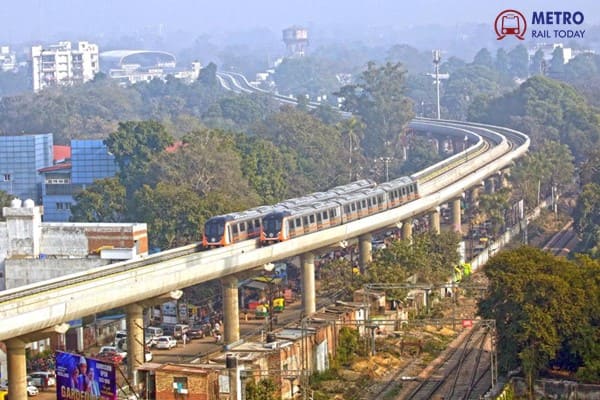
Chennai, India (Rail & Metro Today): The Central Government has once again rejected Tamil Nadu’s proposals to develop Metro Rail systems in Coimbatore and Madurai, recommending that the two cities instead consider Bus Rapid Transit System (BRTS) solutions to meet their growing urban mobility requirements.
The latest rejection comes after Tamil Nadu submitted revised proposals in May, arguing that the two cities have substantial floating populations driven by industry, commerce, tourism and religious travel. However, the Ministry of Housing and Urban Affairs (MoHUA) has maintained that the proposals do not adequately justify Metro Rail investment under the existing policy framework.
The decision has renewed debate over the criteria used for approving Metro projects in India, particularly as some cities with populations below the prescribed threshold have previously received approvals for Metro or Metro-like systems.
Why Were Coimbatore and Madurai Metro Proposals Rejected?
MoHUA had initially rejected Tamil Nadu’s proposals in November last year, citing provisions of the Metro Rail Policy, 2017. The state subsequently submitted revised proposals, highlighting the economic and tourism significance of both cities.
Coimbatore is one of Tamil Nadu’s major industrial and commercial centres, while Madurai is a major religious and tourism destination. Tamil Nadu argued that the cities' floating population should also be considered while assessing their public transport requirements.
However, according to reports, the Centre has again declined the proposals. MoHUA has suggested developing an elevated or at-grade BRTS instead.
The Ministry has also indicated that population is not the sole criterion for approving a Metro project, although the population threshold under the existing policy remains an important consideration.
Metro Rail Policy Requires 20 Lakh Population
Under the Metro Rail Policy, 2017, cities with a population of at least 20 lakh based on the 2011 Census are eligible to prepare a Comprehensive Mobility Plan for Metro Rail projects.
According to the 2011 Census, Coimbatore had a population of approximately 15.84 lakh, while Madurai had nearly 15 lakh residents. Both therefore fall below the prescribed threshold.
Although current population estimates indicate that both urban areas have grown substantially and may now have populations exceeding 20 lakh, the Centre continues to rely on the 2011 Census figures because the 2021 Census has not been completed.
Why Did Smaller Cities Receive Metro Approvals?
The rejection has also raised questions about the treatment of cities that had populations below 20 lakh in 2011 but subsequently received approvals for Metro projects.
Agra, for instance, had a population of around 15 lakh in the 2011 Census but received approval for its Metro project in 2019.
Similarly, Prayagraj, which had a substantially smaller population, was initially approved for a Metrolite system in 2021. In October 2025, the Uttar Pradesh government upgraded the proposal to a full Metro project as part of infrastructure development associated with the Kumbh Mela.
Nagpur and Kanpur, by comparison, met the population criterion in the 2011 Census when their Metro projects were approved.
The contrasting cases have prompted discussions about whether factors such as tourism, major national events, regional economic importance and strategic connectivity should receive greater weight in Metro project approvals.
Centre Cites Passenger Demand and Travel Time
Population eligibility was not the only concern raised by the Centre.
According to reports, MoHUA found that the Detailed Project Reports (DPRs) prepared by Chennai Metro Rail Limited did not establish sufficient passenger demand to justify the high capital investment required for Metro Rail.
The Ministry also reportedly concluded that Metro systems would not provide significant reductions in travel time for commuters in either Coimbatore or Madurai.
After examining the proposals in their entirety, the Centre therefore recommended BRTS as a more appropriate public transport solution.
BRTS vs Metro Rail
A Bus Rapid Transit System uses dedicated bus lanes or corridors to provide faster and more reliable public transport than conventional buses operating in mixed traffic.
The principal advantage of BRTS is its comparatively lower capital and operating cost. Metro Rail, on the other hand, offers substantially higher passenger-carrying capacity and can provide high-frequency services on heavily congested corridors.
The Centre has suggested that Coimbatore and Madurai could adopt either elevated or at-grade BRTS, depending on local conditions.
Elevated BRTS Could Be Considered
The recommendation could present a new planning challenge for Tamil Nadu because the existing proposals were developed around Metro Rail infrastructure.
According to reports, the state government may consider an elevated BRTS in Coimbatore, particularly because several major roads have limited space for dedicated bus lanes at ground level.
An elevated BRTS would, however, require fresh feasibility studies, alignment planning, engineering assessments and revised cost estimates.
What Next for Coimbatore and Madurai?
The Centre's latest decision places the immediate focus on finding a high-capacity public transport alternative for two of Tamil Nadu's fastest-growing urban centres.
For Coimbatore, with its industrial clusters and expanding urban footprint, and Madurai, with its significant tourism and religious travel demand, the choice between an elevated BRTS, at-grade BRTS or another mass transit solution will require detailed assessment of passenger demand, road capacity, travel patterns and long-term urban growth.
The controversy also highlights a broader policy question for India's rapidly urbanising cities: whether Metro Rail approvals should continue to depend heavily on historical Census population figures or adopt a broader assessment based on floating population, economic activity, projected ridership and regional mobility requirements.
As cities continue to expand beyond their 2011 boundaries, the debate over the most appropriate mass transit technology—and the criteria for selecting it—is likely to become increasingly important for India's urban transport planning.

MRT Online Desk
Metro Rail Today is an authentic and global news provider for the Rail & Metro industry from and around the world.