


Trending Now
 Exclusive Interview with Champak Panda, Managing Director, Rolling Stock & Components, Alstom India
 Delhi Metro invites Expression of Interests to manufacture Platform Screen Doors in India
 NMRC to appoint General Consultant for Noida-Greater Noida Aqua Line Metro Expansion
 NHSRCL launches Five Heavy Portal Beams on Mumbai-Ahmedabad Bullet Train Project
 Bihar pushes Patna Metro Rail Project, explores Ultra Pod Taxi to link Airport
 Ceigall India-led JV awarded ₹918 crore civil contract for Jaipur Metro Phase 2 Project
 Railway Ministry sanctions ₹895 crore to upgrade Traction and Power Systems of Kolkata Metro
 India tests First Hydrogen Train on Jind–Sonipat Route, Marks leap towards Green Rail Mobility
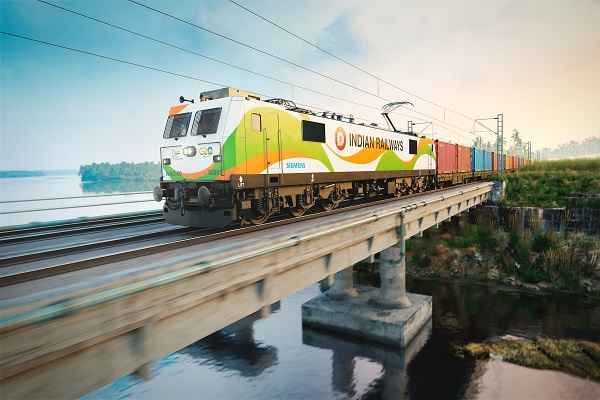 Siemens hands over first set of 9000 HP e-locomotives to Indian Railways for commercial operations
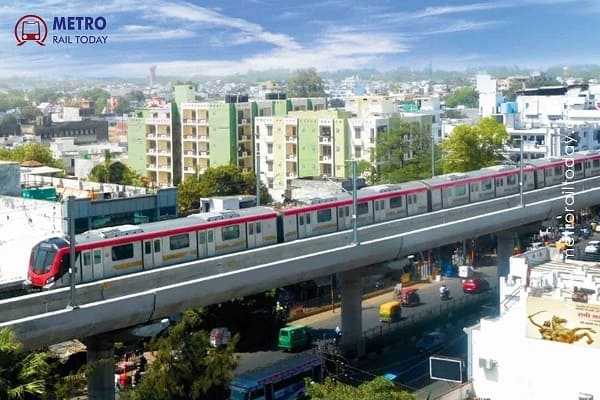 Global Tender issued for 45 Metro Coaches and Advanced Signalling for Lucknow Metro Expansion
DMRC begins land acquisition process for two new corridors of Delhi Metro Phase 4
MRT Online Desk
Posted on: 2024-06-05 16:25:00
Viewer: 6,618
Comments: 0
Country: India
City: New Delhi
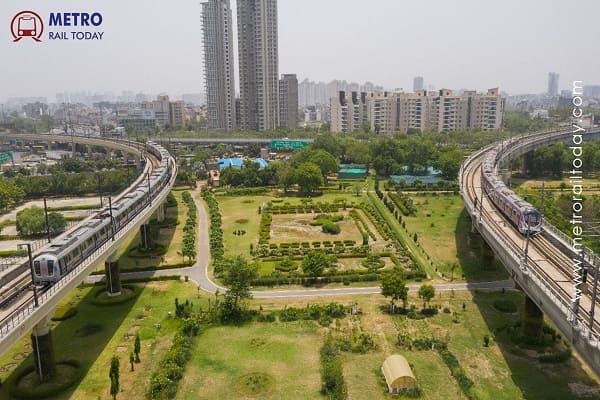
New Delhi, India (Metro Rail Today): The Delhi Metro Rail Corporation (DMRC) has embarked on the process of securing statutory clearances for the construction of two newly approved corridors as part of its ambitious Phase IV expansion. These corridors, Lajpat Nagar to Saket G Block and Inderlok to Indraprastha represent extensions of the existing Golden and Green Lines, respectively. According to DMRC, these new routes are expected to be operational by 2028. The Union Cabinet gave its nod to these projects in March, marking a significant step forward in the enhancement of Delhi's urban transit infrastructure.
In the months since the Union Cabinet's approval, DMRC has been actively pursuing the necessary permissions and land acquisitions to commence construction. A senior DMRC official provided insights into the ongoing efforts, stating, “Currently, we are in the process of obtaining statutory clearances which include acquiring land from the Delhi Development Authority (DDA), the Central Public Works Department (CPWD), and the Public Works Department (PWD), along with meeting the requirements for forest clearance.”
This phase is critical as it sets the foundation for subsequent construction activities. The official further elaborated that, “Planning and tendering for civil works are underway. This will be followed by specialized contracts for essential technical components such as track laying, electrical systems, and signalling.”
Projected Timeline and Key Details
The timeline for the completion of these corridors is set for 2028, a target that aligns with DMRC's strategic plan to bolster Delhi's metro network. Here’s a closer look at the specifics of the two new corridors:
Inderlok to Indraprastha Corridor:
- Length: 12.4 kilometers
- Stations: 10
- Interchange Stations: Inderlok, Nabi Karim, New Delhi, Delhi Gate, and Indraprastha.
Lajpat Nagar to Saket G Block Corridor:
- Length: 8.4 kilometres
- Stations: 8
- Interchange Stations: Lajpat Nagar, Chirag Dilli, and Saket G Block.
The addition of these corridors will significantly enhance connectivity across Delhi, linking more areas seamlessly to the metro network.
Boosting Interchange Stations
A notable aspect of these expansions is the increase in the number of interchange stations. Presently, the Delhi Metro network boasts 29 interchange stations from Phases I, II, and III. With the completion of Phase IV, an additional 11 interchange stations will be added, taking the total count to 48. This expansion will include eight new interchange stations from the Inderlok-Indraprastha and Lajpat Nagar-Saket G Block corridors alone.
Key Highlights:
- Triple Interchange Stations: Lajpat Nagar and New Delhi metro stations are set to become triple interchange hubs, joining the ranks of Kashmere Gate, which currently connects the Red, Yellow, and Violet Lines.
- Azadpur Interchange: The Azadpur station will also become a triple interchange station once the RK Ashram–Janakpuri West corridor is operational.
The planned expansions under Phase IV are designed not only to extend the reach of the metro network but also to improve the efficiency and convenience of travel within the city. The creation of more interchange stations will enable smoother transitions between lines, reducing travel times and improving the overall commuting experience.
Priority Corridors Under Construction
In addition to the new corridors, three other priority corridors are already under construction as part of Phase IV:
- Majlis Park-Maujpur Corridor
- Janakpuri West-RK Ashram Marg Corridor
- Aerocity-Tughlaqabad Corridor
These corridors are crucial to the broader vision of DMRC, aiming to provide comprehensive coverage across Delhi and adjoining areas.
The expansion of the Delhi Metro Phase 4 through the addition of the Lajpat Nagar to Saket G Block and Inderlok to Indraprastha corridors is a significant development in the city’s transit infrastructure. As DMRC progresses with the necessary statutory clearances and subsequent construction phases, these projects promise to enhance connectivity and convenience for millions of commuters. The strategic addition of new interchange stations will further streamline travel, making Delhi Metro an even more integral part of the city's daily life.


MRT Online Desk
Metro Rail Today is an authentic and global news provider for the Rail & Metro industry from and around the world.