


Trending Now
 Siemens Bags Order from Titagarh Rail Systems for Pune Metro Extension Trainsets
 Titagarh Rail Systems becomes Corporate Member of Chamber of Railway Industries (Rail Chamber)
 World Bank approves ₹1,400 crore Civil Tender for Gurugram Metro Phase 2
 Bi-RIDE invites ₹200 crore Tender for Soladevanahalli Depot of Bengaluru Suburban Rail Project
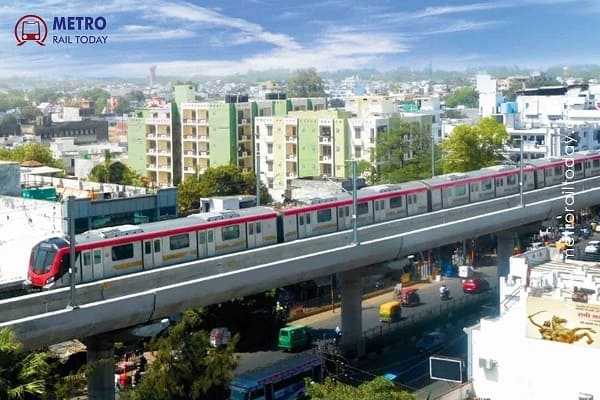 GHV India awarded ₹107.79 crore Civil Contract for Lucknow Metro East-West Corridor
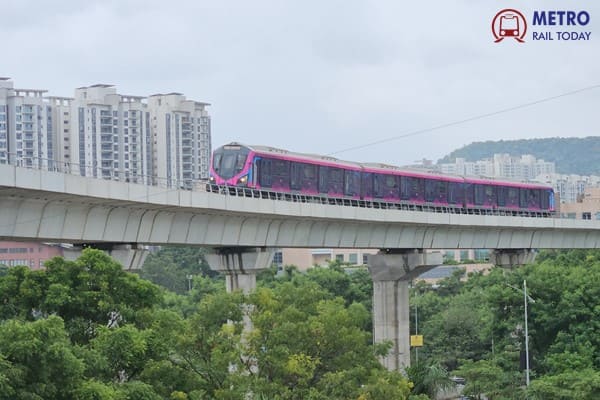 Pune Metro Line 3 set to launch First 12-km Section on 15 July 2026
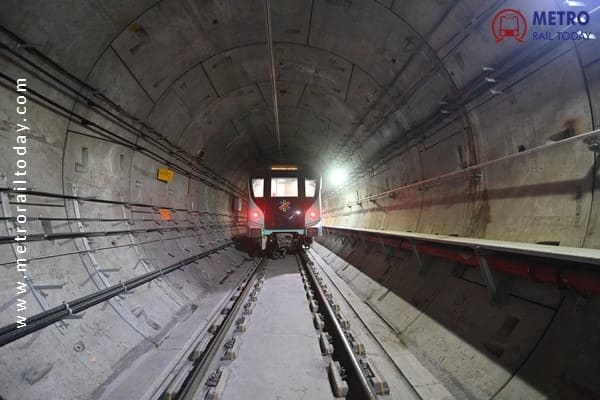 DMRC gets approval to Fell or Transplant 364 Trees for Central Vista Metro Corridor under Phase IV
 ₹4.5 Lakh crore Metro Rail Investment reaches less than 5% of Urban Population in India
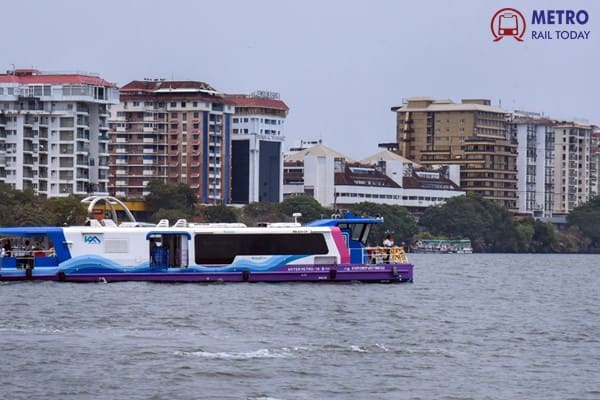 West Bengal plans to launch Water Metro Systems in Kolkata
- Titagarh Rail Systems targets full Indigenous Aluminium Coach Manufacturing by FY2027
Govt. of India approves three new corridors worth ₹12,015 crore under Delhi Metro Phase V
MRT Online Desk
Posted on: 2025-12-24 16:00:00
Viewer: 2,828
Comments: 0
Country: India
City: New Delhi
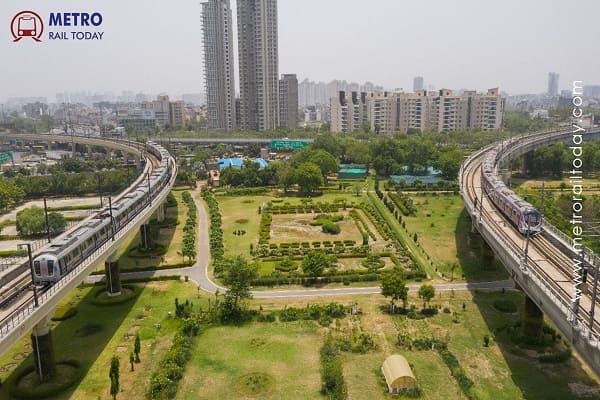
New Delhi, India (Metro Rail Today): In a major push to public transport expansion in the national capital, the Union Cabinet chaired by Prime Minister Narendra Modi has approved three new metro corridors under Delhi Metro Phase V(A). The 16.076-km expansion aims to significantly improve connectivity to the Central Vista, domestic airport, and South Delhi, while reducing congestion and pollution.
The total cost of the project is ₹12,014.91 crore, to be funded by the Government of India, Government of NCT of Delhi, and international funding agencies.
Three approved corridors under Phase V(A)
The approved corridors include:
-
R.K. Ashram Marg – Indraprastha (9.913 km)
-
Aerocity – IGI Domestic Airport Terminal-1 (2.263 km)
-
Tughlakabad – Kalindi Kunj (3.9 km)
Together, these stretches will add 13 stations to the Delhi Metro network, with:
-
10 underground stations
-
3 elevated stations
These will function as extensions of the Magenta Line and Golden Line, enhancing interconnectivity across the network.
Central Vista to get direct metro access
One of the most significant components of this approval is Central Vista connectivity. The new section will provide doorstep metro access to the redeveloped government office complexes, commonly referred to as Kartavya Bhawans.
This is expected to benefit:
-
around 60,000 office-goers daily
-
nearly 2 lakh visitors every day
by offering faster, reliable, and congestion-free mobility.
Extensions to strengthen airport connectivity
The Aerocity – Terminal 1 and Tughlakabad – Kalindi Kunj stretches will act as extensions of the Aerocity – Tughlakabad corridor, improving domestic airport connectivity from:
-
Tughlakabad
-
Saket
-
Kalindi Kunj
-
Chhatarpur
This will substantially reduce travel time for airport-bound commuters from South Delhi.
Key station list released
The stations on R.K. Ashram Marg – Indraprastha corridor will include:
-
R.K. Ashram Marg
-
Shivaji Stadium
-
Central Secretariat
-
Kartavya Bhawan
-
India Gate
-
War Memorial – High Court
-
Baroda House
-
Bharat Mandapam
-
Indraprastha
The Tughlakabad – Kalindi Kunj corridor stations will be:
-
Sarita Vihar Depot
-
Madanpur Khadar
-
Kalindi Kunj
In addition, Aerocity station will be extended to directly connect with IGD Airport Terminal-1.
The corridors are expected to reduce traffic congestion on major city roads, lower dependence on fossil fuels, cut vehicular emissions and improve ease of living and accessibility.
The expansion will also stimulate commercial and employment activity along the alignment.
Phase IV nearing completion; record ridership achieved
Construction of Phase IV (111 km, 83 stations) is currently over 80% complete and likely to be commissioned in stages by December 2026.
Delhi Metro today operates 395 km across 12 lines, covers 289 stations, carries 65 lakh passenger journeys per day on average, and registered record ridership of 81.87 lakh on 8 August 2025.
Mrs. Mamta Shah, MD & CEO, Urban Infra Group, said:
“Approval of the Phase V(A) corridors marks another transformative step in Delhi’s metro expansion. Direct connectivity to Central Vista and enhanced airport access will improve productivity, reduce congestion, and promote greener mobility. Delhi Metro continues to be a benchmark for integrated, sustainable urban transit in India.”
With Phase V(A) now cleared, Delhi Metro further consolidates its status as India’s largest metro system, among the largest urban rail networks in the world, and supporting the national capital’s journey toward smarter, cleaner, and more efficient urban mobility.

MRT Online Desk
Metro Rail Today is an authentic and global news provider for the Rail & Metro industry from and around the world.