

Trending Now
 Siemens Bags Order from Titagarh Rail Systems for Pune Metro Extension Trainsets
 Titagarh Rail Systems becomes Corporate Member of Chamber of Railway Industries (Rail Chamber)
 World Bank approves ₹1,400 crore Civil Tender for Gurugram Metro Phase 2
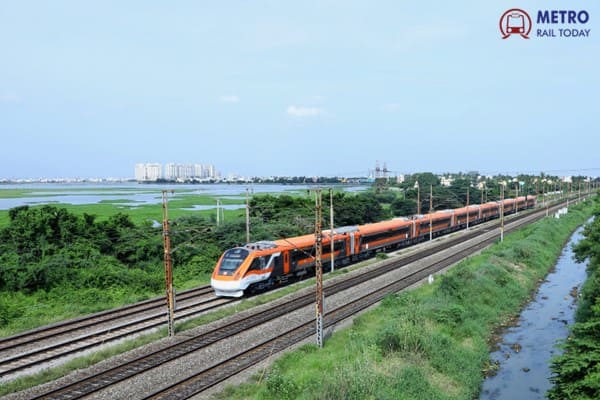 Bi-RIDE invites ₹200 crore Tender for Soladevanahalli Depot of Bengaluru Suburban Rail Project
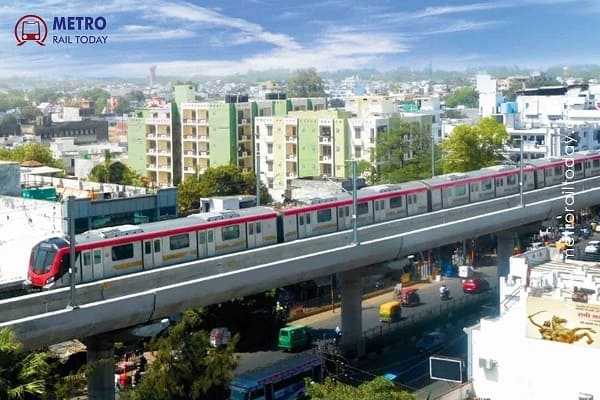 GHV India awarded ₹107.79 crore Civil Contract for Lucknow Metro East-West Corridor
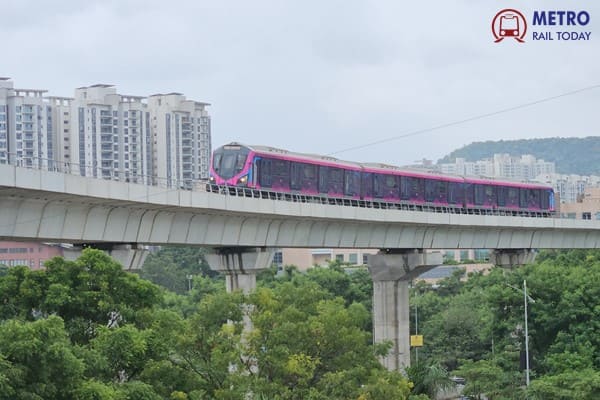 Pune Metro Line 3 set to launch First 12-km Section on 15 July 2026
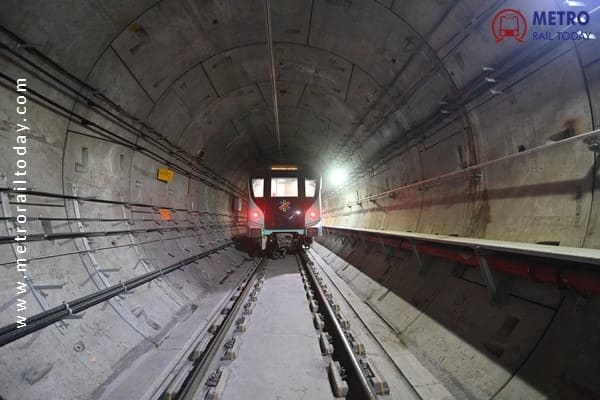 DMRC gets approval to Fell or Transplant 364 Trees for Central Vista Metro Corridor under Phase IV
 ₹4.5 Lakh crore Metro Rail Investment reaches less than 5% of Urban Population in India
 West Bengal plans to launch Water Metro Systems in Kolkata
- Titagarh Rail Systems targets full Indigenous Aluminium Coach Manufacturing by FY2027
India plans record ₹1.3 Trillion Rail Safety Outlay for FY2026-27
MRT Online Desk
Posted on: 2025-12-22 15:00:00
Viewer: 2,243
Comments: 0
Country: India
City: New Delhi
New Delhi, India (Metro Rail Today): Heightened scrutiny over train accidents has pushed rail safety to the centre of India’s infrastructure spending priorities, with the Union government weighing its largest-ever allocation for railway safety. According to people familiar with the matter, the proposed outlay for safety-related works in FY27 could exceed ₹1.3 trillion, marking a decisive policy shift toward accident prevention, asset renewal, and technological upgrades.
The planned allocation represents about a 12% increase over the current year’s budget, with the bulk of funds expected to flow into track renewals, rolling stock upkeep, signalling upgrades, and accelerated deployment of Kavach—India’s indigenous automatic train protection (ATP) system. Safety now stands not only as an operational imperative but also as a political and public priority, especially after recent high-profile accidents.
Safety to Account for Nearly Half of Railway Capex
The emphasis on safety represents a major recalibration in capital expenditure strategy. Safety-related works could constitute nearly half of the total railway capex in FY27, with total capital outlay projected to rise to around ₹2.76 trillion, up from ₹2.52 trillion in the current fiscal year.
Despite a marked decline in accident indicators over the past decade, renewed concerns have surfaced following recent mishaps. The deadliest this year occurred near Bilaspur, where a MEMU passenger train overshot a red signal and collided with a stationary freight train, resulting in 11 deaths and over 20 injuries.
Indian Railways recorded 31 accidents in FY25 and 10 consequential accidents in the current fiscal up to November. Consequential accidents include collisions, derailments, and fires resulting in fatality or major property loss. Between FY15 and FY24, India recorded 678 consequential accidents leading to 748 fatalities.
Strong Progress, but Long Road Ahead
Operational safety indicators show significant improvement. Accidents per million train kilometres fell from 0.11 in FY15 to 0.03 in FY24—a 73% improvement. To maintain this trajectory, the government has extended funding under the Rashtriya Rail Sanraksha Kosh (RRSK), under which more than ₹1.08 trillion has already been spent on asset renewal and safety upgrades.
Safety expenditure has grown sharply over the past two decades, rising 2.5x from ₹70,273 crore during FY05–FY14 to ₹1.78 lakh crore during FY15–FY24. Track renewal spending alone rose 2.33x, from ₹47,018 crore to ₹1.09 lakh crore during the same period.
Kavach Rollout Expands, but Coverage Still Low
Kavach has been designated India’s national ATP system, designed to automatically apply brakes if a loco pilot fails to respond, including under poor visibility conditions. To date, Kavach is installed on 1,465 route kilometres and 121 locomotives.
Kavach 4.0 is currently planned for rollout across 15,512 route kilometres, yet overall operational coverage remains slightly above 2% of India’s 67,000-km rail network—highlighting both progress and the scale of work ahead.
Money Alone Won’t Deliver Safety: Experts
Experts agree that funding, though necessary, is insufficient by itself.
“There is no shortage of funds for Indian Railways, whether for safety, track renewals, new rolling stock or station development… Investment by itself doesn’t guarantee safety,”
said Shubhranshu, railway professional and former head of Rail Wheel Plant, Bela, who also led the design and production of the Vande Bharat Express.
He emphasised the role of maintenance discipline, training, accountability, and leadership motivation, noting that these factors often deliver the greatest safety gains at relatively low financial cost.
Tech-Led Safety Transformation Underway
The anticipated rise in FY27 safety spending is expected to be directed toward:
-
track renewals and strengthening rails
-
maintenance of locomotives and coaches
-
elimination and interlocking of level crossings
-
electronic interlocking replacing mechanical systems
-
signalling upgrades and axle counters
-
GPS-based fog safety devices
-
rapid expansion of Kavach coverage
Signalling upgrades already show momentum: electronic interlocking stations have risen 3.5x to 2,964 between FY15–FY24, while automatic block signalling has expanded from 1,486 km to 2,497 km. Production of safer LHB coaches surged nearly 16-fold to 36,933 units, and full track circuiting has been completed at 6,609 stations.
Former Vande Bharat Express architect Sudhanshu Mani said the next milestone should be a “zero-failure regime”, enabled by AI-based monitoring of near-miss events and a faster rollout of fail-safe signalling systems.
Commenting on the government’s proposed record allocation, Mrs. Mamta Shah, MD & CEO, Urban Infra Group, said:
“India is entering a decisive decade for rail safety. A ₹1.3 trillion safety outlay is not just a budget line—it is an investment in human lives, public confidence and economic resilience. Technology like Kavach, electronic interlocking and AI-based predictive maintenance must move from pilot scale to nationwide implementation. At the same time, rigorous training and accountability frameworks are equally critical to ensure that every rupee spent delivers tangible safety outcomes.”
She added that the renewed focus on safety will also create large opportunities for Indian MSMEs, especially in signalling equipment, sensors, track renewal components, inspection technologies, and maintenance services.
The Road Ahead
Indian Railways’ safety mission is transforming from a reactive approach to a prevention-driven, technology-centric ecosystem. With the government planning its largest-ever allocation for safety and measurable improvements already visible in accident statistics, the next challenge lies in execution speed, systemic discipline, and workforce training.
If implemented effectively, India could move significantly closer to a near-zero accident railway network, aligning with global best practices while supporting industrial growth across the rail supply chain.

MRT Online Desk
Metro Rail Today is an authentic and global news provider for the Rail & Metro industry from and around the world.