


Trending Now
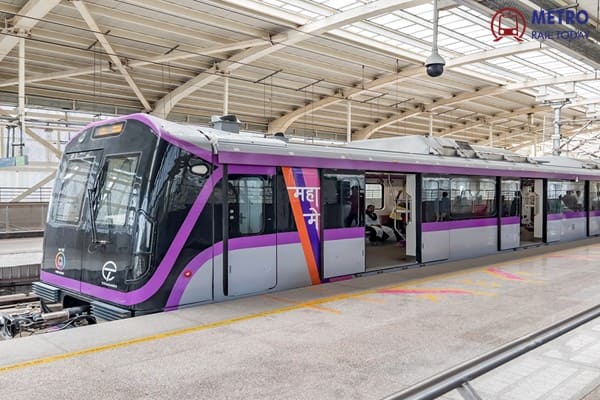 Siemens Bags Order from Titagarh Rail Systems for Pune Metro Extension Trainsets
 Titagarh Rail Systems becomes Corporate Member of Chamber of Railway Industries (Rail Chamber)
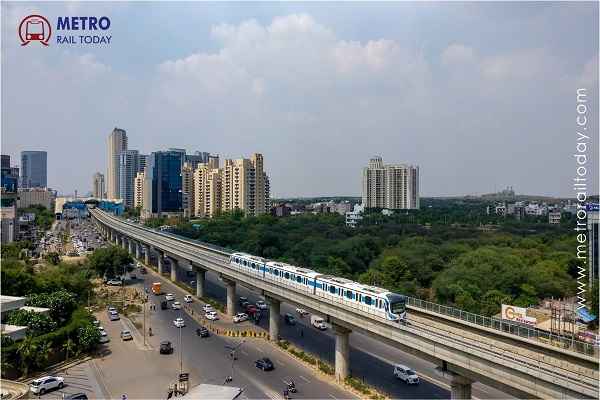 World Bank approves ₹1,400 crore Civil Tender for Gurugram Metro Phase 2
 Bi-RIDE invites ₹200 crore Tender for Soladevanahalli Depot of Bengaluru Suburban Rail Project
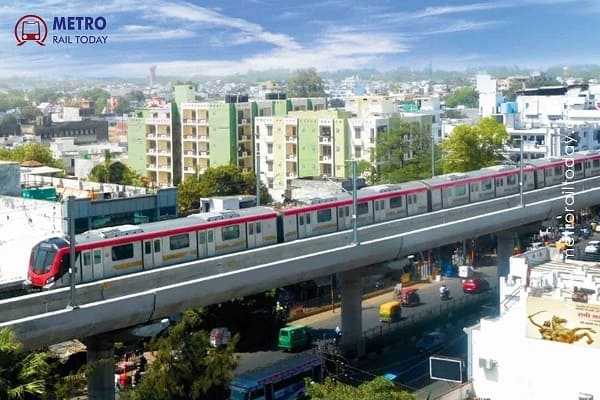 GHV India awarded ₹107.79 crore Civil Contract for Lucknow Metro East-West Corridor
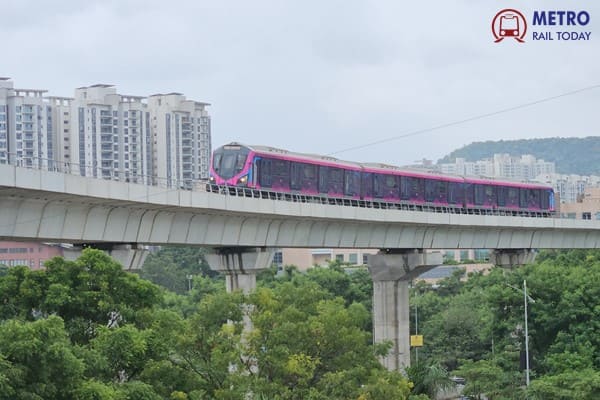 Pune Metro Line 3 set to launch First 12-km Section on 15 July 2026
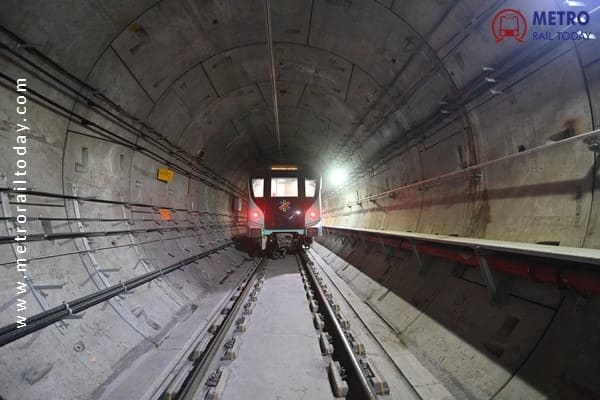 DMRC gets approval to Fell or Transplant 364 Trees for Central Vista Metro Corridor under Phase IV
 ₹4.5 Lakh crore Metro Rail Investment reaches less than 5% of Urban Population in India
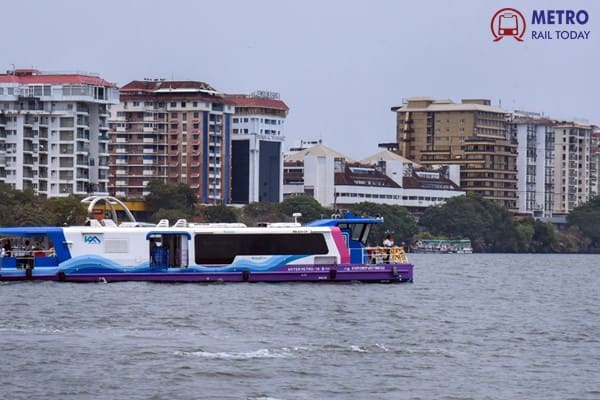 West Bengal plans to launch Water Metro Systems in Kolkata
- Titagarh Rail Systems targets full Indigenous Aluminium Coach Manufacturing by FY2027
HMRTC proposes Double-Decker Viaduct on Pachgaon Metro Corridor in Gurugram
MRT Online Desk
Posted on: 2025-12-22 07:15:00
Viewer: 1,912
Comments: 0
Country: India
City: Gurgaon
Gurugram, India (Metro Rail Today): In a move aimed at preventing long-term congestion, land wastage and duplication of infrastructure along the Southern Peripheral Road (SPR), Gurugram Metro Rail Limited (GMRL) has proposed developing the Sector 56 to Pachgaon Metro corridor as an integrated double-decker viaduct between Ghata Chowk and Vatika Chowk.
Under the proposal, a single viaduct structure would carry both the elevated metro line and an elevated road, supported on common piers and foundations. The concept has been submitted to the Haryana Mass Rapid Transport Corporation (HMRTC) and the project’s design consultant, who are currently preparing the corridor for on-ground execution.
A senior GMRL official said that constructing two separate elevated structures on the same stretch would severely constrain the corridor in the long term.
“The double-decker design will help reduce costs for both the proposed metro line and the elevated road planned on this stretch. If all stakeholders, including civic agencies, work together, the project can be redesigned and implemented in a holistic manner,” the official said.
The official added that double-decker metro-road structures have already been implemented successfully in cities such as Nagpur, Jaipur and Bengaluru, helping optimise limited right of way, reduce pier density and lower construction costs.
Overlapping Projects Raise Red Flags
The Sector 56–Pachgaon Metro corridor is planned as a fully elevated line, with its Detailed Project Report (DPR) currently under preparation and awaiting state government approval.
At the same time, the Haryana government and the Gurugram Metropolitan Development Authority (GMDA) have already approved an elevated road along the same SPR stretch between Ghata Chowk and Vatika Chowk.
“These two major mobility projects are overlapping on the same corridor but are being processed independently,” GMRL said in its proposal.
If executed separately, GMRL warned that the corridor would face:
-
Near-complete occupation of the available right of way
-
Duplication of foundations and excessive pier density
-
Compromised drainage, maintenance access and utilities
-
Visual clutter and loss of scope for future infrastructure expansion
Single DPR for Metro and Elevated Road
To address these concerns, GMRL has proposed preparing a comprehensive DPR that integrates both the metro line and the elevated road on the Ghata–Vatika stretch.
“This approach will ensure both facilities are engineered as a single integrated double-decker structure, with unified pier placement, consistent geometry and coordinated construction sequencing,” the proposal stated.
Such an approach, officials believe, would not only improve constructability but also reduce disruption during execution and optimise lifecycle maintenance.
About the Sector 56–Pachgaon Metro Corridor
The 36-km Sector 56–Pachgaon Metro line is estimated to cost around ₹8,500 crore. As per the draft DPR approved by HMRTC, the corridor will feature 28 elevated stations and provide strategic connectivity across Gurugram’s rapidly expanding zones.
The alignment will connect:
-
Golf Course Extension Road
-
Southern Peripheral Road (SPR)
-
Central Peripheral Road (CPR)
-
Developing sectors along the Dwarka Expressway
-
Manesar industrial area, before terminating at Pachgaon
The corridor is expected to play a crucial role in decongesting arterial roads and supporting Gurugram’s industrial and residential growth.
Commenting on the proposal, Mrs. Mamta Shah, MD & CEO, Urban Infra Group, said:
“Integrated double-decker corridors are becoming essential for dense urban regions like Gurugram, where land availability is extremely limited. Planning metro lines and elevated roads together avoids costly duplication, preserves urban space and ensures better lifecycle efficiency. Early coordination among agencies is the key to making such complex infrastructure viable.”
With both metro and road infrastructure planned along the same SPR stretch, the success of the double-decker proposal will depend on inter-agency coordination, timely approvals and integrated planning. If implemented effectively, the model could become a template for future transit corridors in fast-growing urban regions across India.


MRT Online Desk
Metro Rail Today is an authentic and global news provider for the Rail & Metro industry from and around the world.