

Trending Now
 Siemens Bags Order from Titagarh Rail Systems for Pune Metro Extension Trainsets
 Titagarh Rail Systems becomes Corporate Member of Chamber of Railway Industries (Rail Chamber)
 World Bank approves ₹1,400 crore Civil Tender for Gurugram Metro Phase 2
 Bi-RIDE invites ₹200 crore Tender for Soladevanahalli Depot of Bengaluru Suburban Rail Project
 GHV India awarded ₹107.79 crore Civil Contract for Lucknow Metro East-West Corridor
 Pune Metro Line 3 set to launch First 12-km Section on 15 July 2026
 DMRC gets approval to Fell or Transplant 364 Trees for Central Vista Metro Corridor under Phase IV
 ₹4.5 Lakh crore Metro Rail Investment reaches less than 5% of Urban Population in India
 West Bengal plans to launch Water Metro Systems in Kolkata
- Titagarh Rail Systems targets full Indigenous Aluminium Coach Manufacturing by FY2027
NCRTC initiates pre-construction activities for 136-km Delhi–Panipat–Karnal RRTS Corridor
MRT Online Desk
Posted on: 2025-12-19 10:07:00
Viewer: 4,887
Comments: 0
Country: India
City: New Delhi
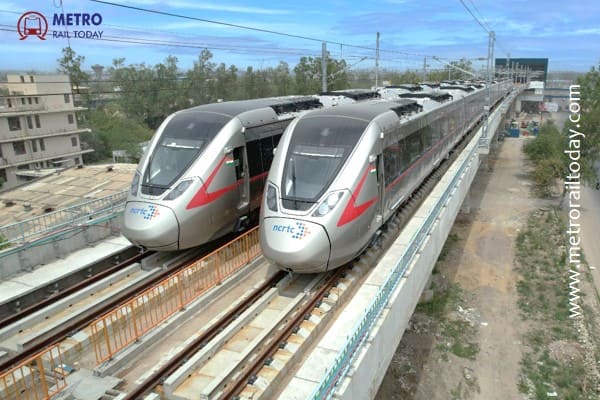
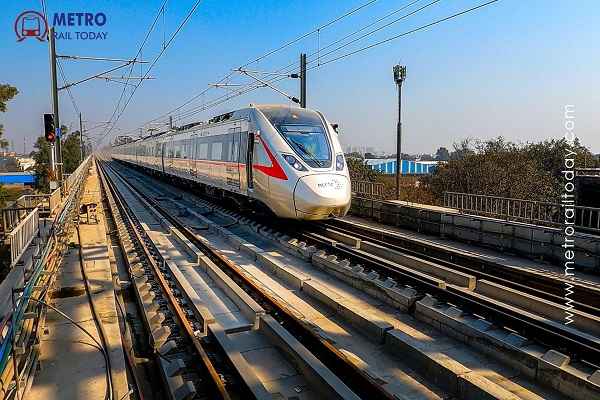
New Delhi, India (Metro Rail Today): The National Capital Region Transport Corporation (NCRTC) has initiated on-ground preparations for the Delhi–Panipat–Karnal Regional Rapid Transit System (RRTS) corridor by inviting bids for the shifting and modification of key electrical utilities along a crucial stretch in north Delhi. The move marks a significant step toward the commencement of full-scale civil construction for one of NCR’s most ambitious regional mobility projects.
According to NCRTC, the tender covers the supply, installation, testing and commissioning, along with shifting and modification of low-tension electrical utilities, and the dismantling and relocation of streetlights that conflict with the proposed Namo Bharat alignment between Kashmiri Gate and Bhalswa.
The utility relocation works will be undertaken along chainage 9,550 to 20,770, forming part of the Delhi section of the Delhi–Panipat–Karnal RRTS corridor. This stretch is considered critical due to its dense urban setting, heavy traffic movement and concentration of underground and overhead utilities.
“The utility shifting work is a prerequisite for initiating civil construction and must be executed with minimal disruption to traffic and daily life. Contractors will be required to coordinate closely with utility agencies and local authorities to ensure continuity of services during relocation. This work should be completed within a year,” an NCRTC official said.
NCRTC is also expected to float additional tenders in the coming months, enabling diversion and enabling works to progress simultaneously across multiple sections of the corridor.
Project Background and Approvals
The move follows the announcement made in November 2025 by Union Minister for Housing and Urban Affairs, Manohar Lal Khattar, confirming that the Delhi–Panipat–Karnal RRTS corridor has received final approvals, with execution set to begin shortly.
Spanning approximately 136 km, the corridor is one of three priority RRTS lines planned to connect Delhi with major satellite towns and industrial centres across the National Capital Region (NCR).
The corridor will originate at Sarai Kale Khan, the designated nodal hub for all three priority RRTS corridors, and pass through northwest Delhi before entering Haryana. Key locations along the alignment include:
-
Narela
-
Kundli
-
Sonipat
-
Gannaur
-
Samalkha
-
Panipat
The extension to Karnal will be taken up in subsequent phases. The line will feature 17 stations (excluding Sarai Kale Khan) and is estimated to cost around ₹33,000 crore.
Construction Status and Phasing
Officials confirmed that work on the first phase, covering a 22-km stretch between Narela and Murthal, began in October 2025 with utility shifting activities. The Kashmiri Gate–Bhalswa section now under tender is expected to be among the most complex segments, owing to congested traffic conditions and extensive utility networks.
Designed for operating speeds of up to 180 kmph, the Delhi–Panipat RRTS is expected to dramatically reduce travel times. The journey between Delhi and Panipat, which currently takes two to three hours, is projected to be cut to under one hour once operational.
The corridor is also expected to:
-
Ease congestion on NH-44 (Delhi–Ambala Highway)
-
Support decongestion of Delhi by enabling reliable regional commuting
-
Strengthen economic integration between Delhi and Haryana’s industrial belts
The Sarai Kale Khan station is planned as an interoperable hub, allowing seamless operations of Namo Bharat trains across the Delhi–Meerut, Delhi–Alwar and Delhi–Panipat corridors.
Currently, 55 km of the Delhi–Meerut RRTS corridor, comprising 11 stations, is already operational.
Commenting on the development, Mrs. Mamta Shah, MD & CEO, Urban Infra Group, said:
“Early-stage works such as utility shifting are often overlooked, but they are fundamental to the timely delivery of high-speed regional corridors. The Delhi–Panipat–Karnal RRTS will redefine commuting patterns across NCR, and coordinated execution in dense urban sections like north Delhi will be critical to maintaining project momentum.”
With enabling works now gathering pace, the Delhi–Panipat–Karnal RRTS is moving steadily from planning to execution. Once completed, the corridor will form a vital pillar of NCR’s high-speed regional mobility framework, supporting sustainable growth, faster commuting and reduced dependence on road-based travel.


MRT Online Desk
Metro Rail Today is an authentic and global news provider for the Rail & Metro industry from and around the world.