

Trending Now
 Siemens Bags Order from Titagarh Rail Systems for Pune Metro Extension Trainsets
 Titagarh Rail Systems becomes Corporate Member of Chamber of Railway Industries (Rail Chamber)
 World Bank approves ₹1,400 crore Civil Tender for Gurugram Metro Phase 2
 Bi-RIDE invites ₹200 crore Tender for Soladevanahalli Depot of Bengaluru Suburban Rail Project
 GHV India awarded ₹107.79 crore Civil Contract for Lucknow Metro East-West Corridor
 Pune Metro Line 3 set to launch First 12-km Section on 15 July 2026
 DMRC gets approval to Fell or Transplant 364 Trees for Central Vista Metro Corridor under Phase IV
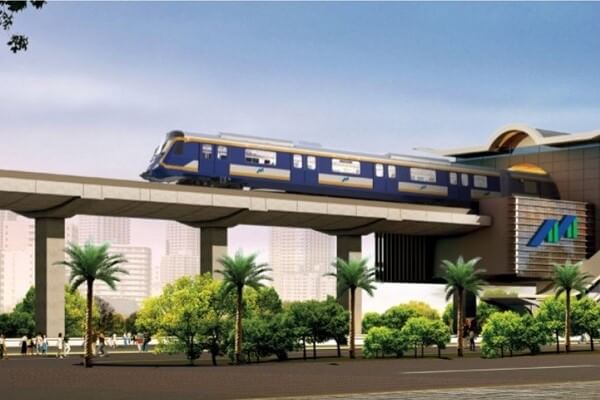 ₹4.5 Lakh crore Metro Rail Investment reaches less than 5% of Urban Population in India
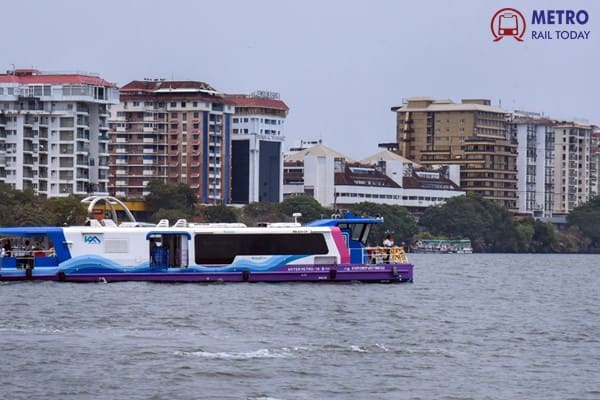 West Bengal plans to launch Water Metro Systems in Kolkata
- Titagarh Rail Systems targets full Indigenous Aluminium Coach Manufacturing by FY2027
Why many Global Railway OEMs struggle in India — and how they can succeed?
MRT Online Desk
Posted on: 2025-12-22 07:30:00
Viewer: 14,542
Comments: 0
Country: India
City: New Delhi
India today is one of themost attractive railway markets in the world. Massive investments are underway acrossheavy haul corridors, 100% electrification, metro systems, rolling stock manufacturing, signaling upgrades, and station redevelopment. For global railway OEMs, the country represents not just a growing market, but a long-term strategic opportunity.
Yet a paradox remains.
Despitestrong technologies, global certifications, and decades of international execution experience, many multinational railway OEMs find it difficult to scale in India. The barrier is rarely related to product capability. Instead, success depends on understandinghow India buys, how India approves, and how India executesrailway projects.
I. Understanding the Indian Tendering Mindset
Public procurement in India—especially withinIndian Railways and metro corporations—is fundamentallyrisk-averse and compliance driven. Decision-making is shaped by accountability frameworks and audit systems.
Key characteristics include:
- Clause-by-clause compliance outweighs technical superiority
- Indian proven references carry greater weight than global references
- Continuity, serviceability, and accountability are prioritised over innovation
As a result, even highly advanced products can bedisqualified on documentation gaps, deviations in tender formats, or lack of local operating history. OEMs who approach Indian tenders purely from a technical standpoint often underestimate thisprocurement psychology.
In India,risk elimination is valued more than technology advancement.
II. Localization Is No Longer Optional — It Is Fundamental
Localization in India is often misunderstood asassembly through a local partner. In reality, it is much deeper and multidimensional.
True localization involves:
- redesigning equipment fordust, heat, humidity, and voltage fluctuations
- meetingIndian Railways RDSO and metro-specific standards
- aligning pricing withL1 (lowest bidder) evaluation frameworks
- developinglocal vendor ecosystem and service infrastructure
Without genuine localization, global products are frequently viewed asoperational risks, regardless of their performance worldwide. Localization builds not only cost competitiveness but alsotrust and service confidenceamong operators.
India rewards companies thatcommit, not those who only sell.
III. Vendor Approvals — The Real Market Entry Barrier
One of the most underestimated challenges in India isvendor approval. Technology acceptance alone does not equal business success.
The approval journey typically involves:
- prototype manufacturing andrigorous inspections
- field trials under Indian climate and traffic loading
- multiple layers of technical and quality audits
- long monitoring periods before commercial clearance
Until these approvals andIndian operational referencesare achieved, OEMs remain stuck atpilot-project stage, unable to achieve meaningful scale. For this reason,early investment in the approval pipelineis often the decisive differentiator between entry and success.
IV. The Documentation–Deployment Gap
Global OEMs are usually very strong in engineering design and R&D. However, Indian railway contracts demand equal strength inexecution-linked documentation.
Critical expectations include:
- preciseclause-by-clause compliance statements
- familiarity withe-procurement portals and statutory submissions
- detailed after-sales, warranty, and performance documentation
- contract administration discipline throughout execution
In the Indian context, documentation isnot administrative overhead. It is the mechanism through which deployment readiness, compliance, and risk management are evaluated. Many technically capable OEMs falter because theyunderrate paperwork as bureaucracy, when in fact it is a core tender requirement.
V. The Critical Role of Indian Execution Partners
Another decisive factor is thequality of local execution partners. Success in India depends not only on product supply, but also oninstallation, commissioning, and lifecycle support.
Strong partners help OEMs with:
- interpreting tender clauses and approval processes
- coordinating with inspectors, engineers, and operating teams
- managing logistics, commissioning, and on-site risks
- maintaining long-term customer relationships and perception
Weak execution ecosystems often lead toproject delays, financial penalties, cost overruns, and loss of repeat orders. In contrast, OEMs that invest in capable local teams and joint ventures createsustainability and customer confidence.
VI. What Successful OEMs in India Do Differently
OEMs that consistently succeed in India tend to follow certain common practices:
- invest earlyin approvals and Indian references
- buildstrong local engineering and service teams
- adapt designs and prices toIndian operating realities
- acceptlower margins initiallyto achieve long-term scale
- align global standards withIndian execution frameworks
These companies recognize that India is not simply another export market. It is adistinct operating environmentrequiring commitment, patience, and partnership.
Conclusion
India does not reject global railway OEMs. India simplydemands that they adapt.
The country’s rail and metro expansion is unprecedented in scale and continuity. Success here will depend on:
- deep and crediblelocalization
- strongtender and compliance capability
- robustexecution partnerships
- long-term strategic commitment beyond transactional sales
Global technology may open the door—but in India,disciplined execution determines who stays and wins.

MRT Online Desk
Metro Rail Today is an authentic and global news provider for the Rail & Metro industry from and around the world.