

Trending Now
 Alstom to deploy DTG Signalling System for Jaipur Metro’s 5.2-km Phase-1 Extension
 RVNL floats ₹297.45-crore Power Systems Tender for Kolkata Metro Purple Line
 Siemens Mobility awarded $772 million Trainset Contract for California High-Speed Rail Project
 RITES submits fresh DPR to UPMRC for ₹12,000 crore Prayagraj Metro Rail Project
 Paras Railtech wins ₹84.72 crore Ballastless Track Contract for Jaipur Metro Rail Project
 Indian Railways announces 3,548 Graduate-Level Vacancies under NTPC Recruitment 2026
 European Union sanctions €10 million to support extension of Hanoi Metro Line 3
 GMRC issues ₹683 crore Tender for construction of 8.68 km stretch for Ahmedabad Metro
- GMRC launches ₹439 crore Tender for construction of 5 New Ahmedabad Metro Stations
 Global tender issued for procurement of 60 Rolling Stock coaches for Hyderabad Metro Rail Project
India develops first High Speed Rail Coach for Mumbai-Ahmedabad Bullet Train Project
MRT Online Desk
Posted on: 2026-09-14 09:05:00
Viewer: 1,416
Comments: 0
Country: India
City: New Delhi
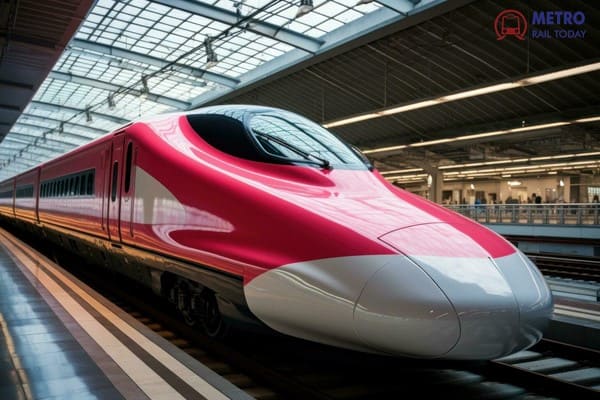
New Delhi, India (Rail & Metro Today): India’s first high-speed rail project is moving closer to its first operational milestone, with the Surat-Bilimora section of the Mumbai-Ahmedabad High-Speed Rail (MAHSR) corridor targeted for commissioning in 2027. Railway Minister Ashwini Vaishnaw has said that the first coach developed for testing the bullet train system is ready, while civil construction on the Vapi-Surat section is expected to be completed by December 2026.
The developments mark a significant phase in the implementation of India’s ambitious 508-km Mumbai-Ahmedabad Bullet Train project, which is being developed across Maharashtra, Gujarat and the Union Territory of Dadra & Nagar Haveli. Once operational, the corridor will introduce high-speed rail technology on a commercial scale in India and establish a new benchmark for intercity passenger mobility.
Surat-Bilimora to Become First Operational Section
The Surat-Bilimora stretch is expected to be the first section of the Mumbai-Ahmedabad High-Speed Rail corridor to enter passenger operations. The broader project is targeted to commence high-speed rail services in August 2027, subject to completion of the required civil, systems, testing and commissioning activities.
According to Railway Minister Ashwini Vaishnaw, construction is progressing across multiple sections of the corridor. The availability of the first coach for system testing represents another important step towards the transition from civil construction to integrated testing and trial operations.
The Vapi-Surat section is also approaching a major construction milestone, with civil works expected to be completed by December. These developments will allow subsequent activities involving track, railway systems, electrification, signalling, rolling stock and other high-speed rail components to progress in a coordinated manner.
A New Era for High-Speed Rail in India
The MAHSR project is designed to substantially reduce travel time between Mumbai and Ahmedabad, while offering passengers a faster, safer and more reliable alternative for long-distance intercity travel.
The corridor will feature a combination of elevated and underground infrastructure, including a major underwater rail tunnel beneath the Thane Creek. The project is being implemented by the National High Speed Rail Corporation Limited (NHSRCL) using Japanese Shinkansen technology.
According to Mrs. Mamta Shah, MD & CEO, Urban Infra Group, the first operational section will be particularly important for demonstrating the wider potential of high-speed rail in India.
“The progress of the Mumbai-Ahmedabad High-Speed Rail corridor represents a transformative moment for India’s railway sector. The commissioning of the Surat-Bilimora section will provide an important opportunity to demonstrate high-speed rail operations in the Indian environment. Beyond reducing travel time, the project can create stronger economic linkages between cities, improve regional accessibility and accelerate the development of a modern rail manufacturing and technology ecosystem.”
12 Stations Across the 508-km Corridor
The Mumbai-Ahmedabad High-Speed Rail corridor will have 12 stations, providing connectivity to some of the most important urban, industrial and commercial centres along the route.
The stations are planned at Mumbai BKC, Thane, Virar, Boisar, Vapi, Bilimora, Surat, Bharuch, Vadodara, Anand, Ahmedabad and Sabarmati.
Station designs are being developed with modern passenger facilities and multimodal connectivity, while incorporating architectural elements associated with their respective locations. The stations are expected to serve not only as railway facilities but also as important nodes connecting high-speed rail with local and regional transport networks.
Infrastructure Progress Across the Corridor
The 508-km MAHSR corridor has witnessed substantial progress since construction activities began. The project includes extensive viaduct construction, bridges, tunnels, stations, depots, track systems, electrical infrastructure, signalling and telecommunications.
A major engineering feature is the 7-km underwater rail tunnel beneath the Thane Creek, which forms part of the Mumbai section of the corridor. The project also includes large-scale viaduct construction across Gujarat and Maharashtra.
The development of dedicated high-speed rail infrastructure is simultaneously creating demand for specialised engineering, construction, rolling stock and railway systems capabilities within India.
First Coach Ready for Testing
The readiness of the first coach for testing is another significant milestone. Testing will be essential for validating the integration of rolling stock with the high-speed rail infrastructure and systems before commercial operations begin.
High-speed rail requires stringent standards for track geometry, signalling, train protection, traction power, rolling stock, communications and passenger safety. The testing and commissioning phase will therefore play a critical role in establishing operational reliability before passenger services are introduced.
The project is expected to provide valuable experience for India's future high-speed rail corridors, particularly in areas such as indigenous manufacturing, systems integration, operations and maintenance.
Foundation of India's High-Speed Rail Programme
The foundation stone for the Mumbai-Ahmedabad High-Speed Rail project was laid in September 2017, marking the formal beginning of India's high-speed rail programme.
The corridor is expected to become more than just a faster railway connection between two major cities. Its wider impact could include improved business mobility, stronger tourism links, enhanced regional economic integration and the creation of a domestic ecosystem for high-speed rail technologies.
With the Surat-Bilimora section targeted for commissioning in 2027, the Mumbai-Ahmedabad Bullet Train project is now entering a crucial transition from construction towards testing and operations. If the planned milestones are achieved, India will soon join the growing group of countries operating dedicated high-speed passenger rail systems, opening a new chapter in the country's railway modernisation journey.

MRT Online Desk
Metro Rail Today is an authentic and global news provider for the Rail & Metro industry from and around the world.