

Trending Now
 BEML–Medha Consortium bids to supply 16 Trainsets for Mumbai–Ahmedabad Bullet Train Project
 Indian Railways attracts $942 million FDI in 11 years as Rail Exports cross ₹26,000 Crore
 Konkan Railway, Aarvee Engineering join hands to expand Rail & Metro Infrastructure Projects
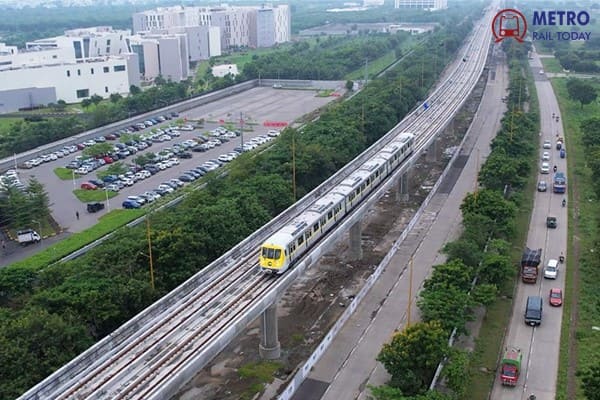 CMRS completes Safety Inspection of Indore Metro Phase 2 Priority Corridor
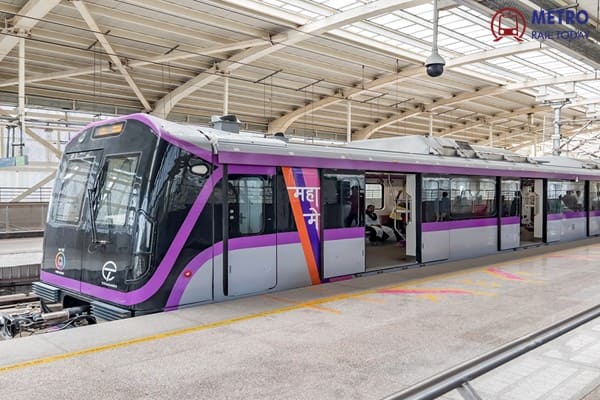 Maha Metro awards Consultancy Contract for R&R Studies on Pune Metro Phase 2 Corridors
 Skoda Group Eyes Entry into Serbian Rail Market, Signs MoU for Potential Production Facility
 India unveils draft National Water Metro Policy 2026 to expand Urban Water Transport
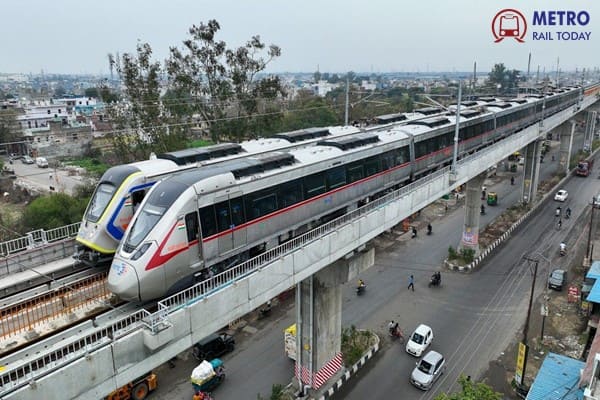 Rewriting Regional Mobility with India’s first Namo Bharat Corridor
 Hyderabad plans Pod Taxi System to enhance Last-Mile Connectivity for Metro commuters
- Maharashtra to expand 200 kilometers metro rail network across Pune and Pimpri-Chinchwad
India to install 28 Seismometers to safeguard Mumbai-Ahmedabad Bullet Train Project
MRT Online Desk
Posted on: 2024-01-29 15:15:00
Viewer: 1,524
Comments: 0
Country: India
City: New Delhi
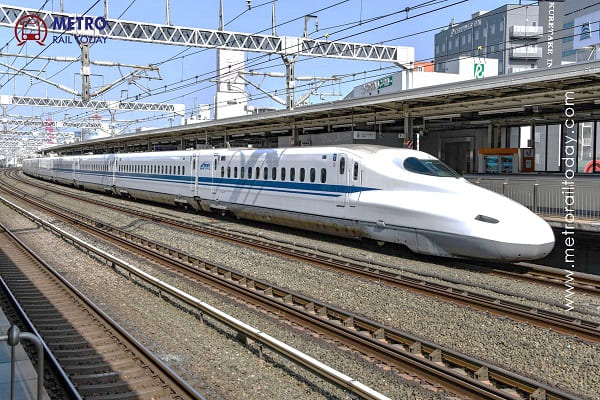
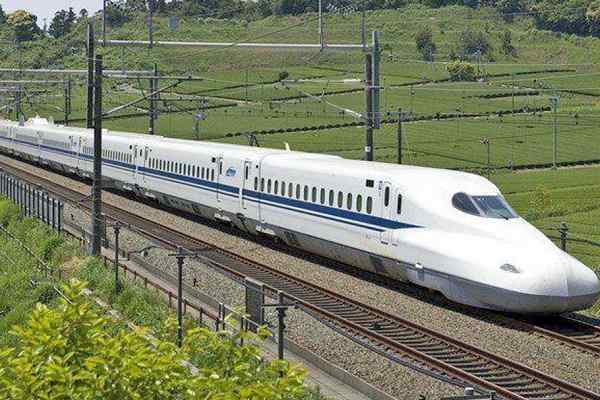
New Delhi, India (Metro Rail Today): In a groundbreaking initiative for enhanced safety, the Mumbai-Ahmedabad High-Speed Rail Corridor, commonly known as the Bullet Train project, will integrate a state-of-the-art Early Earthquake Detection System. This technological marvel, inspired by Japanese Shinkansen expertise, aims to fortify passenger safety and protect critical infrastructure in the event of earthquakes.
The Early Earthquake Detection System relies on 28 strategically placed seismometers, strategically positioned along the high-speed rail corridor. These devices, designed to detect earthquake-induced tremors primarily through primary waves, serve a crucial role in ensuring a swift and automated response to seismic activity.
In the event of an earthquake, the system triggers an automatic power shutdown, a preventive measure to safeguard passengers and the infrastructure. Simultaneously, emergency brakes are activated, bringing trains to a halt in the affected region. This dual-layered approach ensures a swift and efficient response to seismic events, prioritizing the safety of passengers and the integrity of the Bullet Train project.
The distribution of the 28 seismometers is meticulously planned, with 22 installations along the corridor alignment. In Maharashtra, key locations include Mumbai, Thane, Virar, and Boisar, while Gujarat will host installations in Vapi, Bilimora, Surat, Bharuch, Vadodara, Anand, Mahembadad, and Ahmedabad. These seismometers will be strategically positioned in Traction Substations and Switching Posts along the rail corridor.
An additional six seismometers, referred to as inland seismometers, will be placed in earthquake-prone areas, namely Khed, Ratnagiri, Latur, Pangri in Maharashtra, and Adesar and Old Bhuj in Gujarat. Japanese experts conducted a thorough survey in areas near the Mumbai-Ahmedabad High-Speed Rail alignment, identifying locations with a history of earthquakes exceeding 5.5 magnitudes in the past century. After comprehensive soil suitability studies, the selected sites emerged as optimal for inland seismometer installation.
This groundbreaking initiative underscores a commitment to proactive safety measures, integrating cutting-edge technology inspired by Japanese expertise. As the Bullet Train project progresses, the implementation of the Early Earthquake Detection System stands as a testament to prioritizing safety and resilience in high-speed rail transportation.


MRT Online Desk
Metro Rail Today is an authentic and global news provider for the Rail & Metro industry from and around the world.