


Trending Now
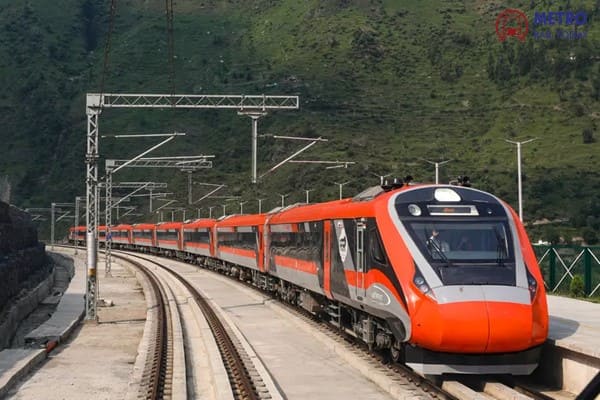 Japanese Delegation visits KRIDE to explore Bengaluru Suburban Rail Project opportunities
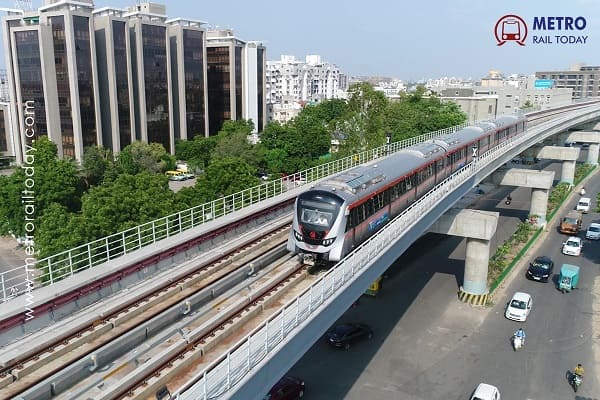 GMRC issues ₹879 crore Civil Tender for Airport Extension under Ahmedabad Metro Phase 2A
 Global Mobility Leaders Alstom and Siemens become Corporate Member of Chamber of Railway Industries
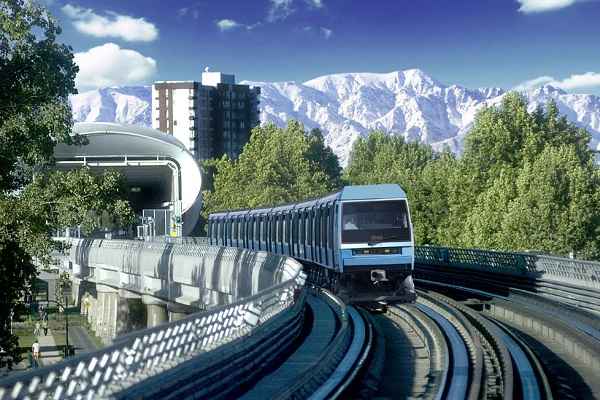 L&T-MHI JV wins contract for Automated People Mover at Dubai’s Al Maktoum International Airport
 Delhi Metro Rail Network to expand to 695 km by 2047, Six new RRTS Corridors planned
 HÜBNER at InnoTrans 2026: Global rail expertise and local capability for India’s Next-Gen Mobility
 Australia shortlists three firms/consortia for Sydney–Newcastle High Speed Rail Project
 MRVC set to procure 238 AC Vande Metro Trainsets worth ₹19,293 crore from Indian Railways
 Maharashtra approves ₹17,725 crore Mumbai Metro Line 13 linking Mira-Bhayandar with Vasai-Virar
 Gujarat issues three tenders for 48.38-km Metro-RRTS Hybrid corridors under Ahmedabad Metro Phase 3
Indian Railways plans ₹1 Lakh crore East-West Dedicated Freight Corridor under PPP Model
MRT Online Desk
Posted on: 2026-08-03 07:20:00
Viewer: 1,145
Comments: 0
Country: India
City: New Delhi
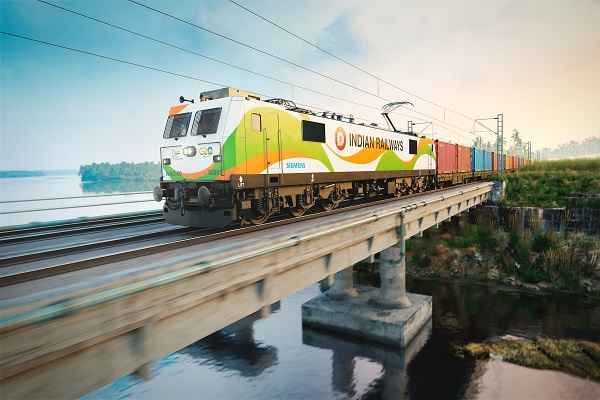
New Delhi, India (Rail & Metro Today): The Ministry of Railways is considering developing the proposed East-West Dedicated Freight Corridor (DFC) under a Public-Private Partnership (PPP) model, with the nearly 2,100-km corridor likely to be divided into smaller, investor-friendly packages to attract private participation.
The proposed freight corridor, announced in the Union Budget 2026-27, is expected to require an investment of more than ₹1 lakh crore. According to officials familiar with the proposal, the Railway Ministry is examining a structure under which the corridor could be divided into approximately 10 sections, with individual sections awarded to separate concessionaires.
The proposed approach is aimed at avoiding the challenges faced during an earlier attempt to develop the Sonnagar-Dankuni section of the Eastern Dedicated Freight Corridor through private participation.
East-West DFC May Adopt Hybrid Annuity Model
The proposed East-West DFC is being considered under the Hybrid Annuity Model (HAM), under which concessionaires would be responsible for designing, building, financing, operating and maintaining their respective sections.
An official said the proposal to divide the project into around 10 smaller sections is currently under consideration. Public sector undertakings (PSUs), along with private companies, may also be permitted to participate in the bidding process.
Under the indicative concession framework prepared by the Dedicated Freight Corridor Corporation of India (DFCCIL), the concession period would include the construction phase followed by a 15-year operation and maintenance period. At the end of the concession period, the completed infrastructure would be transferred back to the government.
The HAM structure is designed to reduce the upfront financial burden on private developers.
Government to Fund 40% During Construction
Under the proposed financial framework, the government would provide 40% of the project cost through milestone-linked payments during construction, while the remaining 60% would be paid through annuities over 15 years after commissioning.
The framework is also expected to include inflation-linked payments, annual operation and maintenance compensation and mobilisation advances.
The structure is intended to improve project bankability and make individual DFC packages more attractive to a wider pool of infrastructure developers.
The proposed participation of PSUs could further broaden the pool of potential concessionaires and help ensure competition for the individual packages.
Lessons from Sonnagar-Dankuni DFC
The proposed strategy draws heavily on the experience of the earlier PPP attempt for the 534-km Sonnagar-Dankuni section of the Eastern DFC.
The section was estimated to cost around ₹20,000 crore, requiring substantial financial capacity from potential private developers. However, the project did not receive private bids under the earlier structure.
Following the unsuccessful bidding process, Indian Railways decided to develop a shorter 371-km Sonnagar-New Andal section.
The Railway Ministry is now looking to avoid similar challenges by breaking the proposed East-West DFC into smaller contracts that could be more manageable and attractive for investors.
Multiple Sections Could Be Awarded Simultaneously
Dividing the East-West DFC into multiple packages could also help accelerate construction.
The Eastern and Western Dedicated Freight Corridors have experienced delays due to challenges including land acquisition and other implementation issues. Under the proposed strategy, multiple sections could be awarded to different concessionaires at the same time.
This would allow construction to progress simultaneously across different parts of the corridor rather than relying on a single contractor or concessionaire to execute the entire project sequentially.
The approach could significantly reduce the overall implementation timeline if land acquisition and statutory approvals progress in parallel.
DFCCIL Submits Revised DPR
The Dedicated Freight Corridor Corporation of India Limited (DFCCIL) has already submitted the revised Detailed Project Report (DPR) for the proposed East-West DFC to the Railway Board for approval.
Once the project receives approval, the Railway Ministry is expected to finalise the bidding structure, concession framework and implementation strategy.
DFCCIL has also initiated preparatory activities for the proposed corridor. The agency has started the land acquisition process and is engaging with state governments regarding land requirements and road connectivity for proposed freight stations and other project infrastructure.
Strategic Freight Link Across India
The proposed East-West DFC is expected to become a major addition to India's dedicated freight rail network. With a planned length of around 2,100 km, the corridor would significantly expand the capacity available for freight movement across the country.
The project is expected to support faster and more efficient movement of goods while helping decongest existing railway routes that currently carry both passenger and freight traffic.
By adopting a multi-package PPP structure, the government is seeking to combine public-sector oversight with private-sector investment and execution capabilities.
Experts believe that integrating construction with long-term operation and maintenance under the HAM framework could also improve asset quality and lifecycle management. Giving concessionaires responsibility for maintaining their respective sections could create greater accountability for the long-term performance of the infrastructure.
If approved, the East-West DFC could therefore represent a significant shift in the way large-scale railway freight infrastructure projects are financed, constructed and maintained in India, while creating new opportunities for private infrastructure companies and PSUs.


MRT Online Desk
Metro Rail Today is an authentic and global news provider for the Rail & Metro industry from and around the world.