


Trending Now
 NCRTC begins groundwork for 136-km Delhi–Panipat–Karnal Namo Bharat RRTS Corridor
 India targets March 2027 Rollout of First Indigenous Bullet Train 'Bharat B28’
 JICA approves ¥92.4 billion ODA Loan for Mumbai Metro Line 11
 CLW sets Global Benchmark with record 800 Electric Locomotives production in FY 2025–26
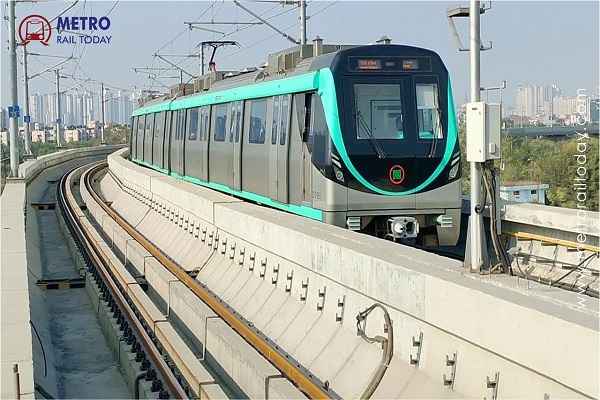 NMRC invites Applications for Key Executive Positions for Noida Metro Rail Project
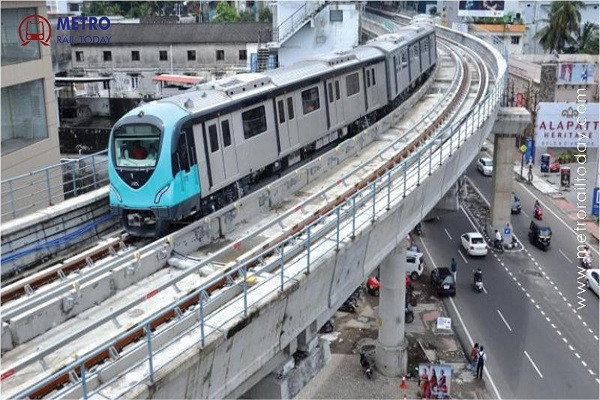 Central Govt rejects revised DPR of 7.5 km Noida-Greater Noida Metro Rail Extension Project
 Revised DPR of Prayagraj Metro focuses on seamless Rail-Air connectivity
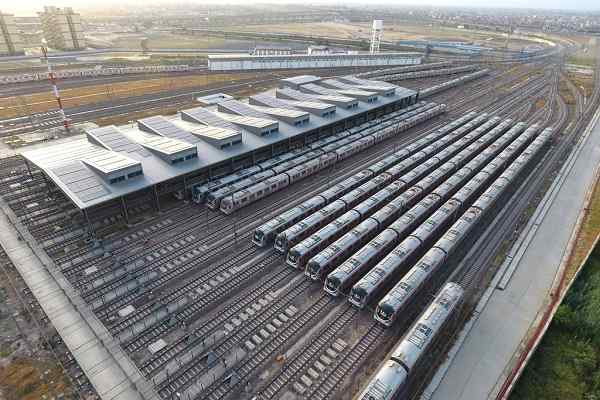 DMRC floats Tender for Central Vista Depot Design in Delhi Metro Phase V Expansion
- MMRDA seeks ₹14,100 Crore Loan for two upcoming Mumbai Metro Corridors
 Jupiter Wagons Eyes ₹20,000-Crore Mumbai Suburban Mega Rolling Stock Tender
India's First Bullet Train Project achieves Second Mountain Tunnel Breakthrough in Palghar
MRT Online Desk
Posted on: 2026-02-02 07:10:00
Viewer: 699
Comments: 0
Country: India
City: Palghar

Palghar, India (Metro Rail Today): The Mumbai–Ahmedabad High-Speed Rail (MAHSR) project achieved another major engineering milestone with the breakthrough of the second mountain tunnel (MT-6) in Palghar district, Maharashtra, Union Minister for Railways, Information & Broadcasting, and Electronics & Information Technology Shri Ashwini Vaishnaw announced on Tuesday.
The newly completed tunnel, 454 metres long and 14.4 metres wide, has been designed to accommodate both up and down tracks of the Bullet Train corridor. This marks the second mountain tunnel breakthrough in Palghar within a month, following the completion of MT-5 near Saphale on 2 January 2026.
Advanced Tunnelling Technology
Mountain Tunnel-6 was excavated simultaneously from both ends using the New Austrian Tunnelling Method (NATM)—a controlled drill-and-blast technique well suited to complex geological conditions such as those found in Palghar. The excavation was completed in just 12 months.
A tunnel breakthrough represents a critical engineering milestone, achieved when excavation teams meet at the centre of the tunnel, creating a continuous passage through the mountain.
NATM enables real-time design adaptation using shotcrete, rock bolts, and lattice girders, without the need for extremely heavy machinery. The method also allows flexible responses to varying rock conditions, making it ideal for irregular tunnel profiles.
Congratulating the project team, Shri Ashwini Vaishnaw said the pace of construction has instilled new national confidence in India’s high-speed rail ambitions.
“The Bullet Train project is drawing global appreciation for its engineering innovations. Many advanced construction technologies and large machines being used are being manufactured in India, reflecting the strength of our domestic capabilities,” the Minister said.
He added that commercial operations on the Gujarat section are expected to begin next year, with high-speed rail services extending up to Thane by 2028 and reaching Mumbai by 2029.
Regional Development Boost
Dr. Hemant Vishnu Savara, Member of Parliament from Palghar, was present at the event and highlighted the district’s rapid infrastructure growth through projects such as the Bullet Train corridor, Dedicated Freight Corridor (DFC), and the upcoming Vadhvan Port.
He noted that railway investments in Maharashtra have increased significantly since 2014, leading to faster execution and improved services.
Safety and Monitoring
Worker safety during tunnelling operations was ensured through:
-
Real-time geotechnical monitoring
-
Advanced ventilation and fire safety systems
-
Controlled access protocols
-
Continuous instrumentation and supervision
Mountain Tunnel Progress in Palghar
| SNo. | Tunnel | Length (km) | Progress | Remarks |
|---|---|---|---|---|
| 1 | MT-1 | 0.820 | 16% | — |
| 2 | MT-2 | 0.228 | — | Preparatory works underway |
| 3 | MT-3 | 1.403 | 41% | — |
| 4 | MT-4 | 1.260 | 32% | — |
| 5 | MT-5 | 1.480 | 57% | Breakthrough on 2 Jan 2026 |
| 6 | MT-6 | 0.454 | 47% | Breakthrough achieved |
| 7 | MT-7 | 0.417 | 29% | — |
A total of seven mountain tunnels are under construction in Palghar district.
Overall Project Progress
The 508-km MAHSR corridor spans:
-
352 km in Gujarat and Dadra & Nagar Haveli
-
156 km in Maharashtra
It will connect major cities including Sabarmati, Ahmedabad, Anand, Vadodara, Bharuch, Surat, Bilimora, Vapi, Boisar, Virar, Thane, and Mumbai.
As of 27 January 2026, the project has completed:
-
334 km of viaducts
-
17 river bridges
-
12 major crossings over highways, railways, and utilities
Track laying and electrification works are progressing rapidly, particularly in the Gujarat section.
Once operational, the Bullet Train project is expected to transform intercity travel, stimulate economic growth, and support the development of new industrial and technology hubs along the corridor.


MRT Online Desk
Metro Rail Today is an authentic and global news provider for the Rail & Metro industry from and around the world.