


Trending Now
 RITES submits fresh DPR to UPMRC for ₹12,000 crore Prayagraj Metro Rail Project
 Paras Railtech wins ₹84.72 crore Ballastless Track Contract for Jaipur Metro Rail Project
 Indian Railways announces 3,548 Graduate-Level Vacancies under NTPC Recruitment 2026
 European Union sanctions €10 million to support extension of Hanoi Metro Line 3
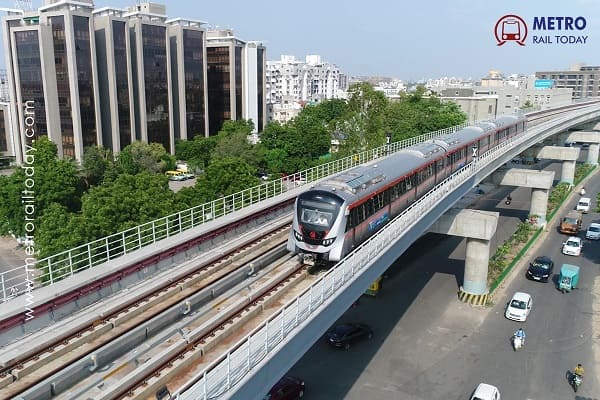 GMRC issues ₹683 crore Tender for construction of 8.68 km stretch for Ahmedabad Metro
- GMRC launches ₹439 crore Tender for construction of 5 New Ahmedabad Metro Stations
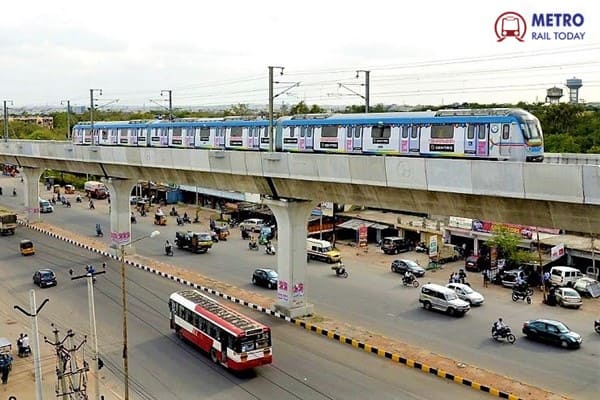 Global tender issued for procurement of 60 Rolling Stock coaches for Hyderabad Metro Rail Project
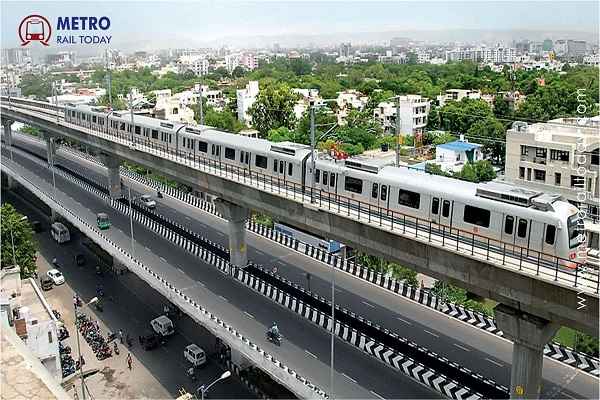 Global tender issued for procurement of 102 Rolling Stock coaches for Patna Metro Rail Project
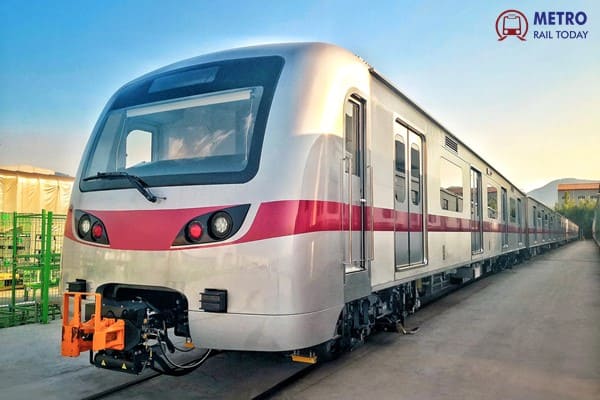 Gamuda awarded RM3.7 billion contract to build Keelung Mass Rapid Transit in Taiwan
 Maharashtra forms special Task Force to plan Rail, Metro and RRTS expansion
Kolkata Metro: From India’s First Metro to a 73.42-km Multi-Corridor Metro Rail Network
MRT Online Desk
Posted on: 2026-09-28 07:25:00
Viewer: 8,293
Comments: 0
Country: India
City: Kolkata
Kolkata Metro, India's first Metro railway system, has evolved over more than four decades from a modest 3.4-km corridor into a multi-corridor urban rapid transit network serving different parts of the city and its metropolitan region. The system, whose construction began in 1972, entered commercial service on October 24, 1984, marking the beginning of India's modern Metro rail era.
The first operational stretch covered 3.4 km between Esplanade and Bhowanipore, now Netaji Bhavan, with three intermediate stations. Since then, Kolkata Metro has steadily expanded through multiple corridors, engineering-intensive underground works and extensions towards major residential, commercial and transport hubs.
By 2025, the network had grown to five colour-coded lines, 58 stations and 73.42 km of route length.
45 km of Metro Added Between 2014 and 2025
Kolkata Metro's expansion has accelerated considerably over the past decade. According to the information provided, around 28 km of Metro was commissioned between 1972 and 2014, while approximately 45 km was commissioned between 2014 and 2025.
The expansion has taken place across several corridors. The Blue Line includes the 28-km Kavi Subash–Noapara section and the 4.14-km Noapara–Dakshineswar extension.
The Yellow Line has added the 6.77-km Noapara–Jai Hind Bimanbandar section, extending Metro connectivity towards Netaji Subhas Chandra Bose International Airport.
The Purple Line has seen the commissioning of the 7.74-km Joka–Majerhat section, while the Orange Line has added the 9.8-km New Garia–Belaghata section.
The Green Line, one of Kolkata Metro's most prominent recent additions, has been commissioned in stages along the 16.55-km Howrah Maidan–Salt Lake Sector V corridor.
Together, these projects have transformed Kolkata Metro from a single north-south corridor into a network serving multiple directions across the metropolitan area.
Engineering Landmark: Metro Tunnel Beneath the Hooghly
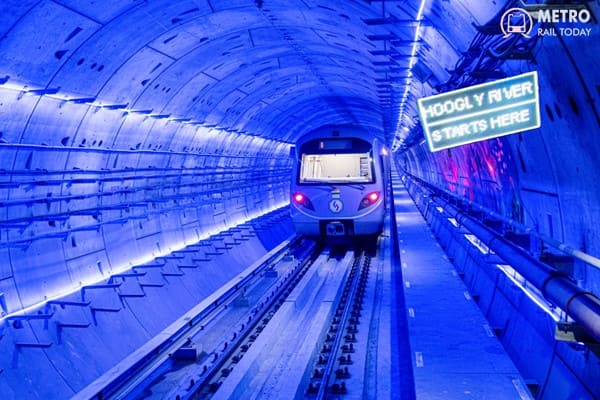
Among Kolkata Metro's most significant engineering achievements is the construction of the Green Line's twin tunnels beneath the Hooghly River.
The subaqueous tunnels were constructed using Earth Pressure Balancing Tunnel Boring Machines (TBMs) through predominantly stiff clayey silt. The under-river portion extends for approximately 520 metres and was constructed in a reported 66 days.
The tunnels are located around 350 metres downstream of Rabindra Setu, popularly known as Howrah Bridge, adding a technically challenging underground link between Kolkata and Howrah.
The river crossing is an important part of the Green Line's infrastructure and represents one of the most notable examples of complex underground Metro construction in India's urban rail sector.
The Green Line also includes the approximately 30-metre-deep Howrah Metro station, another major engineering feature of the corridor.
Expansion Towards the Airport and Southern Kolkata
Kolkata Metro's ongoing expansion is extending the network towards important transport and urban destinations.
The Yellow Line's 6.77-km Noapara–Jai Hind Bimanbandar section provides Metro connectivity towards Netaji Subhas Chandra Bose International Airport, strengthening public transport access to one of the city's principal gateways.
The Purple Line is planned as a 14-km Joka–Majerhat–Esplanade corridor. The 7.74-km Joka–Majerhat section is operational, while the remaining 6.26 km between Majerhat and Esplanade is under construction.
These extensions are intended to strengthen connectivity between southern Kolkata, central areas and major transportation hubs.
60 New-Generation Metro Rakes Planned
Modernisation of the rolling stock is also becoming an important component of Kolkata Metro's expansion.
In June 2026, Union Minister for Railways Ashwini Vaishnaw announced that 60 new-generation Metro rakes would be inducted into the Kolkata Metro network over the following four to five years.
The planned induction is part of the broader modernisation of the system and is expected to support the growing network as additional corridors and extensions become operational.
The announcement also highlighted the pace of network expansion, with 45 km of Metro lines added over 11 years compared with 27 km in the preceding 40 years under the particular comparison cited.
23.60 Crore Passengers Carried in 2025–26
The expansion of infrastructure has been accompanied by substantial passenger usage. According to figures highlighted by Metro Railway General Manager Prem Sagar Gupta during his Independence Day address in August 2026, Kolkata Metro carried 23.60 crore passengers during 2025–26.
Metro Railway has projected that the network could expand to approximately 130 km in the coming years, indicating the scale of development planned for the system.
As additional corridors and extensions are completed, the expanded network is expected to provide connectivity to more residential areas, employment centres, educational institutions, commercial districts and transport hubs.
Digital Ticketing and Passenger Services
Kolkata Metro has also been expanding digital services to simplify ticketing and passenger transactions.
The Aamar Kolkata Metro application enables passengers to purchase tickets online, including QR-based tickets, while supporting digital payment facilities. Metro Railway has also promoted digital purchase of tokens and Smart Cards, along with Smart Card recharge facilities through the application.
The adoption of digital ticketing complements the physical expansion of the Metro network by providing passengers with additional options for accessing services and managing their journeys.
Four Decades of Metro Evolution
Kolkata Metro's journey reflects the changing scale and complexity of urban rail development in India. From the first 3.4-km commercial corridor opened in 1984, the system has grown into a 73.42-km network with 58 stations and five colour-coded lines as of 2025.
The network's development has involved a combination of elevated and underground construction, major river-crossing infrastructure and stations built at considerable depth. The 520-metre under-Hooghly tunnel, constructed in 66 days, remains one of its defining engineering milestones.
At the same time, the system is entering another phase of modernisation through new-generation rolling stock, expansion of power infrastructure, additional corridors and digital passenger services.
With planned expansion towards approximately 130 km, Kolkata Metro is continuing the transformation that began with India's first Metro service more than four decades ago. Its evolution demonstrates how the country's oldest Metro system has progressively developed into a multi-corridor urban transport network serving the changing mobility requirements of Kolkata and its surrounding areas.

MRT Online Desk
Metro Rail Today is an authentic and global news provider for the Rail & Metro industry from and around the world.