


Trending Now
 STUP Consultants Wins Station Design Consultancy Contract for Thane Metro Rail Project
 Larsen & Toubro bags Design-and-Build Contracts for Bangladesh’s Dhaka Metro Line 1 Project
 Wabtec Corporation awarded ₹839 crore contract for India's Vande Bharat Sleeper Train Project
 How Indigenous Engineering and Japanese Technology are transforming India's first Bullet Train?
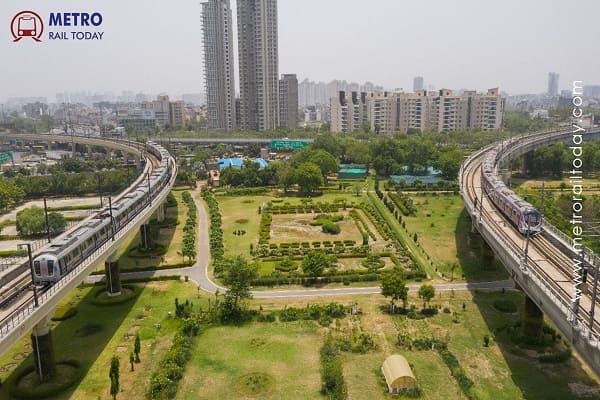 India's Metro Rail Network set to cross 2000-km mark soon, become second largest in World
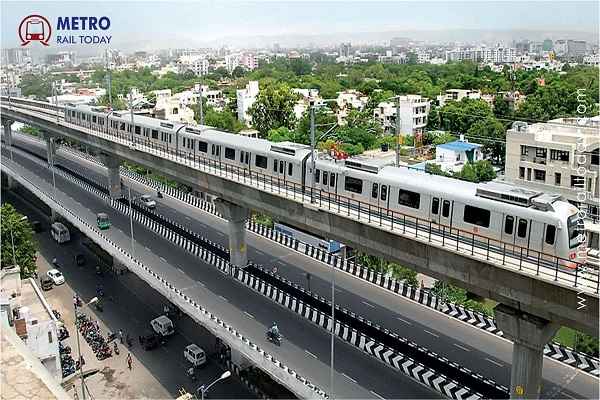 Alstom to deploy DTG Signalling System for Jaipur Metro’s 5.2-km Phase-1 Extension
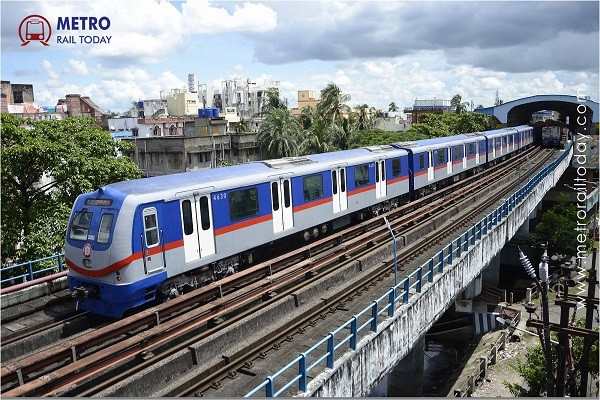 RVNL floats ₹297.45-crore Power Systems Tender for Kolkata Metro Purple Line
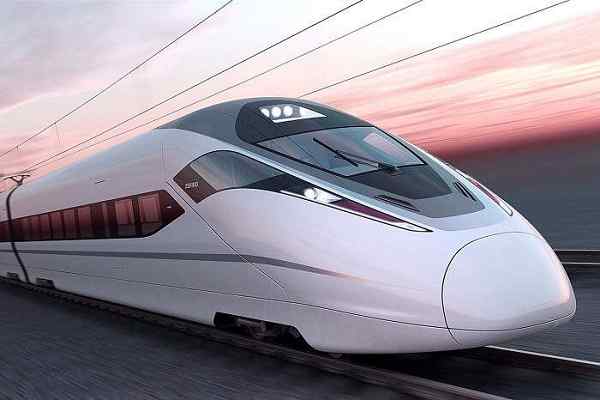 Siemens Mobility awarded $772 million Trainset Contract for California High-Speed Rail Project
- RITES submits fresh DPR to UPMRC for ₹12,000 crore Prayagraj Metro Rail Project
 Paras Railtech wins ₹84.72 crore Ballastless Track Contract for Jaipur Metro Rail Project
Maha Metro achieves First Span Launch on Reach-2B of Nagpur Metro Phase 2
MRT Online Desk
Posted on: 2025-08-21 16:30:00
Viewer: 3,283
Comments: 0
Country: India
City: Nagpur
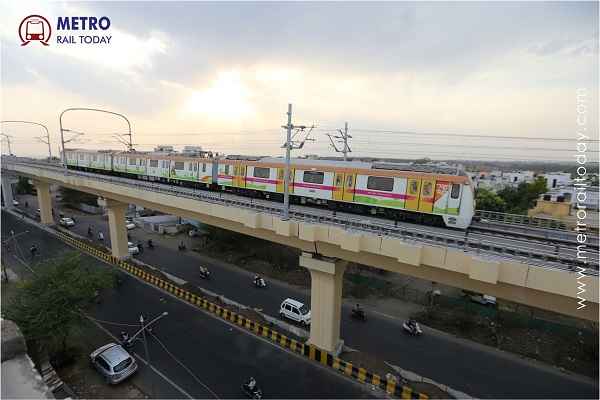
Nagpur, India (Metro Rail Today): In a major stride toward the timely delivery of Nagpur Metro Phase II, Maharashtra Metro Rail Corporation Limited (Maha Metro) has successfully launched the first span on Reach-2B, a critical segment of the city’s expanding Orange Line network. The 25-meter span was erected using the launching girder ‘Sahyadri’, marking a significant achievement in the corridor’s civil construction.
The event was attended by senior leadership of Maha Metro, including Managing Director, Shravan Hardikar, Director (Projects) Rajeev Tyagi, Executive Director Arun Kumar, and Chief Project Manager (Reach 2) Vidyasagar NVP, alongside other senior engineers and site officials.
Reach 2B covers a stretch of 6.016 km, running from Lekha Nagar (Asha Hospital) to Kanhan River Metro Station. As a part of the broader 12-km Orange Line extension, the route aims to significantly enhance last-mile connectivity to the northern outskirts of Nagpur, while serving key areas such as Cantonment zones, schools, hospitals, and major bus stops.
The full Reach-2 corridor is divided into two segments:
-
Reach 2A Stations: Pili Nadi, Khasra Fata, All India Radio, Khairi Fata, Lok Vihar, and Lekha Nagar
-
Reach 2B Stations: Cantonment, Kamptee Police Station, Kamptee Municipal Council, Dragon Palace, Golf Club, and Kanhan River
The launched span comprises 9 pre-cast segments, spanning 25 meters. These were carefully erected with the aid of the launching girder ‘Sahyadri’, a critical piece of machinery designed for precision and safety in elevated viaduct construction.
This successful erection marks the beginning of superstructure works along Reach 2B and paves the way for accelerated progress in the coming months. The milestone also reflects Maha Metro’s focus on timely project execution and high-quality construction practices.
Shravan Hardikar, Managing Director, Maha Metro, noted, “This first span launch is not just a physical achievement—it represents our commitment to connecting the fast-growing northern regions of Nagpur with the city’s core. With every new segment placed, we are one step closer to a fully integrated, efficient, and inclusive urban mobility system.”
Nagpur Metro’s Phase II is aimed at expanding connectivity to underserved and emerging zones of the city. The Orange Line extension from Automotive Square to Sai Mandir near the Kanhan River is designed to serve residential, institutional, and cultural landmarks along the northern corridor, while also providing smoother intermodal integration with road and rail networks.
By completing each milestone on schedule, Maha Metro continues to set benchmarks for rapid transit infrastructure in India’s Tier-2 cities.
Mrs. Mamta Shah, MD & CEO of Urban Infra Group, praised the achievement, “Nagpur Metro’s Phase II is a case study in purposeful urban planning. The Reach 2B span launch reflects how efficient engineering and strategic vision can transform connectivity at the urban periphery. It will boost socio-economic development across northern Nagpur and strengthen the foundation for transit-oriented growth.
With the first span launched, Maha Metro will now ramp up viaduct construction along Reach 2B, targeting structural completion across all six stations in alignment with project timelines. The segment will also facilitate easier access to Kamptee and surrounding localities, paving the way for an integrated, future-ready transit corridor in the region.


MRT Online Desk
Metro Rail Today is an authentic and global news provider for the Rail & Metro industry from and around the world.