


Trending Now
 Japanese Delegation visits KRIDE to explore Bengaluru Suburban Rail Project opportunities
 GMRC issues ₹879 crore Civil Tender for Airport Extension under Ahmedabad Metro Phase 2A
 Global Mobility Leaders Alstom and Siemens become Corporate Member of Chamber of Railway Industries
 L&T-MHI JV wins contract for Automated People Mover at Dubai’s Al Maktoum International Airport
 Delhi Metro Rail Network to expand to 695 km by 2047, Six new RRTS Corridors planned
 HÜBNER at InnoTrans 2026: Global rail expertise and local capability for India’s Next-Gen Mobility
 Australia shortlists three firms/consortia for Sydney–Newcastle High Speed Rail Project
 MRVC set to procure 238 AC Vande Metro Trainsets worth ₹19,293 crore from Indian Railways
 Maharashtra approves ₹17,725 crore Mumbai Metro Line 13 linking Mira-Bhayandar with Vasai-Virar
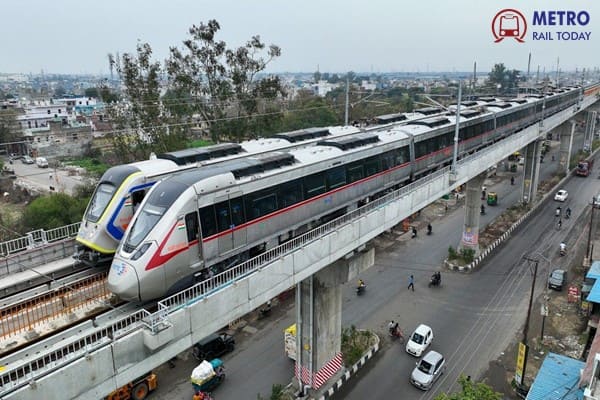 Gujarat issues three tenders for 48.38-km Metro-RRTS Hybrid corridors under Ahmedabad Metro Phase 3
Mangaluru-Udupi-Manipal Metro Project moves forward with Feasibility Study
MRT Online Desk
Posted on: 2025-03-05 07:01:00
Viewer: 4,833
Comments: 0
Country: India
City: Mangalore
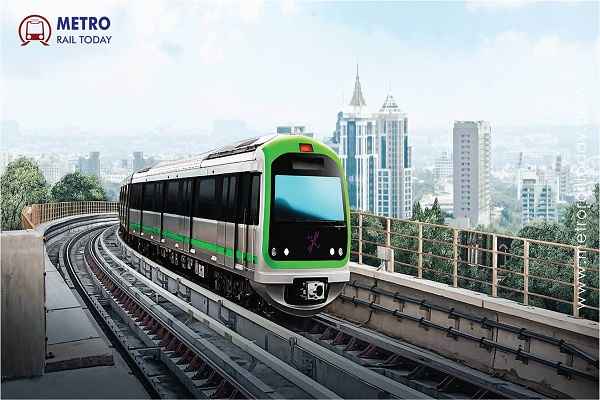
Mangaluru, India (Metro Rail Today): The proposed Mangaluru-Udupi-Manipal Metro Rail project, aimed at enhancing connectivity between key urban areas in coastal Karnataka, has made significant progress as the Urban Development Department initiates a comprehensive feasibility study. This assessment will focus on evaluating the expected costs and revenues associated with the metro system, a crucial step toward realizing the ambitious project.
In a directive issued by Raju P, Under Secretary of the Urban Development Department, the Bengaluru Metro Rail Corporation Limited (BMRCL) and the Deputy Commissioners of Dakshina Kannada and Udupi have been tasked with reviewing the techno-feasibility report submitted by S Mohanadas Hegde, a former KPCC secretary and current member. The report, dated February 22, provides a detailed analysis of the technical and economic viability of the metro corridor.
Metro Project Details
The proposed 64-km metro line will connect Mangaluru to Manipal via Udupi, bridging urban, semi-urban, and industrial zones. The metro network is designed to integrate efficiently with existing transport infrastructure, including airports, railway stations, highways, and ports, ensuring seamless connectivity for commuters.
The metro project is a strategic solution to address challenges posed by urban expansion, population growth, and the increasing demand for sustainable urban transport. It aligns with national initiatives like the National Infrastructure Pipeline (NIP), Smart City Mission, and GatiShakti, contributing to the vision of a modern, efficient transport system. The project also emphasizes electric vehicle (EV) integration and smart infrastructure development, reinforcing its commitment to sustainable mobility.
Project Phases
The metro project will be implemented in two key phases:
- Phase 1 (2025-2027): This phase will focus on land acquisition, preliminary groundwork, and the commencement of initial construction activities.
- Phase 2 (2028-2030): This phase will involve large-scale construction, testing, commissioning, and obtaining regulatory approvals from the Ministry of Housing and Urban Affairs and the Ministry of Railways.
Funding and Coordination
The project is expected to be funded through a combination of government allocations, Public-Private Partnerships (PPP), and international investments. Coordination with key stakeholders, including the Ministry of Railways, NITI Aayog, and state authorities, will be essential for the successful execution of the project. Additionally, approvals from urban development and environmental regulatory bodies will be required.
Comprehensive Feasibility Assessment
In his letter, S Mohanadas Hegde highlighted that a comprehensive assessment of the project has been conducted, covering technical feasibility, financial viability, environmental and social impact, and risk mitigation strategies. He emphasized that the project aligns with both the state’s vision for urban transport and the National Infrastructure Development Agenda, ensuring that the metro system will be well-integrated and future-ready for the region’s evolving transport needs.
The Mangaluru-Udupi-Manipal Metro Rail project promises to significantly improve regional connectivity, alleviate traffic congestion, and promote sustainable urban mobility. As the feasibility study progresses, the project is poised to become a critical part of the state’s infrastructure development, contributing to the broader vision of transforming coastal Karnataka into a well-connected, smart, and future-ready region.


MRT Online Desk
Metro Rail Today is an authentic and global news provider for the Rail & Metro industry from and around the world.