

Trending Now
 Govt of India explores Namo Bharat Rapid Rail to replace proposed Cuttack–Bhubaneswar Metro Project
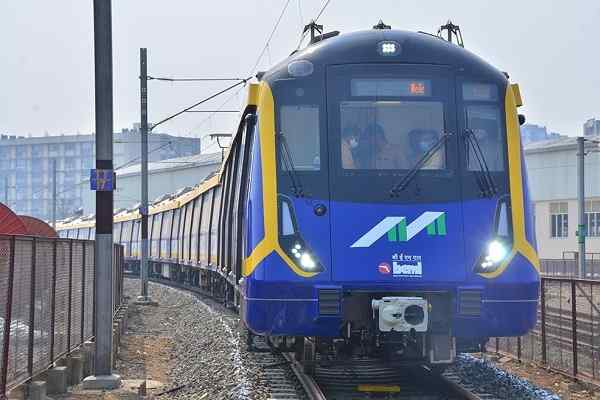 Global tender floated for Automatic Fare Collection System for Mumbai Metro Line 6
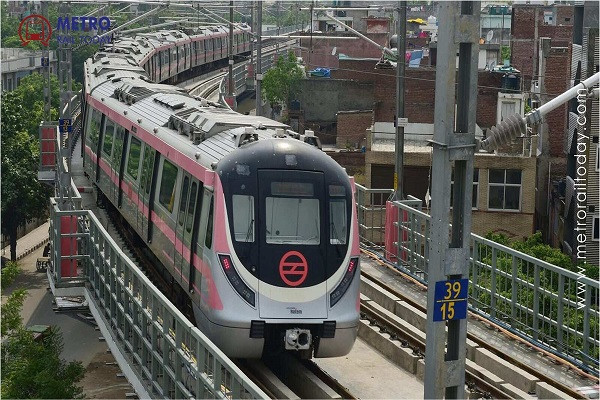 Delhi Metro secures 6th rank among largest metro rail systems in the world by network length
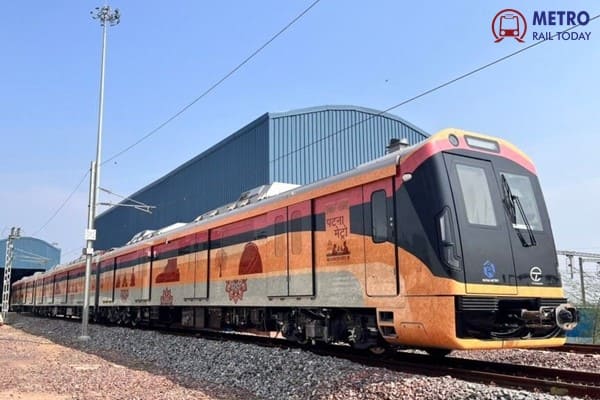 Indian Railways grants NOC to resume tunnelling works on Patna Metro Corridor 2
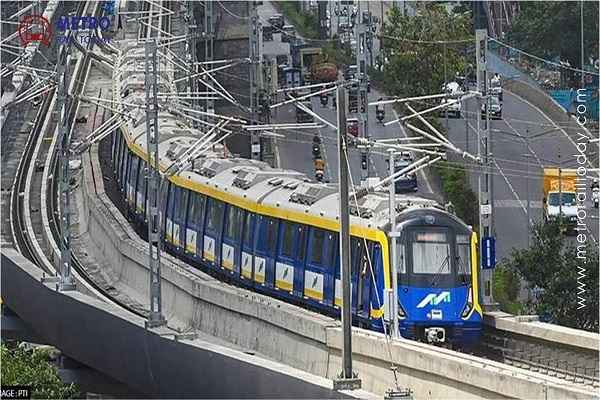 Efkon India Bags ₹103 Crore Telecom Systems Contract for Mumbai Metro Lines 7A and 9
 Bids invited for Telecommunication Systems Contract for Kochi Metro Phase 2 Pink Line
 KMRL invites bids for supply of Heavy-Duty Escalators for Kochi Metro Phase 2 Pink Line
 Spain floated €357.6 Million civil works tender for Burgos–Vitoria High-Speed Rail Line
 Wabtec bags multiple contracts to supply over 680 Pantographs for Rail & Metro projects in India
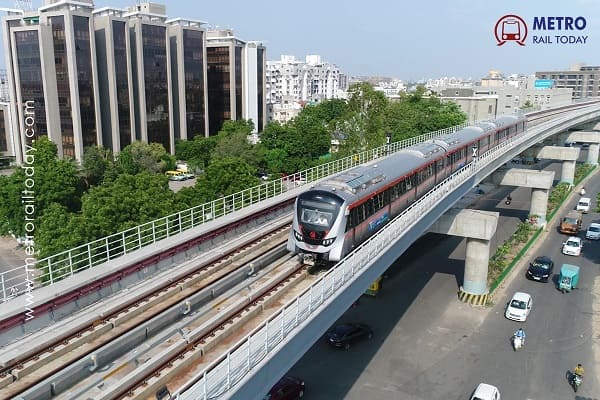 Titagarh Rail bags major Rolling Stock contract for Ahmadabad Metro Phase 2 and Surat Metro
NCRTC installs India’s First “Solar on Track” in a Metro or RRTS System
MRT Online Desk
Posted on: 2025-11-12 09:15:00
Viewer: 2,458
Comments: 0
Country: India
City: New Delhi
New Delhi, India (Metro Rail Today): In a major push toward sustainable urban transport, Ghaziabad’s Duhai has become the second city in India — after Varanasi — to feature solar panels installed between railway tracks. The innovative initiative, implemented by the National Capital Region Transport Corporation (NCRTC), marks a key step in India’s journey toward greener and energy-efficient public transportation systems.
NCRTC has implemented its pioneering ‘Solar on Track’ pilot project at the Namo Bharat Depot in Duhai, located along the Delhi–Ghaziabad–Meerut Regional Rapid Transit System (RRTS) corridor.
The installation comprises 28 high-efficiency solar panels of 550 Wp each, delivering a total capacity of 15.4 kWp over 70 metres of track length. The project is expected to generate approximately 17,500 kWh of clean energy annually, offsetting 16 tonnes of CO₂ emissions every year.
“This ‘Solar on Track’ system demonstrates NCRTC’s unwavering commitment to innovation and sustainability. The installation not only makes effective use of unused track space but also aligns with our broader mission to achieve net-zero energy consumption across all facilities,” the NCRTC said in a statement.
The Duhai solar project builds on NCRTC’s comprehensive Solar Policy, which aims to meet 70% of the corporation’s total energy demand from renewable sources.
Under this policy, NCRTC targets generating 15 MWp of in-house solar power from the rooftops of stations, depots, and office buildings — of which 5.5 MWp is already operational.
In addition to rooftop systems, the Namo Bharat trains feature advanced regenerative braking technology, converting kinetic energy into electrical energy during deceleration — further improving energy efficiency and lowering carbon footprint.
The Duhai project follows the example set by Banaras Locomotive Works (BLW) in Varanasi, which became the first facility in India to commission a solar panel installation between railway tracks.
The Varanasi pilot project was implemented on Workshop Line No. 19, featuring an indigenously designed setup that allows solar panels to be laid between rails without disrupting train traffic.
“The NCRTC’s ‘Solar on Track’ initiative is a game-changer for India’s rail-based transit systems,” said Mrs. Mamta Shah, MD & CEO of Urban Infra Group. “By integrating renewable energy directly within track infrastructure, NCRTC has showcased how innovation and sustainability can go hand-in-hand to shape the future of green mobility in India.”
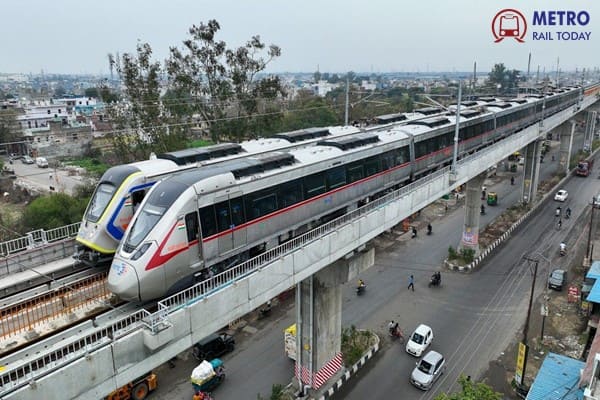
The Delhi–Ghaziabad–Meerut RRTS, branded as Namo Bharat, continues to set benchmarks in sustainability and technology. With a strong focus on clean energy, regenerative systems, and efficient design, NCRTC’s initiatives are expected to make the corridor one of India’s greenest transport networks.
By adopting such forward-looking measures, NCRTC reinforces India’s commitment to achieving net-zero emissions in the transport sector, in line with the Viksit Bharat 2047 vision.

MRT Online Desk
Metro Rail Today is an authentic and global news provider for the Rail & Metro industry from and around the world.