

Trending Now
 Siemens wins ₹91.65 crore Telecom Contract for Kochi Metro Phase 2 Pink Line
 GHV Infra wins ₹150 crore Civil Contract for Vasantkunj Depot of Lucknow Metro East-West Corridor
 Texmaco Rail wins ₹130 crore Track Contract for Kochi Metro Phase 2 Pink Line
 Indian Railways unveils Alignments and Routes of four new High Speed Bullet Train Corridors
 Telangana pushes for approval of ₹38,595 Crore Hyderabad Metro Phase-II Expansion
 Boston Consulting Group appointed to prepare 10 years Corporate Plan for Delhi Metro
 Exclusive Interview with Champak Panda, Managing Director, Rolling Stock & Components, Alstom India
 Delhi Metro invites Expression of Interests to manufacture Platform Screen Doors in India
 NMRC to appoint General Consultant for Noida-Greater Noida Aqua Line Metro Expansion
- NHSRCL launches Five Heavy Portal Beams on Mumbai-Ahmedabad Bullet Train Project
Pune Metro Line 3 to use 'Third Rail System' Technology
Sangeeta Singh
Posted on: 2023-10-04 11:15:00
Viewer: 2,769
Comments: 0
Country: India
City: Pune
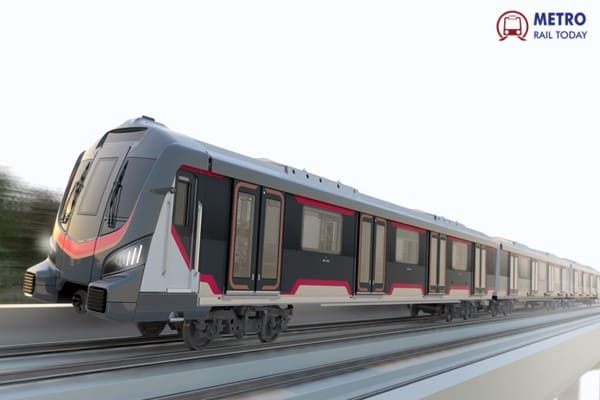
Pune, India (Metro Rail Today): Pune Metro Line 3, a highly anticipated development in Pune's urban transportation network, is set to achieve a significant milestone with the introduction of the groundbreaking 'Third Rail System.' This innovative technology, making its debut in Pune, promises to revolutionize how the metro line draws its electrical power. The adoption of the Third Rail System for Pune Metro Line 3, also known as 'Puneri Metro,' represents a remarkable stride toward sustainable and reliable urban transportation. This project not only underscores Pune's dedication to modernizing its public transit infrastructure but also establishes a precedent for future metro projects in the region.
The construction of Pune Metro Line 3, connecting Hinjewadi to Shivajinagar, is being carried out by the Pune Metropolitan Region Development Authority (PMRDA) on a Public-Private Partnership (PPP) basis. Tata Group has established Pune IT City Metro Rail Limited as a special purpose vehicle (SPV) company responsible for its implementation.
The Third Rail System, characterized by a rail running parallel to the tracks with distinctive yellow markings, is a proven method for supplying electric traction power to railway trains. Trains equipped with metal contact blocks known as "shoes" establish direct contact with the conductor rail, ensuring a seamless and uninterrupted power supply. India currently employs three standard electric traction systems:
- 750 V DC Third Rail
- 1500 V DC Overhead Catenary
- 25 kV AC Overhead Catenary System
Alok Kapoor, Chief Executive Officer of Pune IT City Metro Rail Limited, explained, "The Pune Metro Line 3 will be the first to introduce the third rail technology to the city, demonstrating our commitment to innovation and sustainability. One of the significant advantages of the Third Rail System is its unobtrusive nature. Unlike traditional overhead equipment systems susceptible to disruptions from birds and kites, the third rail system remains unaffected. This innovation ensures that Pune Metro Line 3 seamlessly integrates with the city's skyline, contributing to an aesthetically pleasing urban environment."
What is the Third Rail System?
The Third Rail System, also known as a live rail, electric rail, or conductor rail, supplies electric power to an electric train through a semi-continuous rigid conductor positioned alongside or between the running rails of a railway track. This conductor rail provides electrical power directly to the train, ensuring efficient and reliable operation.
How does the Third Rail System work?
In the Third Rail System, an additional rail track, called a conductor rail, is introduced alongside the standard railway tracks. This conductor rail typically carries either 600 or 750 volts of electrical power, ensuring the smooth and uninterrupted operation of metro trains.
About Pune Metro Line 3
Pune Metro Line III is an approximately 23-kilometer elevated Metro rail project connecting the IT hub of Hinjawadi to the central business district of Shivajinagar. It is a Public-Private Partnership (PPP) project awarded by the Pune Metropolitan Region Development Authority (PMRDA) to a consortium consisting of Tata Group's TRIL Urban Transport Private Limited (TUTPL) and Siemens Project Ventures GmbH. The project will be developed and operated on a Design, Build, Finance, Operate & Transfer (DBFOT) basis by a special purpose vehicle (SPV), Pune IT City Metro Rail Limited (PITCMRL), for a concession period of 35 years, including the construction period.


Sangeeta Singh
Sangeeta is working as Media Coordinator in the Editorial Wing of Metro Rail Today.